
Mental Health Terms You Hear Constantly, Defined Clearly

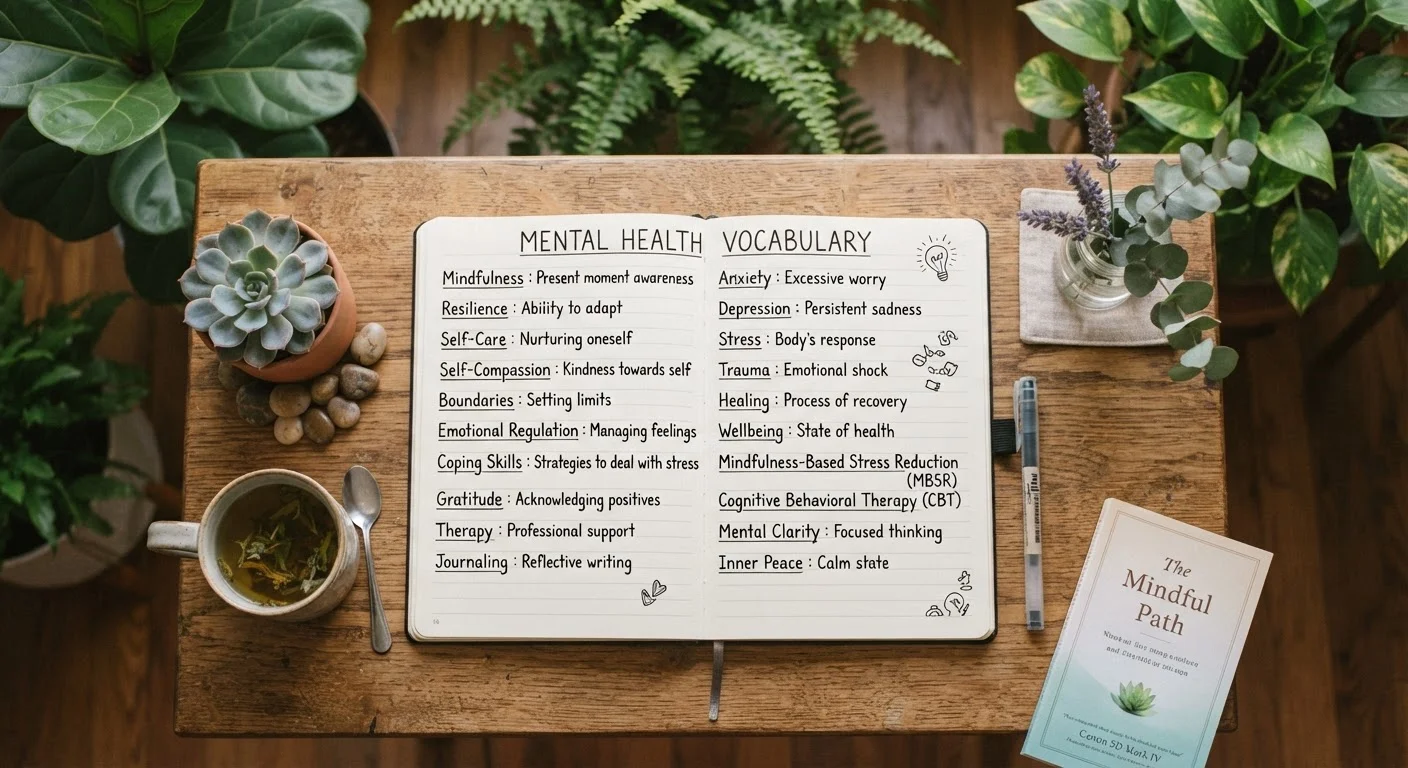
Photo: QuickAdvisor.net editorial
Why Mental Health Vocabulary Matters
Mental health conversations have entered the mainstream - but the terminology often hasn't been clearly explained. Words like trauma, burnout, and anxiety circulate in social media, workplaces, and news coverage, sometimes accurately, sometimes loosely. That gap between frequent use and clear understanding can leave people unsure whether what they're experiencing is significant, or how to talk about it with a provider or loved one.
Knowing what these terms actually mean isn't just academic. Accurate language helps people recognize their own experiences, seek appropriate support, and engage more meaningfully with mental health resources. It also helps dismantle patterns of self-dismissal that delay care.
This reference defines the terms most commonly used in mental health discussions, grounded in how clinicians and researchers actually use them.
This Is Education, Not Medical Advice
Core Terms Defined Clearly
The glossary below covers the most widely referenced concepts in mental health education and clinical practice. Each definition reflects current, evidence-based understanding - not pop psychology or social media shorthand.
Anxiety
A mental and physical response to perceived threat or uncertainty - including worry, racing thoughts, and physical tension. Anxiety exists on a wide spectrum, from everyday nervousness to clinically diagnosable disorders.
Burnout
A state of chronic exhaustion caused by prolonged, unmanaged stress - typically tied to work or caregiving. It goes beyond tiredness and often involves emotional detachment and reduced effectiveness.
Trauma
The lasting emotional and psychological impact of an overwhelming or threatening experience. Trauma responses vary widely between individuals; the same event can be traumatic for one person and not another.
Resilience
The capacity to adapt and recover in the face of adversity, stress, or setbacks. Resilience is not a fixed trait - research indicates it can be developed over time through support, practice, and experience.
Mindfulness
The practice of intentionally directing attention to the present moment without judgment. It is often used in therapeutic settings to reduce stress and interrupt unhelpful thought patterns.
Cognitive Distortion
An inaccurate or exaggerated thought pattern that reinforces negative emotions, such as catastrophizing or all-or-nothing thinking. These patterns are commonly addressed in cognitive behavioral therapy (CBT).
Dissociation
A mental experience of feeling disconnected from one's thoughts, feelings, surroundings, or sense of identity. Mild dissociation (like daydreaming) is common; severe dissociation can be a symptom of trauma-related conditions.
Psychosocial
Relating to the interplay between psychological factors (thoughts, emotions) and social factors (relationships, environment). Mental health is widely understood as a psychosocial phenomenon, not just a biological one.
Stigma
Negative attitudes, stereotypes, or discrimination directed at people with mental health conditions. Stigma can discourage people from seeking care and is a recognized public health barrier.
Protective Factor
A condition, resource, or characteristic that reduces the risk of poor mental health outcomes. Examples include strong social connections, access to care, and stable housing.
Hypervigilance
A state of heightened alertness to potential threat, often associated with anxiety disorders or post-traumatic stress. The nervous system remains on high alert even when no real danger is present.
Self-efficacy
A person's belief in their own ability to manage situations and achieve goals. Higher self-efficacy is associated with better mental health outcomes and greater engagement in health-promoting behaviors.
For a deeper look at how one of these terms plays out clinically, see our article on understanding anxiety across its full spectrum.
By the Numbers: Mental Health in Context
| Share of U.S. adults affected by mental illness annually | ~1 in 5 (National Institute of Mental Health (NIMH)) |
| Most common mental health conditions in the U.S. | Anxiety disorders, then depression (NIMH prevalence data) |
| Average delay from symptoms to treatment | 11 years (National Alliance on Mental Illness (NAMI)) |
| Percentage of mental health conditions beginning by age 14 | 50% (World Health Organization (WHO)) |
| Therapeutic approach most studied for anxiety and depression | Cognitive Behavioral Therapy (CBT) (American Psychological Association (APA)) |
1 in 5
U.S. adults living with a mental illness each year
According to the National Institute of Mental Health, mental illness is among the most common health conditions in the United States.
11 years
Typical gap between symptom onset and receiving treatment
The National Alliance on Mental Illness (NAMI) reports this delay is partly driven by stigma, lack of awareness, and access barriers.
These figures underscore that mental health conditions are common, often begin early, and frequently go untreated for years. Understanding the vocabulary is one step toward shortening that gap. Poor sleep is another often-overlooked factor - learn more about how sleep and mental health reinforce each other.
Putting the Language to Practical Use
Being able to name an experience is genuinely useful - but vocabulary alone isn't the destination. These terms are tools for clearer thinking, better conversations, and more informed choices about care. If you recognize something in these definitions, consider it an invitation to explore further, not a self-diagnosis.
If you're thinking about speaking with a professional, understanding the differences between types of support is a practical next step. Our guide on therapy, coaching, and counseling explains what each involves. And if you're wondering how to build sustainable habits around mental wellness, what makes a daily mental health routine stick offers grounded, research-informed guidance.
This article is for informational and educational purposes only and does not constitute medical advice. Always consult a qualified healthcare or mental health professional for personal guidance.
The content on this site is for informational purposes only and is not a substitute for professional advice. Always consult a qualified professional for guidance specific to your situation.