
Battery, Alternator, and Starter: Understanding Your Car's Electrical System

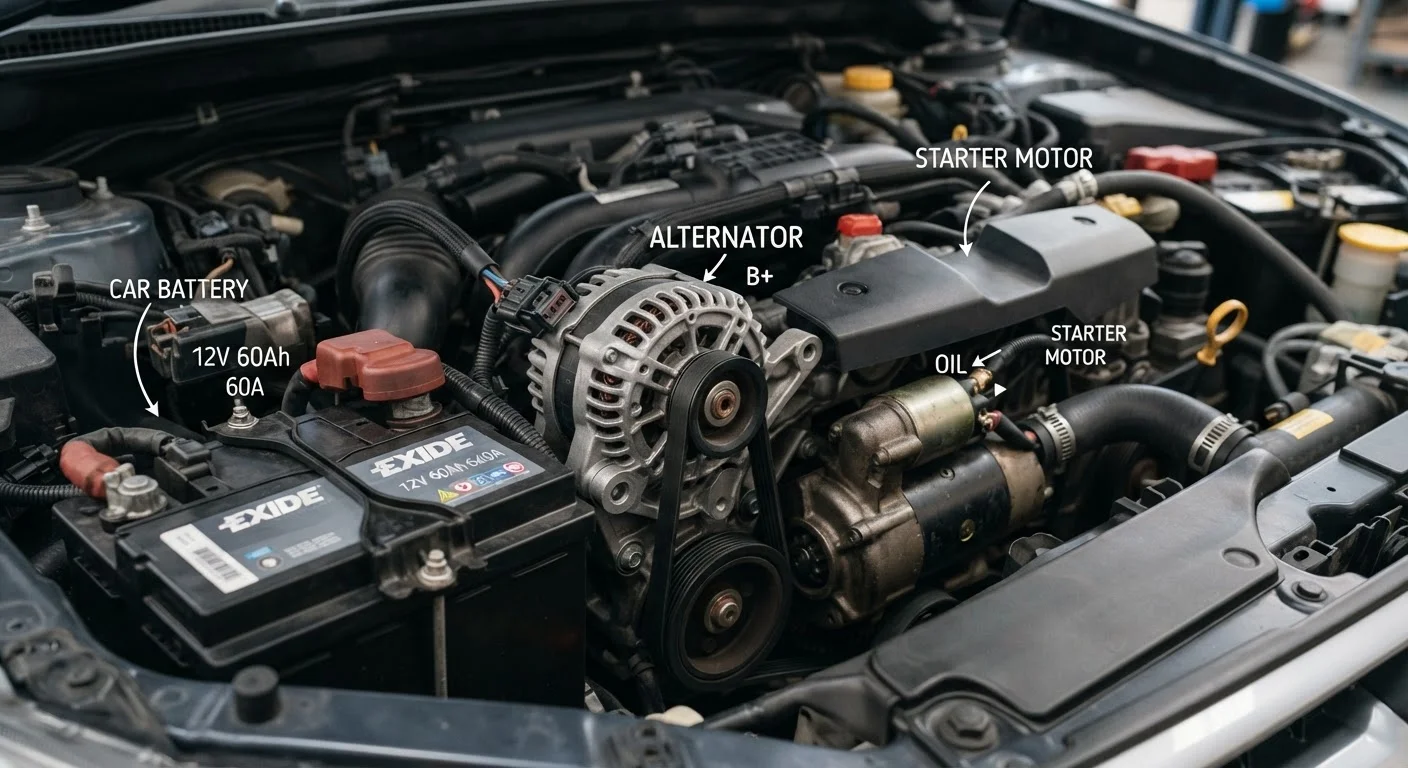
Photo: QuickAdvisor.net editorial
Key Takeaways
- The battery provides the initial burst of power needed to start your engine.
- The alternator recharges the battery and powers electrical systems while the engine runs.
- The starter motor uses battery power to physically crank the engine during ignition.
- Failure in one component often places extra strain on the others, accelerating wear.
- Dimming lights, slow cranking, or clicking sounds are common early warning signs of electrical trouble.
The Battery: Your Car's Stored Power Source
The 12-volt lead-acid battery found in most passenger vehicles serves one primary purpose: delivering a large, concentrated burst of electrical current to start the engine. Once the engine is running, the battery shifts to a secondary role - acting as a buffer that smooths out voltage fluctuations across the electrical system.
Batteries don't have unlimited life. Internal chemical reactions degrade the plates inside the battery over time, reducing its ability to hold a charge. Cold temperatures thicken battery fluid and slow those reactions, which is why hard starts are common on freezing mornings. Heat, paradoxically, accelerates internal corrosion and shortens overall lifespan.
Signs of battery trouble include slow engine cranking, warning lights, and visible corrosion around the terminals - a white or blue-grey powder buildup that increases electrical resistance. Keeping terminals clean and having the battery tested annually after the three-year mark is a sound preventive habit. For a broader look at building good maintenance routines, see our First-Time Car Owner's Maintenance Primer.
The Alternator: Keeping Everything Charged
Once the engine starts, the alternator takes over as the primary source of electrical power. Driven by a belt connected to the engine's crankshaft, the alternator spins an internal rotor inside a set of stationary coils to generate electricity. This output recharges the battery and simultaneously powers the ignition system, headlights, climate controls, infotainment, and every other electrical load the vehicle carries.
A healthy alternator typically produces between 13.5 and 14.8 volts - enough to keep the battery topped off and the vehicle's systems stable. When output drops outside that range, problems follow quickly.
3-5 years
Typical car battery service life
Industry guidance from battery manufacturers and automotive associations generally places average battery lifespan in the three-to-five-year range under normal conditions.
13.5-14.8V
Healthy alternator output range
Automotive electrical standards specify this voltage range as the normal operating output for a functioning alternator at the vehicle's battery terminals.
100-200+ A
Current drawn by starter motor
Starter motors in passenger vehicles typically draw between 100 and 200 amperes or more during cranking, depending on engine displacement and temperature.
Alternator failure is often gradual. An aging unit may perform adequately under light load but struggle when the electrical demand rises - for example, when headlights, heated seats, and a blower motor all run at once. Dimming or flickering lights while the engine is running is a reliable early indicator. A battery warning light that appears only during high-load situations is another clue worth investigating promptly.
The Starter Motor: Translating Electricity Into Motion
The starter is an electric motor mounted near the base of the engine. When you turn the key or press the ignition button, a small relay called a solenoid engages, sending current from the battery to the starter. The starter's pinion gear then meshes with the engine's ring gear and spins the engine fast enough - typically 200 RPM or more - to initiate combustion.
The entire process takes less than a second in a healthy system, but it draws an enormous amount of current - often 100 to 200 amperes or more depending on engine size. That high draw is why a weak battery makes starter problems worse; insufficient current means the motor can't spin the engine fast enough to start.
Don't Ignore Unusual Starter Sounds
Starters are generally durable components, but brushes and solenoids wear over time, particularly in high-cycle scenarios like urban stop-and-go driving or frequent short trips. Unusual sounds - clicking, grinding, or whirring without the engine catching - are worth having evaluated by a qualified mechanic rather than ignored.
How Failure in One Component Affects the Others
The battery, alternator, and starter don't operate in isolation. They form a closed loop of dependency, which means weakness in one part stresses the whole system.
- Weak battery + healthy alternator: The alternator compensates by running at higher output continuously, increasing heat and wear on its own components.
- Failing alternator + healthy battery: The battery depletes because it's never fully recharged, leading to hard starts and eventually a dead battery - even though the battery itself isn't faulty.
- Deteriorating starter + weak battery: Each start attempt drains the battery more deeply than normal, compounding stress on both components simultaneously.
Diagnosing electrical complaints accurately requires testing all three components - not just the one that appears symptomatic. A mechanic who replaces only the battery when the alternator is also failing is likely to see the car return with the same complaint within weeks. When having electrical work performed, ask for a complete charging system test rather than a single-component check.
Just as the cooling system and electrical system each depend on well-functioning parts to protect the engine, understanding these interactions helps you catch problems early. For a parallel look at another critical system, see how your car's cooling system works and what happens when it fails.
Frequently Asked Questions
The content on this site is for informational purposes only and is not a substitute for professional advice. Always consult a qualified professional for guidance specific to your situation.