
Car Fluids You Shouldn't Ignore Between Oil Changes

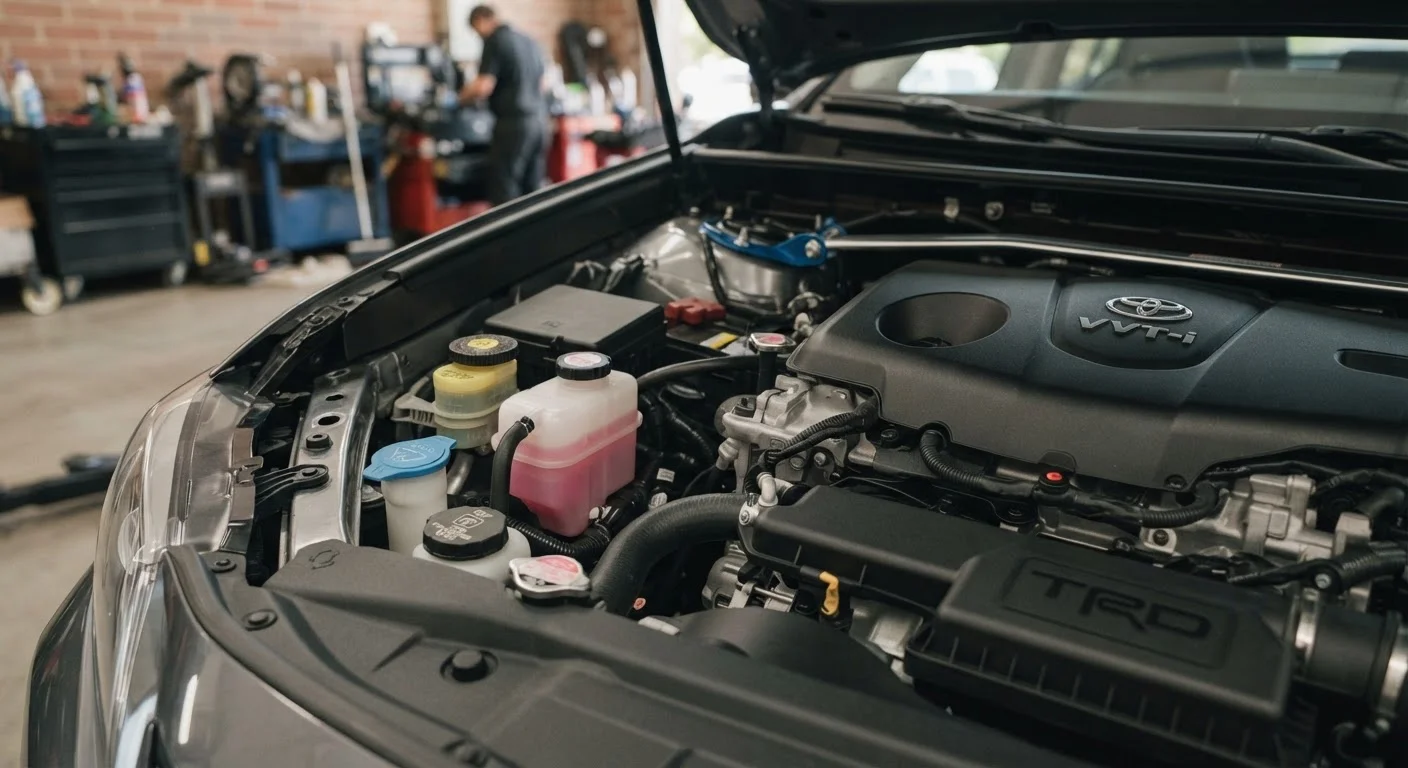
Photo: QuickAdvisor.net editorial
Why Fluids Matter Between Oil Changes
Oil changes get all the attention - and they deserve it. But your vehicle relies on several other fluids to operate safely every day, and most of them have nothing to do with your engine's lubrication cycle. Letting them slip below safe levels or degrade past their useful life can lead to expensive repairs, compromised safety, or both.
The good news: checking most of these fluids takes less than ten minutes and requires no special tools. Your owner's manual is the definitive reference for your car's specific fluid types, fill points, and service intervals - consult it before adding anything to your vehicle.
| Coolant flush interval (typical) | Every 30,000-50,000 miles (Varies widely by vehicle - consult owner's manual) |
| Brake fluid change interval (typical) | Every 2 years or ~30,000 miles (Many manufacturers recommend moisture-based testing) |
| Transmission fluid life (automatic) | 30,000-60,000 miles (conventional); up to 100,000 miles (synthetic) (Manufacturer specifications vary significantly) |
| Power steering fluid | Inspect every oil change; replace if dark or contaminated (Many newer vehicles use electric power steering with no fluid) |
| Windshield washer fluid | Top off as needed; use rated fluid for cold climates (Never substitute plain water in freezing temperatures) |
| Coolant concentration | Typically 50/50 antifreeze-to-water mix (Inexpensive test strips can verify concentration) |
The Six Fluids to Monitor Regularly
1. Engine Coolant (Antifreeze)
Coolant circulates through your engine and radiator to regulate operating temperature, preventing both overheating in summer and freezing in winter. Low or degraded coolant is a leading cause of roadside breakdowns. Check the translucent reservoir tank - level should fall between the MIN and MAX marks. Coolant should appear bright green, orange, or pink depending on type; if it looks rusty or has debris floating in it, it's due for a flush. See our cooling system explainer for a deeper look at what happens when coolant fails.
Always Check Fluids on a Level Surface
2. Brake Fluid
Brake fluid transmits the force of your foot on the pedal through hydraulic lines to the brake calipers. Because it's hygroscopic - meaning it absorbs moisture from the air - it degrades over time even without heavy use. Contaminated brake fluid has a lower boiling point, which can cause brake fade under hard stops. The reservoir is typically a small translucent container near the firewall. Fluid should be light amber to clear; dark brown fluid is a sign of age. Unusual brake behavior paired with low or dirty fluid warrants a mechanic's inspection promptly.
3. Transmission Fluid
Whether your vehicle has an automatic or manual transmission, it depends on fluid to lubricate gears and enable smooth shifting. Automatic transmission fluid (ATF) can be checked via a dedicated dipstick on many vehicles, though some newer models have sealed systems that require professional service. Healthy ATF is typically red and nearly transparent; dark, burnt-smelling fluid indicates it's overdue for a change. Symptoms of low or degraded transmission fluid include delayed engagement, rough shifts, or slipping between gears.
4. Power Steering Fluid
If your car has hydraulic power steering (many newer vehicles use electric systems and have no fluid), a reservoir under the hood holds the fluid that makes turning effort manageable. Low fluid can cause stiff or whining steering. Check the level when the engine is warmed up; replace if the fluid appears dark or gritty.
5. Windshield Washer Fluid
This one is purely about visibility - and safety. Use a fluid rated for the temperatures in your region; plain water can freeze in the reservoir or lines in cold climates and cause cracking. Never substitute household glass cleaner, which can damage paint and rubber seals.
6. Battery Electrolyte (Flooded Lead-Acid Batteries Only)
If your vehicle has an older, non-sealed lead-acid battery with removable caps, the cells need distilled water periodically to maintain the correct electrolyte level. Most modern batteries are sealed and maintenance-free. If you're unsure of your battery type, a mechanic can assess it during a routine service visit.
Putting It Into a Maintenance Routine
A practical approach is to do a quick fluid check every time you stop for fuel - it adds two minutes and catches developing problems early. At minimum, inspect all fluids at every oil change interval. Neglecting fluid maintenance doesn't just accelerate wear - it can void powertrain warranties and turn a minor top-off into a major repair bill.
For those also focused on oil itself, our engine oil guide covers how to choose the right viscosity and oil type for your specific engine. And if temperature extremes are a concern in your area, seasonal car care guidance explains which fluids face the most stress in winter and summer conditions.
~35%
Of roadside breakdowns linked to cooling system failures
The Car Care Council has consistently identified cooling system problems as a leading cause of non-collision roadside incidents.
2-3 years
Typical brake fluid lifespan before moisture absorption becomes a safety concern
Brake fluid is hygroscopic - it absorbs atmospheric moisture over time, which lowers its boiling point and can compromise stopping performance.
This article is for general informational purposes. Always follow your vehicle manufacturer's specifications for fluid types and service intervals. When in doubt about a fluid's condition or a vehicle system's behavior, consult a qualified mechanic.
The content on this site is for informational purposes only and is not a substitute for professional advice. Always consult a qualified professional for guidance specific to your situation.