
Air Filters, Cabin Filters, and Fuel Filters: What Each One Does

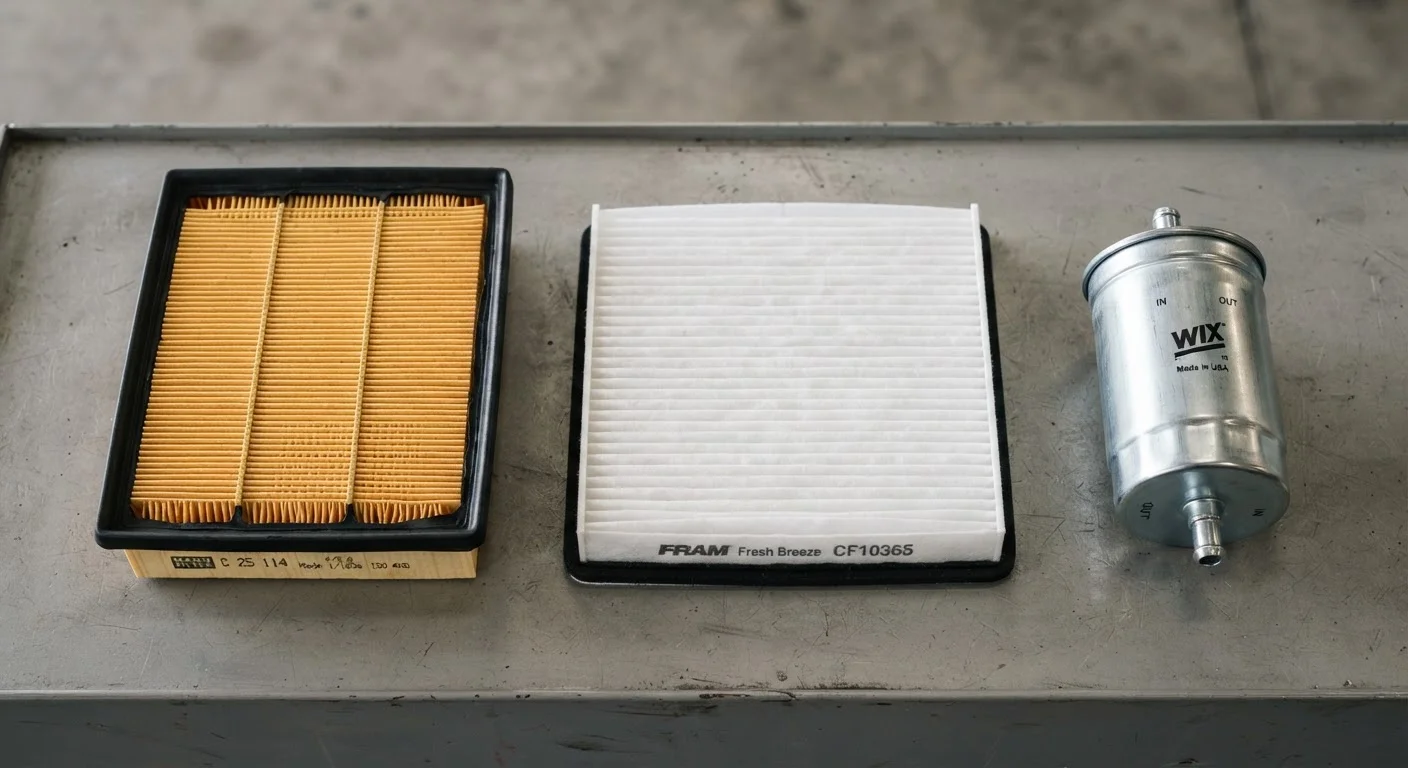
Photo: QuickAdvisor.net editorial
Three Filters, Three Separate Jobs
Most drivers know their car has filters somewhere under the hood, but the distinctions between them matter more than many realize. Your vehicle typically relies on at least three dedicated filters - one for the engine's air intake, one for the passenger cabin, and one for the fuel system. Each guards a different part of the vehicle against a different type of contamination. Confusing them - or ignoring any one of them - can lead to problems that range from reduced fuel economy to premature engine wear.
Understanding what each filter does, where it lives, and when it typically needs attention is a straightforward way to stay ahead of maintenance. It also helps you have more informed conversations with a mechanic when warning signs appear. Skipping scheduled maintenance on any of these components can compound into more costly repairs over time.
| Engine Air Filter Interval | Every 15,000-30,000 miles (typical) (Varies by manufacturer and driving conditions) |
| Cabin Air Filter Interval | Every 15,000-25,000 miles (typical) (Check owner's manual for vehicle-specific guidance) |
| Fuel Filter Interval (older vehicles) | Every 20,000-40,000 miles (Integrated designs in modern vehicles may not require routine replacement) |
| Engine Air Filter Location | Air intake housing under the hood |
| Cabin Air Filter Location | Behind glove box or under dashboard (Location varies by vehicle make and model) |
| Primary Fuel Filter Function | Removes sediment and rust from fuel |
Engine Air Filter: Protecting the Combustion Process
The engine air filter sits between the outside atmosphere and your engine's intake manifold. Its job is to trap airborne particles - dust, pollen, dirt, and debris - before they enter the combustion chamber. Engines require a precise ratio of air to fuel to run efficiently, and contaminated or restricted airflow disrupts that balance.
A clogged engine air filter forces the engine to work harder to draw in air, which can reduce fuel efficiency, cause sluggish acceleration, and in severe cases trigger the check engine light. Most manufacturers recommend inspecting this filter every 15,000 to 30,000 miles, though vehicles driven frequently on unpaved roads or in dusty environments may need more frequent attention. Replacement is a relatively straightforward task, but a qualified mechanic can assess whether the filter truly needs changing during a routine service visit.
Engine Air Filter
A replaceable filter element positioned in the engine's air intake path. It prevents dust, pollen, and airborne debris from entering the combustion chamber and interfering with the air-fuel mixture.
Cabin Air Filter
A filter that cleans air flowing through a vehicle's HVAC system before it reaches the passenger compartment. It captures pollen, dust, mold spores, and fine particulates.
Fuel Filter
A filter in the fuel delivery system that removes sediment, rust particles, and other contaminants from gasoline or diesel before it reaches the engine's fuel injectors or carburetor.
HVAC System
Stands for Heating, Ventilation, and Air Conditioning. In a vehicle, this system controls interior climate and air circulation, relying on the cabin air filter to maintain air quality.
Combustion Chamber
The sealed area inside each engine cylinder where the air-fuel mixture is ignited. Clean, unrestricted airflow into this chamber is essential for efficient engine operation.
Cabin Air Filter: What You Actually Breathe
The cabin air filter - sometimes called a pollen filter or HVAC filter - is separate from the engine's air supply entirely. It cleans the air flowing through your vehicle's heating, ventilation, and air conditioning (HVAC) system before it reaches the passenger compartment. It traps pollen, dust, mold spores, exhaust particles, and other pollutants.
When a cabin air filter becomes saturated, drivers often notice reduced airflow from vents even at high fan settings, persistent musty odors inside the car, or worsened allergy symptoms during drives. A typical replacement interval falls between 15,000 and 25,000 miles, though this varies by vehicle and environment. The cabin filter is often located behind the glove box or under the dashboard - consult your owner's manual for the exact location. See car fluids you shouldn't ignore between oil changes for a broader look at under-the-radar vehicle upkeep.
Fuel Filter: Keeping the Fuel System Clean
The fuel filter screens contaminants - rust particles, sediment, and other debris - out of the fuel before it reaches the fuel injectors or carburetor. Clean fuel delivery is essential for consistent engine performance and longevity of fuel system components.
On older vehicles, fuel filters are typically inline components that require periodic replacement, often every 20,000 to 40,000 miles depending on the manufacturer's guidance. Many modern vehicles use a fuel filter integrated directly into the fuel pump assembly inside the fuel tank, which is designed to last much longer and is not typically a routine service item. A failing or severely clogged fuel filter can cause hard starting, engine hesitation under acceleration, stalling, or a noticeable loss of power at higher speeds. Because fuel system work involves flammable materials and pressurized lines, this job should always be handled by a qualified automotive technician.
Up to 10%
Potential fuel economy loss from a clogged engine air filter
A heavily restricted engine air filter can reduce fuel efficiency noticeably, according to U.S. Department of Energy guidance on vehicle maintenance.
3 filters
Distinct filtration systems in most passenger vehicles
Engine air, cabin air, and fuel filters each serve a separate function and operate on independent service schedules.
Recognizing the Symptoms Before They Worsen
Each filter tends to send its own warning signals when it's past due. Engine air filter problems often show up first as a drop in fuel economy or reduced throttle response. Cabin filter degradation is frequently signaled by weak airflow from the vents or an unpleasant smell when the HVAC system runs. Fuel filter issues typically manifest as engine hesitation, rough idling, or difficulty starting - symptoms that can mimic other mechanical problems, so proper diagnosis matters.
Referring to your vehicle's owner's manual is the most reliable starting point for service intervals specific to your make and model. Maintenance schedules are not universal - driving conditions, vehicle age, and fuel quality all influence how quickly filters degrade. When in doubt, a routine inspection by a trusted mechanic will confirm whether replacement is genuinely necessary, avoiding both premature changes and costly delays.
The content on this site is for informational purposes only and is not a substitute for professional advice. Always consult a qualified professional for guidance specific to your situation.