
Reading a Nutrition Facts Label Without Getting Confused

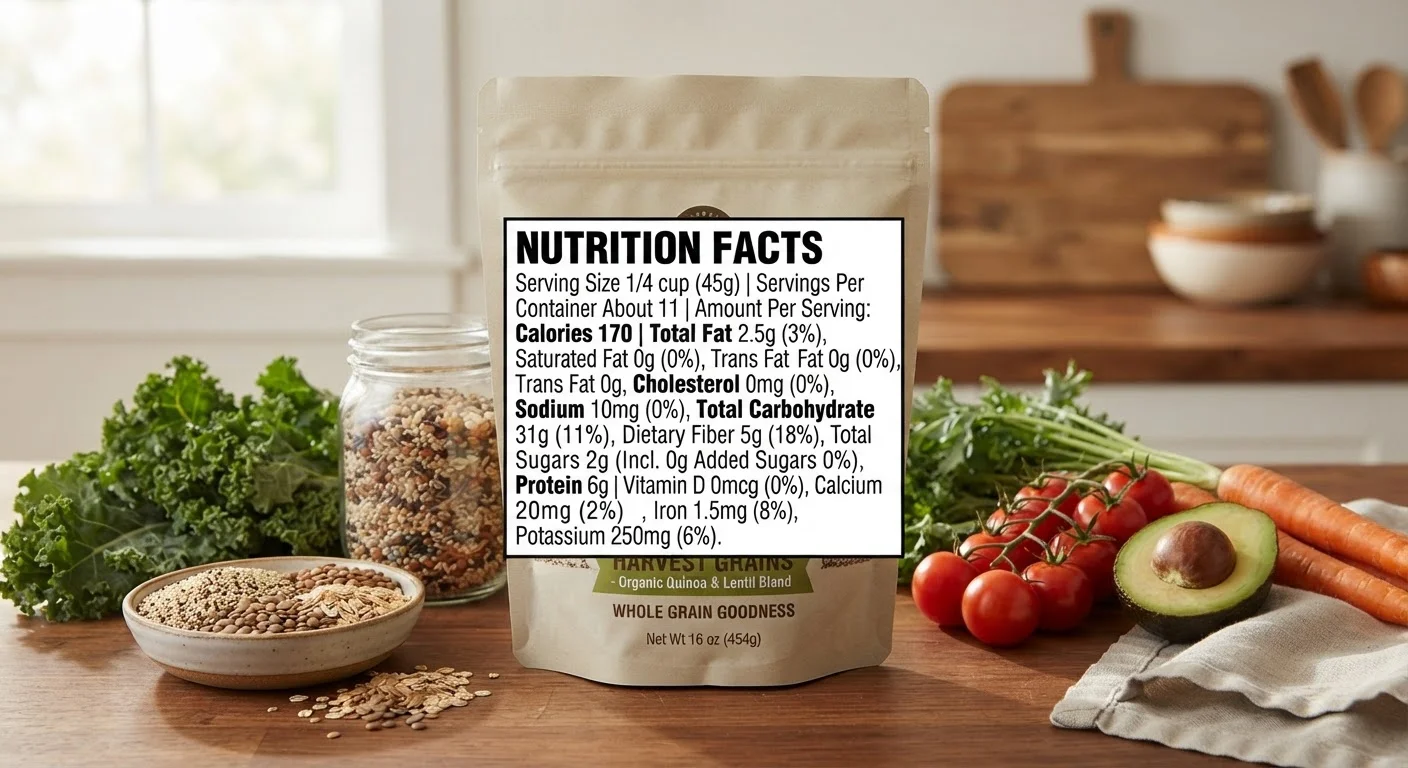
Photo: QuickAdvisor.net editorial
Key Takeaways
- Serving size is a reference amount set by regulators, not a recommended portion for you personally.
- % Daily Value tells you how much a nutrient contributes to a standard 2,000-calorie daily diet.
- 5% DV or less is low for a nutrient; 20% DV or more is considered high.
- Added sugars and total sugars are listed separately and mean very different things nutritionally.
- The ingredient list is ordered by weight, placing the most predominant ingredients first.
- Consistent label reading is a learnable skill that supports smarter, more confident food choices.
Why the Label Layout Matters
The Nutrition Facts panel used on U.S. packaged foods follows a format standardized by the FDA. The current design - updated in 2020 - made several meaningful changes: calories appear in larger type, added sugars are now broken out separately, and vitamin D and potassium replaced vitamins A and C as required nutrients (reflecting shifts in public health priorities). Understanding this layout means you can extract useful information in seconds, regardless of the product category.
The panel flows in a deliberate order: serving information at the top, calorie count, then a breakdown of macro- and micronutrients, and finally the % Daily Value column. Each section answers a different question, and reading them in sequence - rather than zeroing in on one number - gives a more complete picture.
Front-of-Package Claims Are Marketing
For context on how this information fits into core nutrition principles for everyday eating, exploring the broader nutritional literacy landscape can sharpen how you apply what labels tell you.
Step-by-Step: Reading the Panel
What you will need
Packaged food product
Provides a real Nutrition Facts panel to practice reading alongside these steps.
Calculator or smartphone
Helpful for multiplying nutrient values when you consume more than one serving.
Start with serving size - before anything else
Every number on the label is tied to the serving size listed at the very top. The U.S. Food and Drug Administration (FDA) sets these reference amounts based on how much people typically consume in one sitting, not what they should consume. If a bag of crackers lists a serving size as 15 crackers and you eat 30, every number on the label doubles.
Check both the serving size and the servings per container. A bottle that looks single-serve may contain two or more servings. See our guide to portion size vs. serving size for a deeper look at this important distinction.
Check calories in context of your whole day
Calories reflect total energy per serving. The label is designed around a 2,000-calorie reference diet, though individual needs vary based on age, sex, activity level, and health status. Rather than fixating on a single number, use calories as one data point alongside nutrient quality. A 200-calorie snack rich in fiber and protein tells a different story than 200 calories of refined starch.
Interpret % Daily Value correctly
The % Daily Value (% DV) column on the right tells you how much of a nutrient one serving provides relative to the recommended daily intake for a person eating approximately 2,000 calories per day. The FDA's rule of thumb: 5% DV or less is low for a nutrient, and 20% DV or more is high. This scale works in both directions - it helps you seek more of beneficial nutrients (fiber, vitamin D, calcium) and moderate nutrients to limit (sodium, saturated fat, added sugars).
Identify nutrients to limit
Current federal dietary guidance highlights four nutrients most Americans consume in excess: saturated fat, sodium, added sugars, and trans fat. Saturated fat is linked to cardiovascular risk factors when consumed in high amounts. Sodium intake is a key variable in blood pressure management for many people. Trans fat, while largely eliminated from the U.S. food supply through regulatory action, can still appear in trace amounts - look for 0g as the target.
Added sugars deserve special attention. The label distinguishes them from total sugars, which also include naturally occurring sugars found in fruit or dairy. For a fuller explanation of why this distinction matters, see our breakdown of natural vs. added sugars.
Look for nutrients to get enough of
Many Americans fall short on dietary fiber, vitamin D, calcium, iron, and potassium. The Nutrition Facts panel highlights these because adequate intake supports long-term health - from bone density to digestive function. When comparing two otherwise similar products, favoring the one with a higher % DV for these nutrients is a straightforward, evidence-backed strategy.
Scan the ingredient list as a final check
The ingredient list appears below the Nutrition Facts panel and is ordered by weight - the first ingredient is the most prevalent by mass. A product listing refined flour or added sugar as its first or second ingredient is predominantly made up of those components, regardless of what the front-of-package marketing claims. Short ingredient lists aren't automatically better, but unfamiliar additives warrant a quick search if you have dietary restrictions or sensitivities.
For a broader framework on evaluating what labels really communicate, see what a nutrition label is actually telling you.
This article is for general informational and educational purposes only and is not a substitute for professional medical or dietary advice. Always consult a qualified healthcare provider or registered dietitian for guidance tailored to your individual health needs.
Common Mistakes and How to Avoid Them
Even practiced label readers make a few recurring errors. The most common: ignoring the serving size and treating the whole container as one serving. A 20 oz. soda may list nutrition data per 8 oz., meaning the full bottle contains 2.5 servings worth of sugar and calories.
Another frequent mistake is treating a low-calorie label as a nutritional endorsement. Some products with minimal calories also deliver minimal fiber, protein, or micronutrients - they're not inherently better choices. Conversely, calorie-dense foods like nuts or olive oil carry significant nutritional value that a calorie-first reading would obscure.
Labels Are a Tool, Not a Verdict
Finally, many shoppers overlook the ingredient list entirely, focusing only on the numbers. The two sections are complementary: the Nutrition Facts panel quantifies, while the ingredient list explains. Together, they give you the most complete picture a label can provide.
The content on this site is for informational purposes only and is not a substitute for professional advice. Always consult a qualified professional for guidance specific to your situation.