
Thermal Expansion: Why Sidewalks Crack, Bridges Have Gaps, and Jars Get Stuck

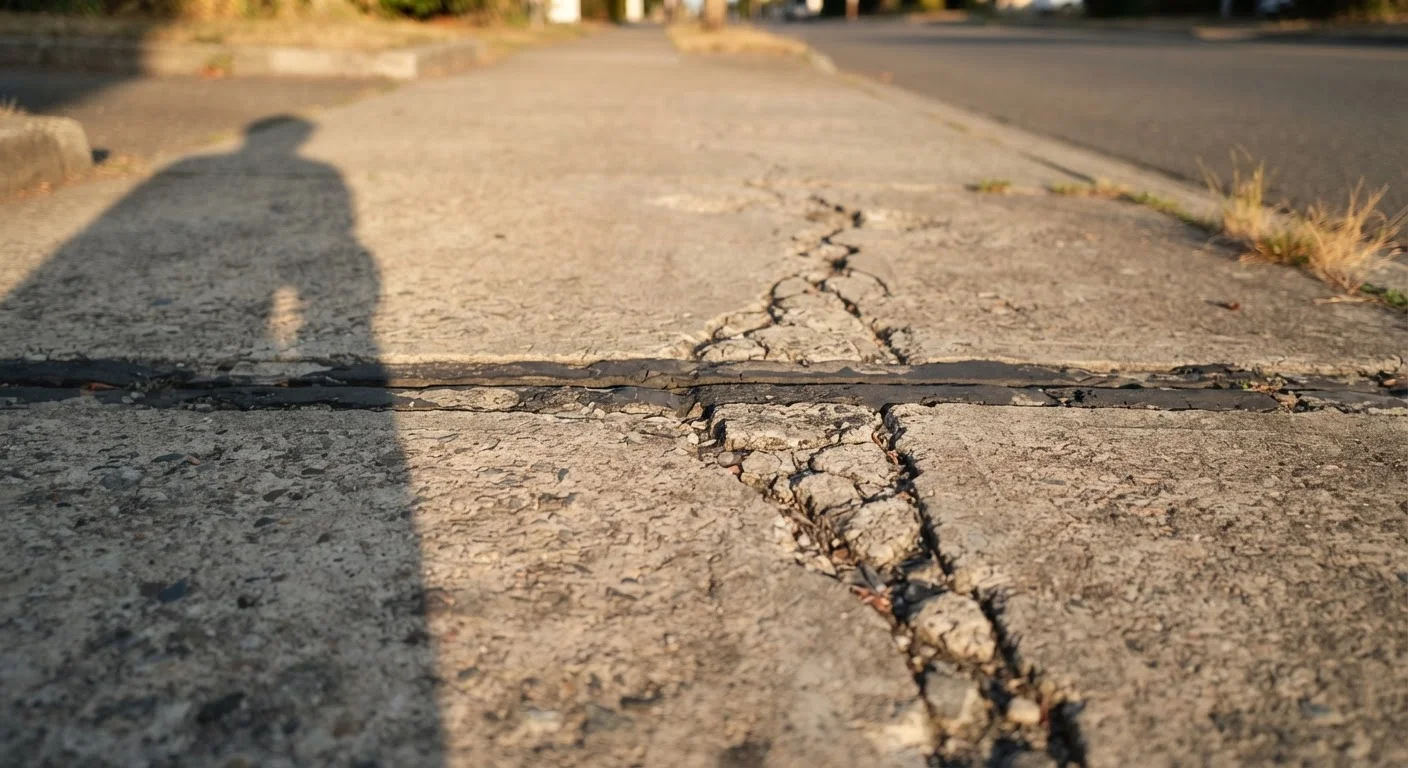
Photo: QuickAdvisor.net editorial
Key Takeaways
- Nearly all materials expand when heated and contract when cooled - this is thermal expansion.
- Engineers design gaps into bridges and sidewalks specifically to accommodate thermal expansion safely.
- Liquids expand faster than solids, which is why running warm water over a stuck jar lid actually works.
- Thermal expansion is measurable, predictable, and harnessed in countless everyday technologies.
- The coefficient of thermal expansion differs by material, which is why mixed-material structures need careful design.
The Physics Behind the Familiar
You've probably noticed it without ever naming it: the way a metal spoon heats up faster than a ceramic mug, the gaps between railroad rails, or the satisfying pop of a jar lid finally giving way under warm water. All of these moments share a single underlying cause - thermal expansion, the tendency of matter to increase in volume as its temperature rises.
At the atomic level, the explanation is straightforward. Heat is a form of energy, and adding it to a material causes its atoms or molecules to vibrate more intensely. As those vibrations grow, atoms push against their neighbors and take up more space. The effect is tiny at the scale of a single atom, but across billions of atoms in a solid object, it adds up to a measurable - and sometimes consequential - change in size.
The degree to which a specific material expands per degree of temperature change is called its coefficient of thermal expansion (CTE). Steel, concrete, aluminum, glass, and water all have different CTEs, and those differences explain a surprising number of phenomena in everyday life. The examples below make the physics concrete - sometimes literally.
What Is the Coefficient of Thermal Expansion?
Seven Ways Thermal Expansion Shows Up in Real Life
Sidewalk cracks aren't random - they're thermal expansion at work
Concrete sidewalks are poured in sections separated by deliberate grooves called control joints or expansion joints. These aren't decorative - they're engineered stress-relief channels. On a hot summer day, a concrete slab can rise several degrees above air temperature, causing it to expand measurably. Without somewhere to go, that expansion generates compressive stress that fractures the slab along its weakest point.
Control joints give the concrete a predetermined place to move and crack, keeping the walking surface relatively intact. When joints are missing, spaced too far apart, or filled with incompressible debris over time, uncontrolled cracking follows. The familiar "fault lines" running across old sidewalks are thermal expansion's signature on urban infrastructure.
Concrete can expand enough on a hot day to fracture if it has nowhere to go.
Bridge expansion joints are a deliberate engineering gap
Next time you drive over a long bridge, listen for the rhythmic thump as your tires cross metal plates with jagged, interlocking teeth. Those are expansion joints, and they exist because steel and concrete both expand significantly over the temperature swings a bridge endures across seasons - from below freezing in winter to well above 100°F in direct summer sun.
A typical steel bridge can change its overall length by several inches between its coldest and hottest extremes. Expansion joints allow that movement to occur without buckling the roadway deck or cracking the supporting concrete. Early bridges that lacked proper joint design sometimes suffered catastrophic warping in heat waves - a problem that modern bridge engineering has largely solved through precise thermal calculations.
A steel bridge can change its overall length by several inches between winter and summer.
Running warm water over a stuck jar lid is applied thermal physics
When a metal jar lid feels impossibly tight, running warm water over it for a few seconds often does the trick. Here's why: the metal lid (typically steel or aluminum) has a higher coefficient of thermal expansion than the glass jar. When both are heated slightly, the metal lid expands proportionally more than the glass ring it's sealed against, loosening the grip just enough to twist open.
This also illustrates an important principle - different materials expand at different rates. That differential expansion is both a nuisance (it stresses joints between dissimilar materials) and a tool (it's what makes bimetallic thermostats work, as two metals bonded together bend predictably when heated because one expands faster than the other).
Metal expands more than glass per degree of heat, which is exactly why the warm-water trick works.
Power lines sag in summer - that sag is intentional
Electrical transmission lines are strung with deliberate slack built into the line. This isn't sloppy installation - it's thermal engineering. Metal cables expand in summer heat and contract in winter cold, and a line strung perfectly taut in summer would snap under the contraction of a cold winter night.
Utility engineers calculate the expected temperature range for a given region and set line tension accordingly, ensuring the wire has room to contract without breaking while never sagging low enough to contact trees, vehicles, or the ground below. The visible sag on hot days is the system working exactly as designed.
Power line sag on hot days is intentional design, not poor installation.
Thermometers work because liquids expand more than solids
Traditional liquid-in-glass thermometers rely on the fact that the liquid inside (historically mercury, now often colored alcohol) expands at a predictably higher rate than the glass tube surrounding it. As temperature rises, the liquid expands and is forced up the narrow tube; as temperature drops, it contracts and retreats. The glass barely changes size by comparison.
The narrow bore of the tube amplifies the effect - a tiny volume change in the liquid translates to a clearly visible column height change, making small temperature differences readable. This elegant design has been in use for centuries and remains one of the most intuitive demonstrations of differential thermal expansion between materials.
A thermometer's liquid rises because it expands far faster than the surrounding glass tube.
Water is the famous exception to the rule
Almost all substances expand as they heat and contract as they cool - but water behaves unusually between 32°F (0°C) and 39.2°F (4°C). In that narrow range, water actually contracts as it warms, reaching its maximum density at about 39.2°F. Below that point, it begins expanding again until it freezes.
This anomaly has profound consequences for life on Earth. Because ice is less dense than liquid water, it floats - insulating the water beneath and allowing aquatic life to survive winter. If water behaved like most substances, ice would sink, lakes would freeze solid from the bottom up, and aquatic ecosystems would look radically different. Thermal expansion's exception, in this case, is as important as the rule.
Water's unusual expansion behavior between 32°F and 39°F is why ice floats and lakes don't freeze solid.
Railroad tracks need room to breathe - or they buckle
Steel railroad rails are long, continuous pieces of metal that can reach extreme temperatures on summer days - the dark steel absorbs solar radiation efficiently. Without accommodating thermal expansion, those rails would buckle laterally, creating dangerous waves in the track known as sun kinks.
Modern rail systems use one of two approaches: traditional tracks include small gaps between rail sections to allow expansion, while continuous welded rail (CWR) - used on most high-speed and heavy freight lines - is pre-stressed during installation at a calculated "neutral temperature," so that it's under compression in summer and tension in winter but never exceeds safe stress limits in either direction. Track inspectors monitor CWR carefully during heat waves, when sun kinks pose the greatest risk.
Buckled railroad tracks - called sun kinks - are a real heat-wave hazard that engineers actively engineer against.
Try Thermal Expansion at Home
Why This Physics Principle Matters Beyond the Classroom
Thermal expansion isn't just an academic curiosity - it's a force that civil engineers, product designers, and materials scientists account for every day. When it's ignored or underestimated, the consequences range from cracked sidewalks to catastrophic structural failures. When it's understood and respected, it becomes a design tool: the bimetallic strip in a thermostat, the mercury column in a thermometer, the tolerance gaps in a precision machine.
For everyday readers, understanding thermal expansion turns puzzling moments - the creaking of a house on a cold night, a tight ring on a warm day, a glass cracking when filled with boiling water - into predictable physics. The universe, it turns out, runs on consistent rules, and thermal expansion is one of the most tactile ways those rules make themselves known.
The content on this site is for informational purposes only and is not a substitute for professional advice. Always consult a qualified professional for guidance specific to your situation.