
Aerobic vs. Anaerobic Energy: How Your Muscles Choose Their Fuel

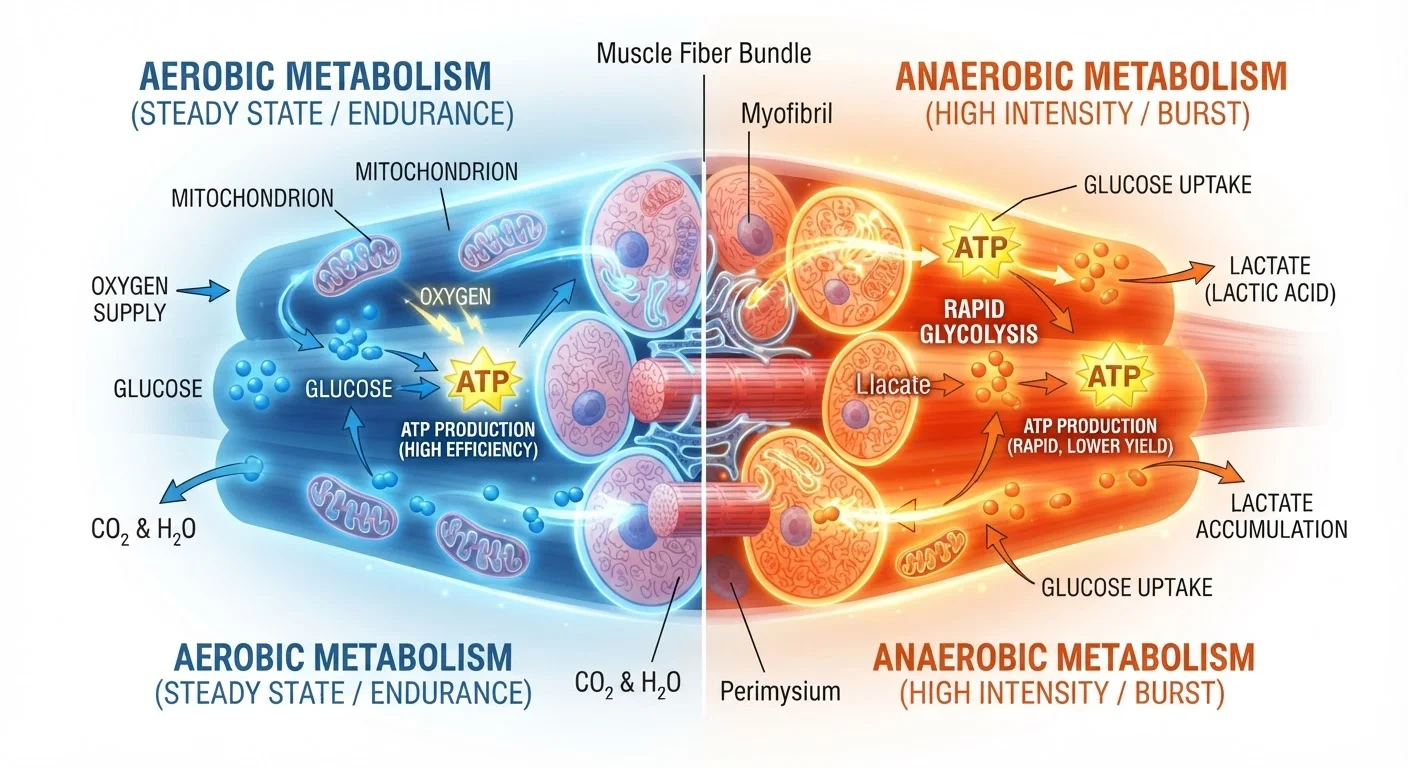
Photo: QuickAdvisor.net editorial
Key Takeaways
- Aerobic metabolism uses oxygen to break down carbohydrates and fat into sustained energy.
- Anaerobic metabolism produces energy rapidly without oxygen, but generates lactic acid as a byproduct.
- Your muscles blend both systems constantly - intensity level determines which one dominates.
- The burning sensation during hard effort is linked to acid accumulation in working muscles.
- Training can improve both systems, expanding your capacity at all effort levels.
Two Systems, One Body
Every time your muscles contract - whether you're climbing stairs or sprinting for a bus - they need a molecule called ATP (adenosine triphosphate). ATP is the universal energy currency of cells. The catch: muscles store only a tiny amount at any moment, so they must constantly manufacture more. How they do that depends almost entirely on how hard they're working.
At lower intensities, the body runs its aerobic system: a process that uses oxygen to extract energy from carbohydrates and fats. At higher intensities - when demand outpaces oxygen delivery - the anaerobic system kicks in, generating ATP rapidly without oxygen. Most activities engage both systems simultaneously; what changes is the proportion of each.
Understanding this distinction explains some of the most familiar physical sensations in exercise: the steady rhythm of a long run, the burning legs during a hill sprint, and the gasping recovery afterward.
How Aerobic Metabolism Works
The aerobic pathway takes place primarily in the mitochondria - tiny structures inside muscle cells sometimes called the cell's powerhouses. When oxygen is available, the body can fully break down glucose (from carbohydrates) and fatty acids (from fat) through a series of chemical reactions, ultimately producing ATP, carbon dioxide, and water.
This process is remarkably efficient. A single glucose molecule yields roughly 30-32 ATP molecules through aerobic metabolism. Fat yields even more per gram, making it a dense, long-lasting fuel. The trade-off is speed: aerobic reactions are slower, which is why this system dominates during low-to-moderate activity - jogging, cycling at a comfortable pace, or a long hike.
The aerobic system is what Zone 2 training targets specifically. Keeping effort in that moderate aerobic range trains the body to use oxygen more efficiently and burn fat more readily, adaptations that benefit both endurance athletes and everyday exercisers.
| Criterion | Aerobic Energy | Anaerobic Energy |
|---|---|---|
| Oxygen required | Yes | No |
| ATP yield per glucose | ~30-32 ATP | ~2 ATP |
| Speed of energy production | Slower | Faster |
| Fuel sources | Carbohydrates and fat | Primarily carbohydrates |
| Duration of dominance | Minutes to hours | Seconds to ~2 minutes |
| Key byproducts | CO₂ and water | Lactate and hydrogen ions |
| Typical activities | Jogging, cycling, swimming | Sprinting, heavy lifting, HIIT |
How Anaerobic Metabolism Works
When intensity spikes - think a hard sprint, a heavy squat, or the final push in a race - oxygen delivery can't keep up with energy demand. The body shifts to anaerobic glycolysis: breaking down glucose without oxygen. This produces ATP much faster but yields only about 2 ATP per glucose molecule, making it far less efficient.
The process also generates lactate and hydrogen ions as byproducts. It's the accumulation of these ions - not lactate itself, as was once commonly believed - that contributes to the burning sensation in muscles during intense effort. This is a normal physiological response, not damage. Once intensity drops, the body clears these byproducts and returns to aerobic dominance.
There's also a third, ultra-short pathway - the phosphocreatine system - which powers efforts lasting just a few seconds, like a maximum-effort jump or a single heavy lift. It's technically anaerobic and depletes almost immediately, which is why true maximum efforts are so brief.
~30-32 ATP
ATP yield from aerobic glucose breakdown
Aerobic metabolism extracts far more usable energy per glucose molecule than its anaerobic counterpart, explaining why it supports sustained activity.
~2 ATP
ATP yield from anaerobic glycolysis
The anaerobic pathway sacrifices efficiency for speed, producing energy quickly at the cost of fuel economy and generating acidic byproducts.
~10 seconds
Duration of phosphocreatine system dominance
The phosphocreatine pathway, used in maximum-effort bursts, depletes in roughly 8-10 seconds before glycolysis takes over, according to exercise physiology research.
For a deeper look at how these energy demands shape different forms of exercise, see our comparison of strength training vs. cardio.
Why the Distinction Matters for How You Train
Neither system is superior - they serve different purposes and respond to different kinds of training. Building your aerobic capacity means spending time at moderate effort levels where oxygen supply meets demand comfortably. Building anaerobic capacity means periodically pushing past that threshold, as in high-intensity interval training.
Practically speaking, most recreational exercisers benefit from developing both. A strong aerobic base supports faster recovery between hard efforts and improves overall cardiovascular health. Anaerobic training adds speed, power, and the metabolic stress that drives certain adaptations - like improved lactate clearance - that aerobic-only training doesn't fully stimulate.
Even something as simple as the difference between walking and running reflects these systems at work. A brisk walk keeps most people comfortably aerobic; running hard tips them into anaerobic territory. The body is constantly adjusting the blend based on the signals it receives. Training simply shifts where those thresholds sit.
If you're curious how structured formats exploit both systems deliberately, interval training is built around exactly this interplay - alternating effort and recovery to stress both pathways in a single session.
The content on this site is for informational purposes only and is not a substitute for professional advice. Always consult a qualified professional for guidance specific to your situation.