
How Scientists Search for Signs of Life Beyond Earth

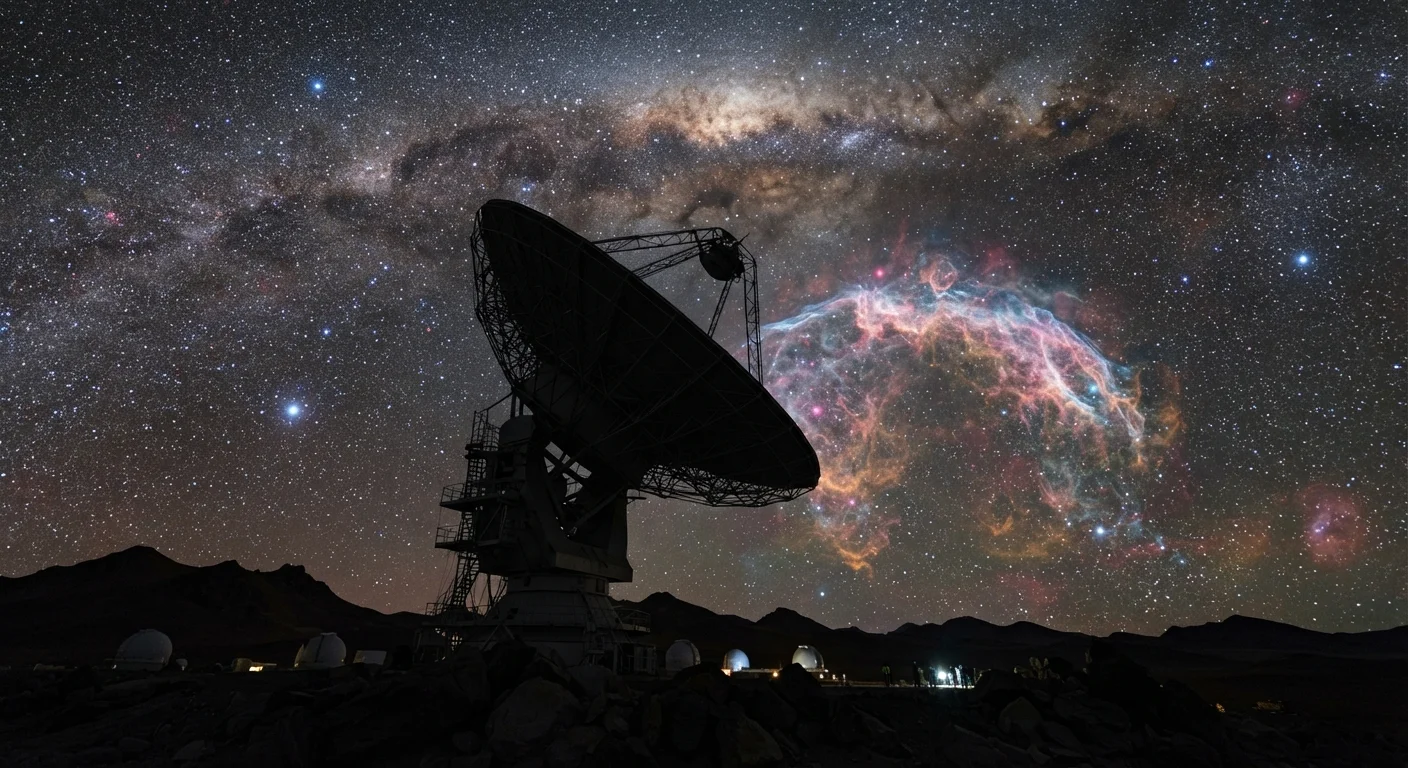
Photo: QuickAdvisor.net editorial
Key Takeaways
- Scientists search for life using multiple methods: radio signals, atmospheric biosignatures, and direct planetary exploration.
- Biosignatures - chemical or physical signs of living processes - are a primary target for current and future telescopes.
- Ocean moons like Europa and Enceladus are considered among the most promising places to search for microbial life.
- SETI focuses on detecting intentional signals from technologically advanced civilizations.
- No confirmed evidence of extraterrestrial life has been found, but the search is more systematic than ever.
Why the Search for Extraterrestrial Life Is a Scientific Discipline
The question of whether life exists elsewhere in the universe is one of the oldest humans have asked - but it only became a rigorous scientific field in the mid-20th century. Today, the search for extraterrestrial life (sometimes called astrobiology) draws on astronomy, chemistry, biology, and planetary science. It is not speculation; it is hypothesis-driven research conducted by researchers at NASA, major universities, and international space agencies.
Understanding how this search actually works requires breaking it into distinct, methodical approaches. Each targets a different kind of evidence and operates at a different scale - from the chemistry of a distant planet's atmosphere to the ocean hidden beneath an ice shell in our own solar system. As part of the broader story of how humanity has come to understand its place in the cosmos - explored in milestones that shaped human understanding of the cosmos - the search for life represents one of science's most ambitious ongoing endeavors.
The Four Main Methods Scientists Use
Researchers approach the search for life from several directions simultaneously. Here is how each method works:
Scan for Radio and Laser Signals (SETI)
The Search for Extraterrestrial Intelligence (SETI) listens for radio waves or laser pulses that would be unlikely to occur naturally - patterns suggesting deliberate transmission by a technologically advanced civilization. Radio telescopes sweep specific frequency ranges, particularly the "water hole" band (roughly 1,400-1,700 MHz), which researchers consider a logical communication channel because hydrogen and hydroxyl - components of water - naturally emit at those frequencies. No confirmed artificial signal has been detected, though the 1977 "Wow! signal" remains an unexplained data point.
Analyze Atmospheric Biosignatures on Exoplanets
When a planet passes in front of its host star, some starlight filters through the planet's atmosphere. Different molecules absorb different wavelengths of light, leaving a chemical fingerprint scientists can read using a technique called transmission spectroscopy. Researchers look for gases that living organisms are known to produce - oxygen, methane, nitrous oxide, and others - especially in combinations that would be chemically unstable without a biological source continuously replenishing them. Space telescopes, including the James Webb Space Telescope, are equipped to perform this analysis on planets orbiting nearby stars.
Explore Ocean Worlds in Our Own Solar System
Several moons in the outer solar system harbor liquid water oceans beneath icy crusts. Jupiter's moon Europa and Saturn's moon Enceladus are considered high-priority targets. Enceladus actively vents water vapor and organic molecules into space through geysers - material that NASA's Cassini spacecraft flew through and sampled. Future missions, such as NASA's Europa Clipper, are designed to study these environments in detail, searching for chemical conditions hospitable to microbial life. Because life on Earth thrives in deep-sea hydrothermal vents with no sunlight, similar environments in ocean moons are considered scientifically plausible habitats.
Search for Biosignatures Directly on Mars
Mars is the most accessible potentially habitable world and has been explored by a series of landers and rovers. Scientists examine Martian rock and soil for organic molecules, isotopic ratios that biology preferentially produces, and structural patterns - such as microbial mats or fossilized microfossils - that would indicate past life. The Perseverance rover is currently caching rock samples that a future joint NASA-ESA mission is planned to return to Earth, where far more sensitive laboratory analysis can be conducted than is possible with onboard instruments.
Life as We Don't Know It
What Scientists Have Found So Far - and What Remains Unknown
To date, no confirmed evidence of extraterrestrial life has been discovered. However, several findings have sharpened the search considerably. Mars once had liquid water on its surface, and its subsurface may still harbor briny pockets. The Curiosity and Perseverance rovers have identified organic molecules - carbon-based compounds that are the building blocks of life as we know it - in Martian rock. This does not indicate life was present, but it confirms the chemistry is not hostile to it.
Meanwhile, the James Webb Space Telescope has already begun analyzing the atmospheres of exoplanets, with future observations potentially capable of detecting oxygen, methane, or carbon dioxide in combinations that biology could produce. Researchers are also refining what counts as a biosignature, recognizing that some gases life produces can also be created through geological processes - meaning any detection would require multiple lines of evidence before conclusions could be drawn.
Biosignatures Alone Don't Confirm Life
The honest scientific position is one of informed uncertainty: conditions for life appear to exist in many places, but detecting life itself remains an unsolved challenge. That tension between possibility and evidence is precisely what makes astrobiology one of the most active and rigorous frontiers in science today.
The content on this site is for informational purposes only and is not a substitute for professional advice. Always consult a qualified professional for guidance specific to your situation.