
Why High Prices Don't Always Signal High Quality

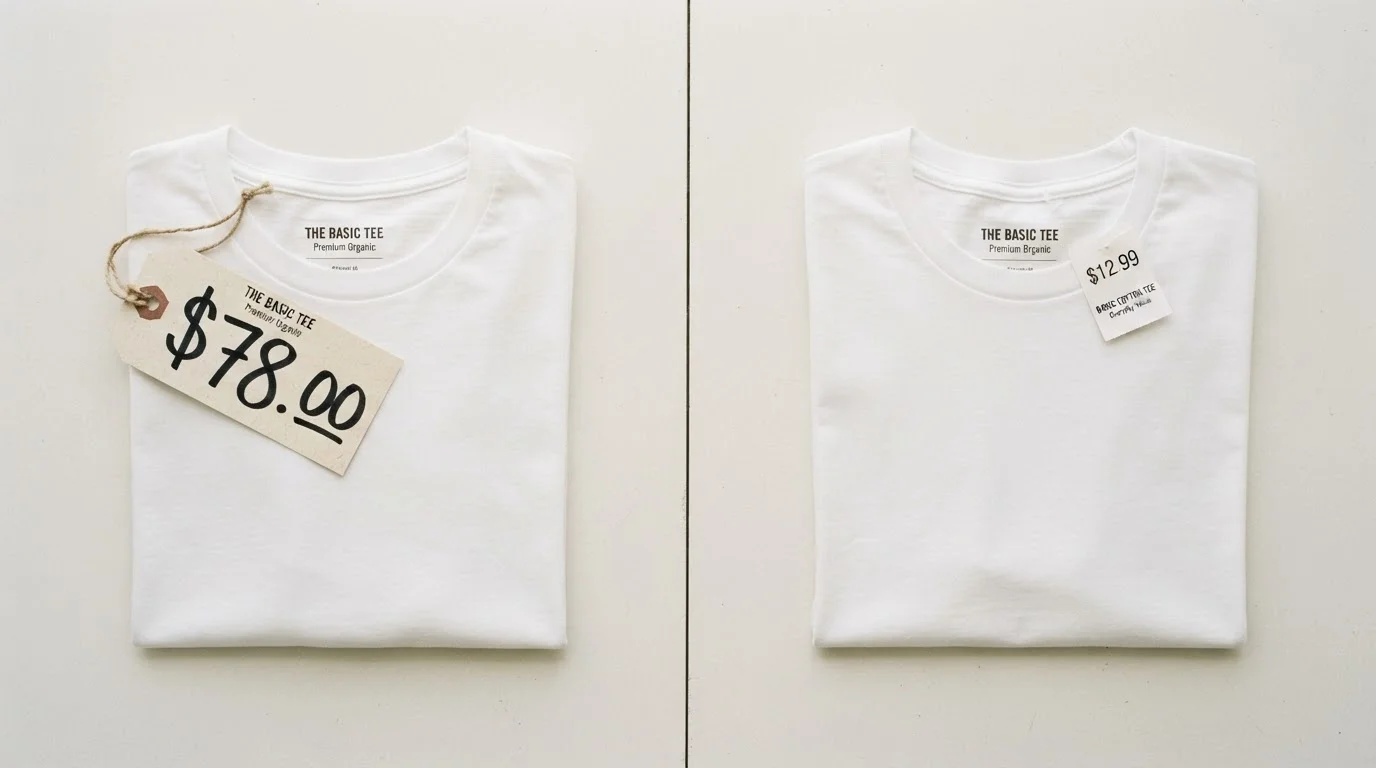
Photo: QuickAdvisor.net editorial
Key Takeaways
- Price often reflects marketing spend, brand positioning, and distribution costs - not product quality.
- Consumers consistently overestimate the quality gap between premium and mid-range products.
- Evaluating materials, specifications, and warranties gives you better quality signals than price alone.
- Luxury pricing is partly a psychological mechanism, not purely a function of what something costs to make.
- Independent testing and standards certifications are more reliable quality indicators than retail price.
The Price-Quality Assumption Is Mostly a Habit
Most shoppers carry a default assumption: the more something costs, the better it must be. It feels logical. It's also frequently wrong.
The intuition has a grain of truth - genuinely superior materials and skilled labor cost more to source. But retail price bundles together many things that have nothing to do with the product in your hands: advertising budgets, retail markups, celebrity endorsements, packaging design, and the simple premium a brand can charge because of its reputation. When you pay a high price, you're rarely paying for quality alone.
Research in consumer psychology has consistently found that price functions as a quality cue - a mental shortcut - rather than a reliable measure of actual performance. When we're uncertain about a category, we lean on price to guide us. Marketers know this, and pricing strategies are designed around it.
Understanding what price actually signals is the first step toward spending more deliberately. Our article on what a 'good deal' actually means explores this further.
Common Myths - and What the Evidence Shows
Below are the most persistent misconceptions about price and quality, paired with what a clearer look at the evidence reveals.
Myth
If it costs more, it's made better. Premium price reflects premium craftsmanship.
Fact
Price reflects the total cost of bringing a product to market - including factors entirely unrelated to build quality.
Manufacturing cost is just one component of retail price. Brand equity, distribution channels, advertising, and store margins all contribute to what you pay at checkout. A product sold through a high-end retailer with heavy national advertising can carry a significantly higher price than a comparable item from a less-marketed brand - even if both come off the same production line. Commodity manufacturing, where the same factory produces items sold under multiple brand names at very different price points, is common across apparel, electronics, cookware, and personal care categories.
Myth
Expensive products last longer and need replacing less often.
Fact
Longevity depends on design choices and materials - attributes that exist across price ranges and must be evaluated directly.
Durability is a specific engineering outcome, not a general property of high-priced goods. Some premium products are built for longevity; others are built for aesthetic appeal or perceived luxury, not extended use. Conversely, mid-range and even budget products in certain categories - hand tools, cast iron cookware, basic workwear - have well-documented track records for durability. The relevant questions are: What are the key components made from? How are stress points reinforced? What does the warranty actually cover? Those answers predict longevity better than price does.
Myth
Blind taste tests or performance tests will always confirm the expensive option is superior.
Fact
Controlled blind evaluations frequently find little or no detectable difference between premium and lower-cost alternatives.
This has been demonstrated repeatedly in food and beverage research - participants in blind wine tastings, for instance, routinely struggle to reliably rank samples by price. Similar patterns show up in product testing across other categories: when brand identity and price are removed from the evaluation, performance gaps between price tiers narrow substantially or disappear. Preference for the expensive option tends to re-emerge when participants know the price, illustrating that perceived quality is partially constructed by price information itself.
Myth
Luxury and premium brands spend more on ingredients or components, which is why they cost more.
Fact
Much of a luxury premium pays for intangibles - brand heritage, packaging, exclusivity signaling - not raw input costs.
For many luxury goods, the actual cost of raw materials or components is a small fraction of the retail price. The remainder covers the costs of maintaining brand image: flagship store experiences, premium packaging, limited distribution, and the cultural cachet of exclusivity. This isn't inherently deceptive - some buyers are purchasing the experience and status signal alongside the object, and they're aware of that. The issue arises when shoppers assume the price gap reflects ingredient or component superiority rather than brand infrastructure costs.
Myth
If a product is inexpensive, there must be a hidden compromise somewhere.
Fact
Lower prices can result from operational efficiency, simpler branding, or direct-to-consumer distribution - not necessarily inferior materials.
Significant cost reductions are achievable without sacrificing product integrity. Direct-to-consumer brands eliminate retail markups. Manufacturers with efficient supply chains lower per-unit costs without changing specifications. House brands and store labels often source from the same suppliers as name brands. The patterns that lead buyers to overpay frequently include assuming that a lower price signals a hidden defect - when the real cause is simply a leaner business model.
~50%
Blind tests where premium beats budget
Consumer research across food, beverage, and product categories consistently finds that participants perform near chance levels when identifying the higher-priced option by quality alone in controlled blind evaluations.
3-5x
Typical retail markup over manufacturing cost
Standard retail economics apply markups of 3 to 5 times the wholesale cost on many consumer goods categories, meaning price at shelf is a poor proxy for production quality or input cost.
What Actually Predicts Quality
If price is an unreliable signal, what should you use instead? Several factors hold up better under scrutiny:
- Independent test results - Organizations that evaluate products without accepting manufacturer funding give you apples-to-apples comparisons based on performance, not marketing.
- Certifications and standards compliance - Third-party certifications (safety, energy efficiency, material standards) are verified by outside bodies. They carry more weight than self-awarded brand claims.
- Warranty terms and manufacturer support - A company confident in its product backs it with meaningful warranty coverage. Short or heavily qualified warranties are worth noting.
- Materials and specifications - Actual construction details - thread count, gauge, tensile strength, component sourcing - tell you more than price tier. You can often find these in product documentation.
You don't need specialized equipment to make these assessments. The article evaluating build quality without specialized tools walks through practical physical checks that reveal a great deal about durability.
Price remains one input among many. Treat it that way, and you'll make fewer decisions driven by the fear of buying something that turns out to be worse. For a structured way to weigh all these factors together, see what 'value for money' actually means.
The content on this site is for informational purposes only and is not a substitute for professional advice. Always consult a qualified professional for guidance specific to your situation.