
Turning Screen Time Into Step Time: Rethinking Passive Hours

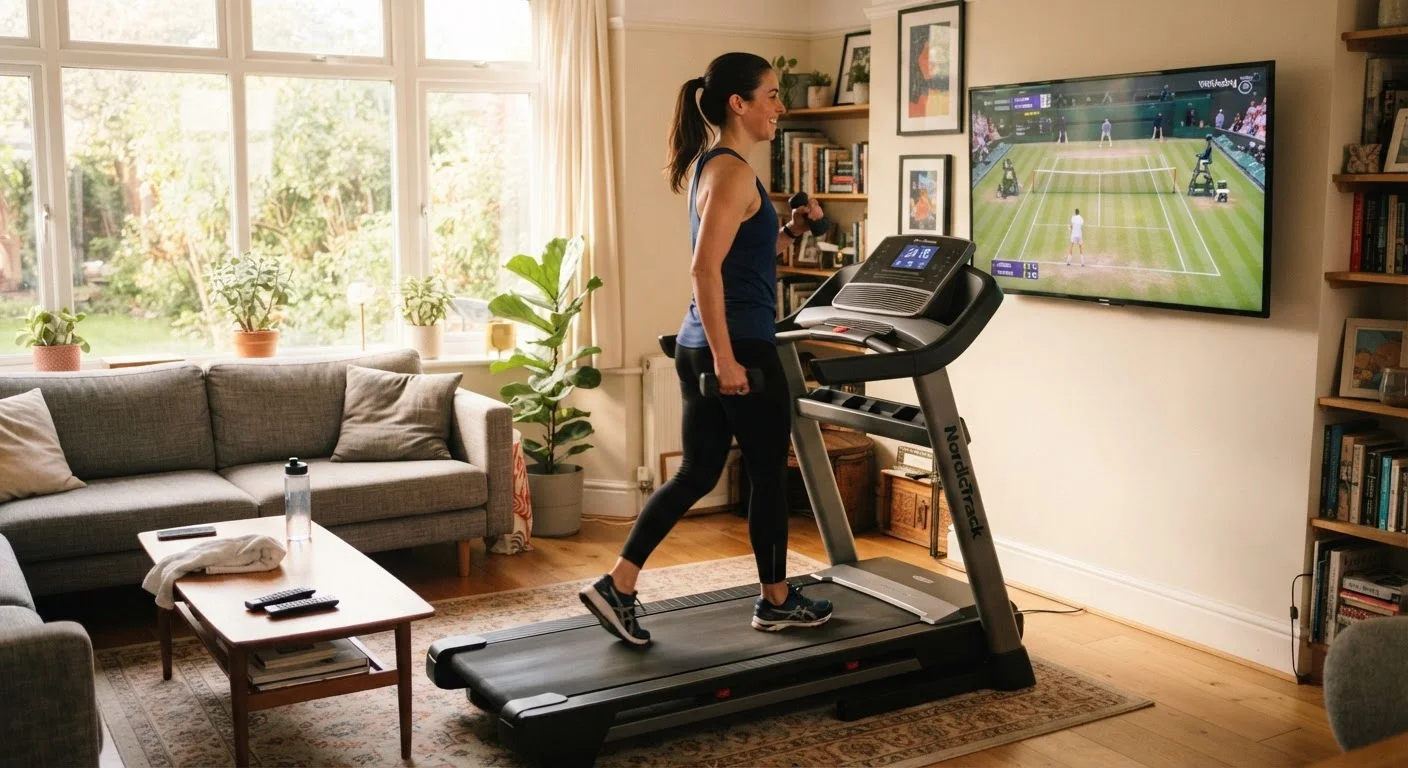
Photo: QuickAdvisor.net editorial
Key Takeaways
- Prolonged sitting carries health risks independent of whether you exercise at other times of day.
- Short movement breaks every 30-60 minutes can meaningfully offset the effects of sedentary screen time.
- Pairing movement with existing screen habits removes the need for extra motivation or schedule changes.
- Simple environmental cues - like a timer or standing desk - make active screen habits easier to sustain.
- Even light-intensity movement, such as marching in place, contributes to daily step counts and energy expenditure.
Why Passive Screen Time Deserves Specific Attention
The average American spends several hours daily on recreational screens - and most of that time involves near-complete physical stillness. Exercise science has increasingly distinguished between total sedentary time and structured exercise, finding that long unbroken sitting periods are associated with metabolic changes that a single gym session may not fully counteract. In other words, how you spend your non-workout hours matters alongside how you spend your workout hours.
The goal of this guide is not to eliminate screen enjoyment - it's to interrupt the stillness woven around it. Small, consistent movement breaks are the mechanism. They're low-barrier, require no equipment, and don't demand motivation levels that most people can't sustain long-term. For a broader look at where movement already hides in daily routines, explore hidden movement opportunities in your day.
Sitting Time and Health Are Separate Variables
What You'll Need to Get Started
This approach is intentionally low-friction. Most strategies require nothing beyond awareness and a timer. Optional tools can increase the effect, but none are required to begin.
What you will need
Interval timer app
Set repeating alerts every 30-60 minutes to prompt movement breaks during extended screen sessions.
Resistance bands
Allow low-effort strength movements - rows, bicep curls, leg presses - that can be performed while seated or standing in front of a screen.
Under-desk pedal exerciser
Provides continuous low-intensity leg movement during seated computer or TV time without requiring a dedicated workout space.
Step counter or fitness tracker
Makes accumulated movement visible throughout the day, reinforcing the habit and revealing patterns in sedentary time.
Stack Habits for Effortless Consistency
How to Turn Screen Sessions Into Active Time
Follow the steps below to build a sustainable screen-time movement practice. Each step builds on the last, but you can start at any point that matches your current habits.
Audit your daily screen blocks
Before changing anything, spend one day noting when and how long you use screens passively - TV, streaming, social scrolling, gaming. Look for blocks longer than 30 minutes where you barely move. These are your target windows. Even a rough mental tally is enough to identify two or three daily opportunities.
Set a movement interval timer
Choose a repeating interval - 30 minutes is well-supported by sedentary behavior research as a practical break threshold. Set a recurring alarm or use a dedicated interval timer app. When it sounds, you move for at least two minutes before resuming. The timer externalizes the decision so you don't have to rely on willpower mid-episode.
Choose your movement menu
Pick three to five simple movements you can perform in your living space without preparation. Good options include marching in place, bodyweight squats, calf raises, shoulder rolls, or a short walk to another room and back. Having a pre-decided list removes the mental friction of figuring out what to do when the timer goes off.
Pair longer activities with active setups
For screen sessions exceeding an hour - a movie, a gaming session, a long video call - consider environmental modifications. A standing mat near the TV, a resistance band looped over a chair, or an under-desk pedal device can turn passive time into light-activity time without requiring you to pause what you're watching. The content becomes a reward that runs while you move rather than instead of movement.
Use content structure as a natural cue
Streaming services, games, and social media all have built-in pause points - ad breaks, episode credits, loading screens, level transitions. Treat these as automatic movement prompts rather than scrolling opportunities. Stand up, do ten squats or a short walk, then sit back down. You're not losing content; you're using dead time that already exists.
Track and gradually expand
After one week, review your step count or movement log. Most people discover that screen-time movement adds 1,000-3,000 steps to their day without any dedicated workout. Use that momentum to gradually extend break durations or add a short walk before or after a screen session. For broader strategies that work within a busy schedule, see making movement fit a packed schedule.
Start Gradually If You Have Joint or Mobility Concerns
Over time, these small interventions compound. Research on sedentary behavior suggests that even light-intensity movement - the kind you do during a commercial break - contributes meaningfully to daily energy expenditure and metabolic health markers when accumulated consistently. If you're concerned about losing the progress you build, understanding why people abandon active habits can help you stay ahead of the common drift patterns.
This article is for general informational and educational purposes only and does not constitute medical advice. Consult a qualified healthcare professional before making changes to your physical activity routine, especially if you have a medical condition or have been sedentary for a prolonged period.
The content on this site is for informational purposes only and is not a substitute for professional advice. Always consult a qualified professional for guidance specific to your situation.