
How Language Barriers Actually Work-and Why They're Less Intimidating Than You Think

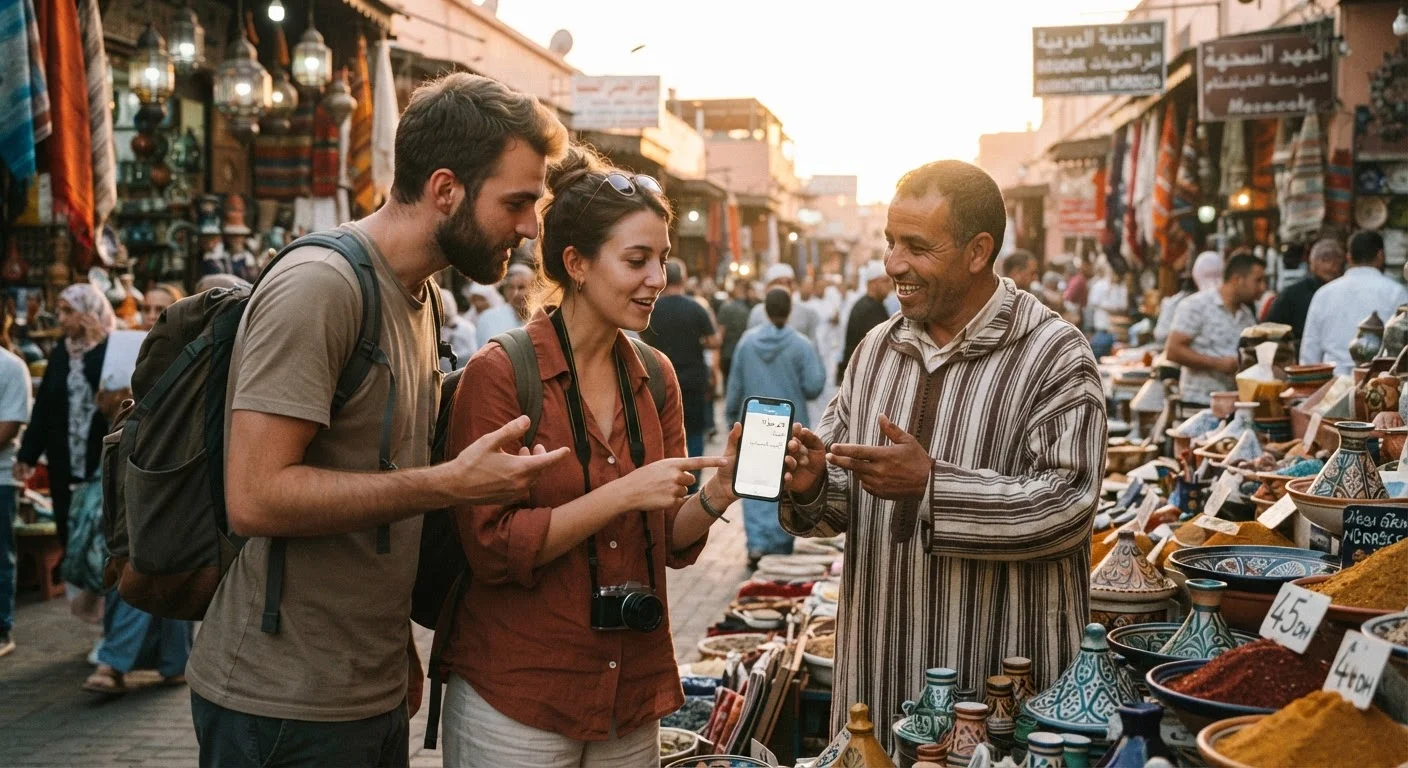
Photo: QuickAdvisor.net editorial
Key Takeaways
- Language barriers are almost always partial, not total - shared context and gesture carry enormous weight.
- Most travelers overestimate how much fluency they need before a trip.
- A handful of target-language words signals respect and dramatically improves interactions.
- Translation apps have become genuinely reliable tools for filling communication gaps in real time.
- Slow speech, visual aids, and patience resolve the majority of travel misunderstandings.
- Anxiety about language barriers causes more friction than the barriers themselves.
What a Language Barrier Actually Is (and Isn't)
The phrase "language barrier" conjures an image of two people staring blankly at each other, utterly unable to connect. In reality, that scenario is vanishingly rare. What most travelers encounter is a partial barrier - a communication gap that requires some creativity to bridge, not an impenetrable wall.
Human communication is a layered system. Words carry meaning, but so do facial expressions, body posture, pointing, tone of voice, shared physical context, and visual cues. Research in communication consistently finds that nonverbal channels carry a substantial portion of everyday meaning. When words fall short, these other channels step up - and travelers who understand this stop feeling like they're stranded and start feeling resourceful.
The key mental shift is moving from "I can't speak their language" to "I have a whole toolkit, and words are just one tool in it."
A Note on Safety-Critical Communication
Why Anxiety Makes It Feel Worse Than It Is
Fear of language barriers is one of the most common reasons Americans cite for sticking to English-speaking destinations - or for over-relying on tour packages that handle all communication for them. That caution is understandable, but it often costs travelers experiences they'd genuinely love.
The anxiety itself creates friction. Hesitation, avoidance, and apologetic body language all make interactions harder. Locals are generally forgiving of linguistic stumbles - what they respond less well to is impatience or an expectation that they accommodate you entirely. A confident smile and a genuine attempt, even a clumsy one, resets the dynamic fast.
~7,000
Languages spoken worldwide
Ethnologue's ongoing global language census documents roughly 7,000 living languages, underscoring why even well-traveled polyglots rely on communication strategies beyond words.
1.5 billion
People who speak English as a second language
According to British Council estimates, English is used as a foreign or second language by approximately 1.5 billion people globally, giving English-speaking travelers a surprisingly wide network to draw on.
Over 500M
Monthly active users of Google Translate
Google has reported more than 500 million monthly active users of its Translate service, reflecting how central real-time translation tools have become in everyday cross-language communication.
It also helps to remember that the person on the other side of the interaction usually wants the transaction to succeed just as much as you do. A vendor wants to sell you bread. A hotel receptionist wants you checked in. A taxi driver wants to get you where you're going. Mutual motivation is a powerful communication lubricant.
Tools and Habits That Actually Help
A few practical approaches make a measurable difference in real travel situations:
- Learn ten to fifteen key phrases before you go. Greetings, "please" and "thank you," numbers one through ten, "do you speak English?" and "I don't understand" cover an enormous range of daily interactions and signal genuine respect.
- Download an offline translation app. Connectivity abroad can be unreliable; offline language packs mean your translation tool works even without data.
- Use your phone's camera. Point your camera at a menu, a street sign, or a transit schedule and let a translation app read it live - one of the most practical travel technologies available today.
- Speak slowly, not loudly. Volume doesn't aid comprehension; pace does. Give your listener time to find the familiar words embedded in your speech.
- Carry a notebook and pen. Written numbers, drawn maps, and sketched objects cross almost every language gap cleanly.
Making communication-resilience part of your broader trip preparation is smart travel practice. As we cover in our piece on why travel plans fall apart, the habits that keep a trip on track are almost always built before departure, not improvised in the moment.
Start Every Interaction With a Local Greeting
The Bigger Picture: Connection Over Perfection
Language fluency is a wonderful thing to pursue, but it was never a prerequisite for meaningful travel. Some of the most memorable interactions travelers describe happen precisely in the creative space between two languages - the shared laughter over a miscommunication, the improvised pantomime that lands, the warm nod when understanding finally clicks.
Treating a language barrier as a puzzle rather than an obstacle changes your experience entirely. You start noticing how much communication is already happening without words. You become a more attentive traveler, more observant, more adaptive.
The travelers who struggle most abroad are rarely those with limited language skills. They're the ones who give up before they try - or who never got past the fear of looking foolish. A little willingness to be imperfect opens up more of the world than any phrasebook ever could.
Frequently Asked Questions
The content on this site is for informational purposes only and is not a substitute for professional advice. Always consult a qualified professional for guidance specific to your situation.