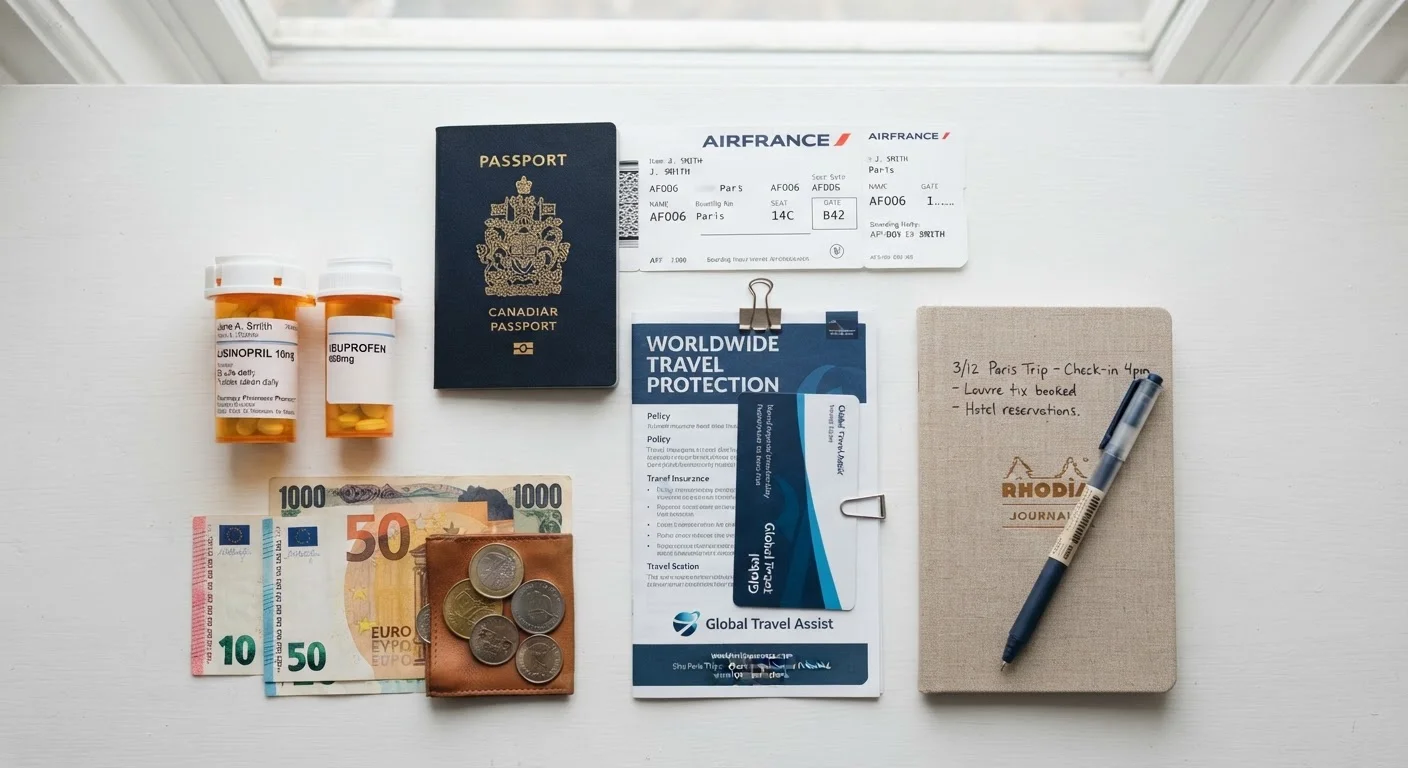
A practical checklist covering passports, medications, travel insurance, emergency contacts, and key logistics before any international trip.
Key Takeaways
Check passport validity at least six months before your international departure date.
Confirm visa requirements through official government sources - rules change without notice.
Carry copies of essential documents separately from originals when traveling abroad.
Consult a travel medicine clinic or your doctor about destination-specific health needs.
Travel insurance can cover medical emergencies, trip cancellations, and lost luggage - review what yours actually includes.
Share your itinerary and emergency contacts with someone trusted at home.
Why a Pre-Departure Checklist Pays Off Every Time
International travel is genuinely exciting - and genuinely unforgiving when something slips through the cracks. A forgotten document, an expired passport, or an overlooked visa requirement can derail an entire trip before it begins. The good news? Most problems are entirely preventable with a little advance planning.
This checklist is designed to walk you through three critical pillars of pre-trip preparation: documents and entry requirements, health and medications, and logistics and communication. Whether you're a first-timer or a seasoned traveler, running through these items at least two to four weeks before departure gives you time to fix what you find. For a broader look at trip planning from the ground up, the Trip Planning hub is a great starting point.
Entry Rules Change - Always Verify Officially
Visa policies, vaccination entry requirements, and border regulations can shift with little warning. Relying on outdated blog posts or travel forums for this information is a real risk. Always check directly with the official embassy or consulate website of your destination country and the U.S. State Department before your trip.
Entry requirements - including visa rules, vaccination mandates, and border policies - can change quickly. Always verify current requirements with the official embassy or consulate of your destination country and check the U.S. Department of State's travel advisories before you go. Do not rely solely on third-party travel sites for this information.
How to Use This Checklist
Work through each group in order, ideally starting four to six weeks before your departure date. Items marked must are non-negotiable - skipping them creates real risk. Items marked should are strongly recommended and worth the effort. Nice-to-have items add comfort and peace of mind but won't make or break your trip.
Verify your passport is valid for at least six months beyond your return date, as many countries enforce this rule at the border.Must
Research and obtain any required visas through the official embassy or consulate of your destination country well in advance.Must
Make two copies of your passport photo page, visa, and travel insurance card - store one separately from your originals and leave one at home.Must
Save digital scans of all key documents to a secure, cloud-based location you can access from anywhere.Should
Check if your destination requires proof of onward travel or a return ticket at the point of entry.Should
Confirm that your driver's license or an International Driving Permit (IDP) is accepted if you plan to rent a vehicle abroad.Nice to have
Health & Medications
Schedule a visit with a travel medicine clinic or your primary care doctor at least four to six weeks before departure to discuss destination-specific health risks.Must
Pack all prescription medications in their original labeled containers, in quantities sufficient for your entire trip plus a buffer of several days.Must
Carry a written list of your current medications, dosages, and any known allergies - keep one copy with you and one in your luggage.Must
Ask your doctor for a letter describing any controlled substances or injectable medications you're traveling with to ease customs inspection.Should
Pack a basic travel health kit: adhesive bandages, antidiarrheal tablets, pain reliever, rehydration salts, and any destination-specific items your doctor recommends.Should
Research recommended or required vaccinations for your destination using the CDC's Traveler's Health resources and consult a provider about what applies to you.Must
Look into whether your destination has water or food safety concerns and pack water purification tablets or a filter if appropriate.Nice to have
Travel Insurance & Finances
Purchase travel insurance that includes medical evacuation and emergency hospitalization coverage before your trip begins.Must
Read your policy carefully to understand what is and isn't covered - including pre-existing conditions and adventure activities.Must
Notify your bank and credit card companies of your travel dates and destinations to prevent fraud blocks on your accounts.Should
Carry a small amount of local currency for arrival expenses like taxis or tips, since airport ATMs and currency exchange can have limited availability.Should
Logistics & Emergency Contacts
Share your full itinerary - including accommodation addresses and flight numbers - with a trusted contact at home.Must
Save the local emergency number for your destination and the address of the nearest U.S. embassy or consulate in your phone.Must
Enroll in the U.S. State Department's Smart Traveler Enrollment Program (STEP) so the embassy can reach you in an emergency.Should
Confirm your accommodation bookings, airport transfers, and any tours or activities 48-72 hours before departure.Should
Download offline maps, translation apps, and your airline's app before you leave - data roaming can be unreliable or expensive in some destinations.Nice to have
Once you've ticked off travel documents and health prep, don't overlook the home-side logistics covered in Your Pre-Trip Checklist: Everything to Handle Before You Leave Home - utility holds, mail forwarding, and pet care are easy to forget in the excitement of packing.
Medical Needs Require Professional Guidance
This checklist provides general travel preparation information only - it is not medical advice. Every traveler's health situation is different. Please consult a qualified healthcare provider or travel medicine specialist to discuss vaccinations, medications, and health precautions specific to your destination and personal health history. In a medical emergency abroad, contact local emergency services and your travel insurance provider immediately.
Travel Editorial Team is the collective byline for our editorial team and contributor network. Articles published under this byline or an editorial pen name are researched, written, and reviewed according to our editorial standards for clarity, consistency, and independence before publication.
The content on this site is for informational purposes only and is not a substitute for professional advice. Always consult a qualified professional for guidance specific to your situation.