
A Reference Guide to Travel Document Requirements for U.S. Citizens

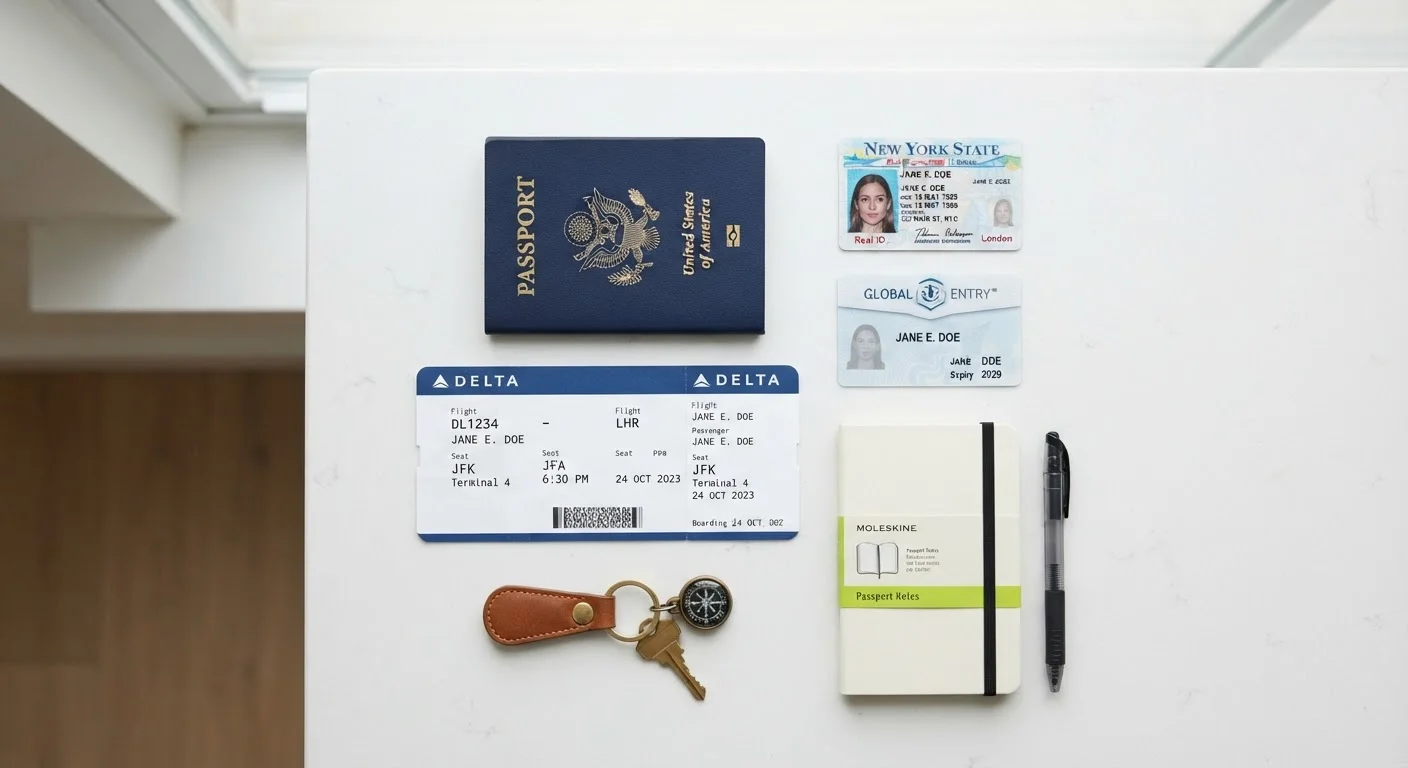
Photo: QuickAdvisor.net editorial
Passport Book vs. Passport Card: Know the Difference
The U.S. passport book is the most universally accepted travel document American citizens carry. It's required for all international air travel and is accepted at land and sea borders worldwide. Standard passport books are valid for 10 years for adults and 5 years for children under 16.
The U.S. passport card is a wallet-sized alternative - but its use is limited. It's accepted only for land and sea border crossings between the U.S. and Canada, Mexico, the Caribbean, and Bermuda. It cannot be used for international air travel. If you drive across the Canadian border regularly, a passport card is a handy backup; for flying anywhere abroad, the full passport book is non-negotiable.
One important rule many travelers overlook: most countries require your passport to be valid for at least six months beyond your travel dates. Check this well before booking - and renew early if needed. See our pre-trip checklist for a full timeline of what to verify before departure.
| Passport Book Validity (Adults) | 10 years (U.S. Department of State) |
| Passport Book Validity (Under 16) | 5 years (U.S. Department of State) |
| Minimum Passport Validity Recommended | 6 months beyond travel dates (Required by most destination countries) |
| REAL ID Enforcement Deadline | May 7, 2025 (U.S. Department of Homeland Security) |
| Passport Card Use | Land and sea crossings only (Canada, Mexico, Caribbean, Bermuda) (U.S. Department of State) |
| States Issuing Enhanced Driver's Licenses | Michigan, Minnesota, New York, Vermont, Washington (U.S. Department of Homeland Security) |
REAL ID, Enhanced Driver's License, and Domestic Travel
Starting May 7, 2025, the REAL ID Act requires that Americans use a REAL ID-compliant driver's license (or another accepted federal ID) to board domestic flights and access certain federal facilities. A standard, non-compliant state ID will no longer be sufficient at TSA checkpoints.
Look for a star marking in the upper corner of your state-issued ID - that's the REAL ID compliance indicator. If your current license doesn't have one, contact your state DMV to upgrade. Alternatively, a valid U.S. passport book or passport card is always accepted in place of a REAL ID for domestic air travel.
Enhanced Driver's Licenses (EDLs) are issued by a handful of states (Michigan, Minnesota, New York, Vermont, and Washington) and serve a dual purpose: they're REAL ID-compliant and accepted for land and sea crossings into Canada and Mexico - similar to a passport card. Check with your state DMV to see what's available where you live.
Your Passport Always Works as a Backup
Visas, Entry Requirements, and Trusted Traveler Programs
U.S. citizens can visit many countries visa-free for short stays, particularly within Europe's Schengen Area, much of Latin America, and parts of Southeast Asia. However, requirements vary significantly - some countries require advance visas, others issue them on arrival, and some require specific documentation like proof of onward travel or sufficient funds.
For a deeper look at how to read destination entry pages without confusion, our entry requirements guide walks through exactly what each term means and where to verify them.
Trusted Traveler Programs - like Global Entry, TSA PreCheck, NEXUS, and SENTRI - can significantly speed up your airport and border experience. Global Entry includes TSA PreCheck and adds expedited U.S. Customs processing upon return from abroad. These programs require an application, background check, and in-person interview, so plan several months ahead.
Always verify current entry requirements directly through official sources such as the U.S. Department of State travel website (travel.state.gov) and the destination country's official embassy or consulate. Entry rules can change with little notice. For first-time international travelers, our first international trip guide covers the full picture - from documents to customs etiquette.
The content on this site is for informational purposes only and is not a substitute for professional advice. Always consult a qualified professional for guidance specific to your situation.