
Trip Planning From Scratch: A First-Timer's Complete Roadmap

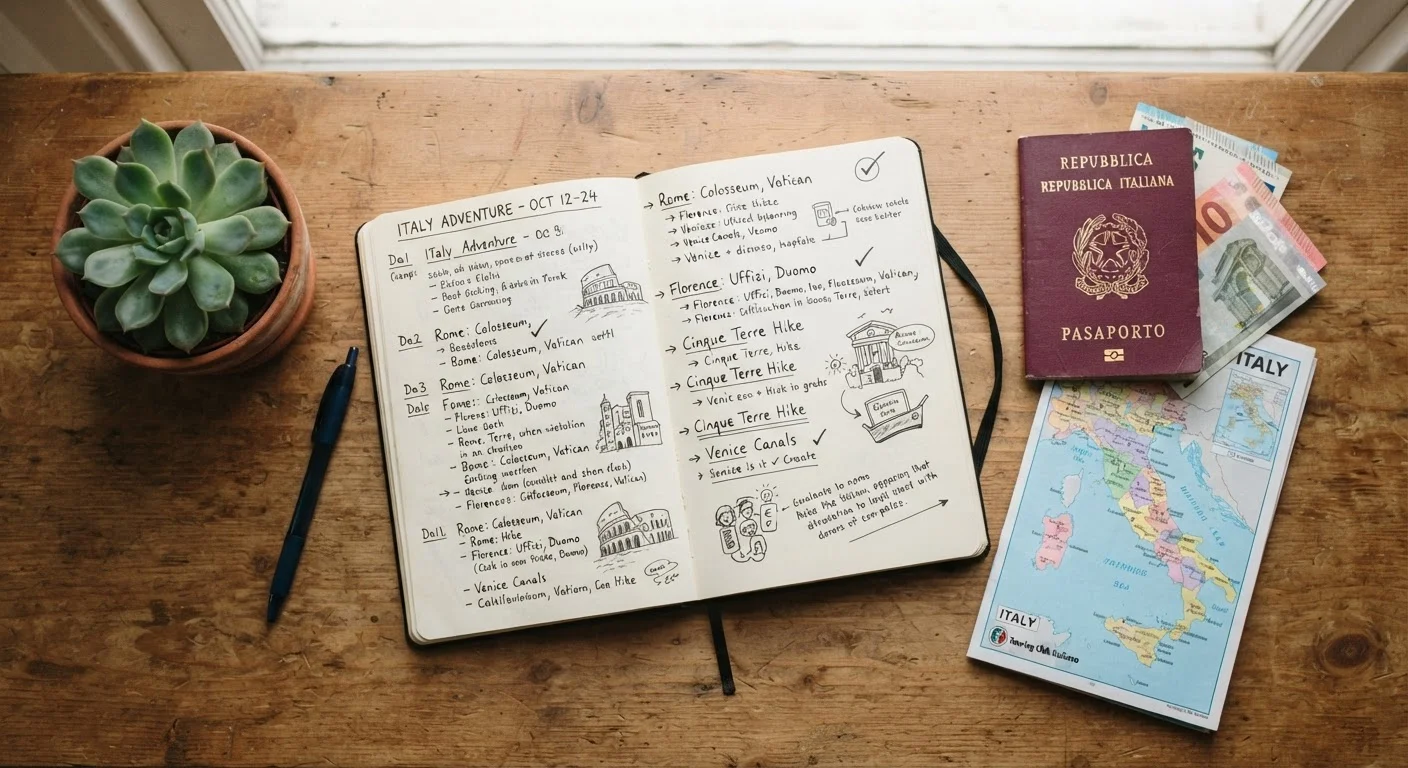
Photo: QuickAdvisor.net editorial
Key Takeaways
- Narrowing down your destination early saves weeks of indecisive browsing.
- A realistic budget - including hidden costs - prevents stressful surprises mid-trip.
- Book flights and accommodation before fine-tuning your daily itinerary.
- A flexible itinerary beats a packed schedule for first-time travelers.
- Pre-departure document checks and a solid packing list keep departure day calm.
Start With the Big Picture: Destination and Timing
Every trip starts with two deceptively simple questions: where and when. Getting these right before anything else prevents the all-too-common spiral of half-researching five destinations and booking none of them.
When choosing a destination, match it to what you actually want from the trip. Rest and beaches? Culture and history? Adventure? Be honest with yourself. Also factor in travel time, language barriers, and how far your budget will stretch in that location. If you're heading overseas for the first time, our guide on what to expect on your first international trip covers the essentials you'll want to think through.
Timing matters just as much. Research the destination's seasons: shoulder season (the stretch between peak and off-peak) often offers the best balance of manageable crowds, decent weather, and reasonable prices. For weather-sensitive destinations - deserts, beach towns, mountain regions - timing can make or break the experience.
Shoulder season
The travel period between a destination's peak and off-peak times. It typically offers milder crowds, more reasonable prices, and acceptable weather.
Anchor activity
A must-do experience that structures your day or itinerary - like a museum visit or a guided tour - around which other plans are built.
Ground transport
Any transportation you use once you've arrived at your destination, such as rental cars, buses, trains, taxis, or rideshares.
International driving permit
An official document that translates your driver's license into multiple languages, required for driving legally in certain foreign countries.
Travel buffer
A portion of your budget set aside for unexpected costs, typically 10-15% above your estimated total spend.
Budget Basics: Know Your Numbers Before You Book
Nothing derails a first trip faster than running out of money on day four. Before you open a single booking tab, sketch out a realistic budget across four core categories: transportation (flights, trains, rental cars), accommodation, food and drink, and activities and entrance fees.
Research average daily costs for your destination - they vary enormously. A week in rural Mexico costs far less than the same time in Scandinavia. Once you have rough estimates, add a 10-15% buffer for unexpected expenses: a missed connection, an irresistible detour, or a rainy afternoon at a museum.
Don't forget the costs travelers routinely overlook: airport transfers, checked baggage fees, travel insurance, currency exchange fees, and tipping norms at your destination. These "invisible" line items can add hundreds of dollars to a trip that looked affordable on paper.
Track Every Cost Category Early
Booking Flights, Accommodation, and Ground Transport
Once your budget is anchored, it's time to lock in the big-ticket logistics. Book in this order: flights first, then accommodation, then ground transport. Flights define your travel window; everything else adjusts around them.
For accommodation, think beyond hotels. Vacation rentals, hostels, guesthouses, and boutique inns all serve different travel styles and budgets. Consider your location priorities: walkability to attractions, access to public transit, and neighborhood safety all deserve attention.
Ground transport is easy to underplan. If you're renting a car, check whether an international driving permit is required. If you're relying on public transit, research passes and ticketing in advance - many cities offer multi-day passes that are significantly more economical than pay-per-ride. For a deeper look at road-based travel, see our complete US road trip planning guide.
Building Your Itinerary Without Overloading It
Here's where first-timers most often go wrong: cramming in too much. A packed schedule sounds ambitious but usually produces exhaustion and a blur of half-experienced places.
A practical rule of thumb: plan no more than two or three anchor activities per day, and leave at least one half-day per three days completely unscheduled. That unplanned time is where the best travel memories often happen - a recommended restaurant from a local, an unexpected festival, or simply sitting in a square watching the world go by.
Consider what kind of traveler you are. Our comparison of structured, flexible, and hybrid itinerary styles can help you figure out which approach fits your personality and trip type. And if you want to understand why well-planned trips still go sideways, common planning mistakes and how to avoid them is worth a read before you finalize anything.
Final Prep: Documents, Packing, and Pre-Departure Tasks
The week before departure is when details matter most. Start with documents: verify passport expiration, confirm any visa requirements directly with official government sources, and make digital and physical copies of everything important. Entry requirements change - always check the most current official guidance rather than relying on travel forums.
For packing, build your list around activities and climate rather than anxiety. Lay everything out, then put back roughly a third of it. Most destinations have shops if you forget something non-critical. Overpacking adds stress at every airport, train station, and staircase.
Our pre-trip checklist walks through every practical task - from confirming utility bills to notifying your bank - so nothing slips through the cracks on departure day. Nail the prep, and you'll board that flight feeling ready rather than frazzled.
Frequently Asked Questions
The content on this site is for informational purposes only and is not a substitute for professional advice. Always consult a qualified professional for guidance specific to your situation.