
The Gulf Coast at Ground Level: What Connects Alabama, Mississippi, and the Florida Panhandle

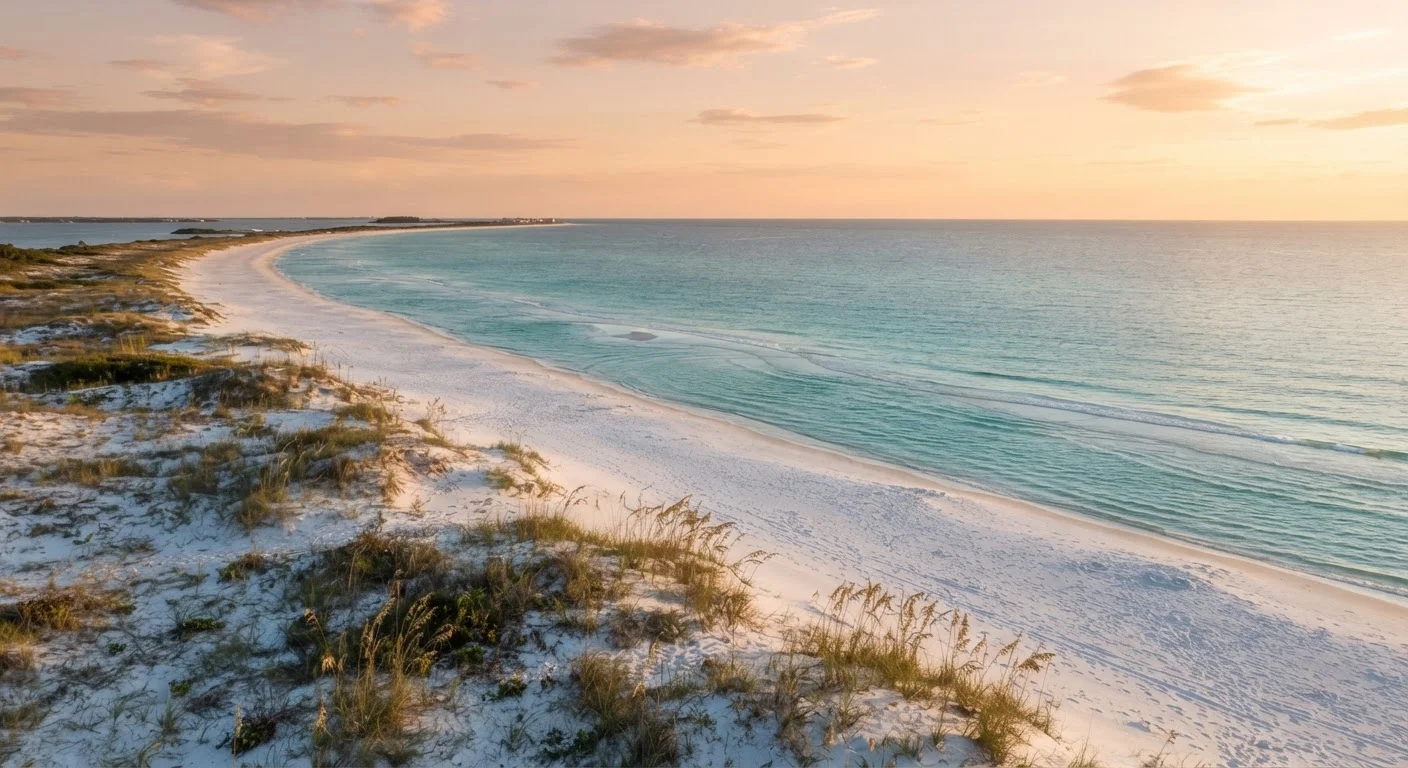
Photo: QuickAdvisor.net editorial
Key Takeaways
- Mississippi, Alabama, and the Florida Panhandle share a continuous stretch of Gulf shoreline with a common culture and landscape.
- The region's beaches feature exceptionally fine white quartz sand - a geological trait distinct from Atlantic Coast beaches.
- Seafood traditions, particularly Gulf shrimp and oysters, are a defining culinary thread across all three states.
- Each state brings its own local flavor: Mississippi's coastal towns, Alabama's family-friendly beaches, and the Panhandle's emerald-water resort areas.
- The region is less crowded and generally more affordable than Florida's more famous southern coasts.
- Travelers should verify conditions, local advisories, and entry details through official sources before visiting.
One Shoreline, Three States
Pull up a map of the northern Gulf Coast and something becomes immediately clear: the political borders between Mississippi, Alabama, and the Florida Panhandle have very little to do with what the land actually looks like. The same white sand, the same blue-green Gulf water, and the same low-lying coastal plain roll through all three without much ceremony about whose state line they're crossing.
That geographic continuity is the starting point for understanding this region. Travelers who plan a trip to one state and stay only within its borders often miss what makes the whole stretch interesting - a slow, cumulative sense of place that's best absorbed across miles rather than within a single resort town.
What all three share most visibly is the sand itself. The beaches here are made of fine quartz crystals washed down from the Appalachian Mountains over millennia. Unlike the yellow or grey sand typical of the Atlantic Coast, Gulf Coast sand stays cool underfoot, squeaks slightly when you walk on it, and looks almost powdery white in midday sun. It's a geological footnote that turns into one of the most commented-on sensory experiences for first-time visitors.
160+ miles
Gulf shoreline across Alabama and the Florida Panhandle
The combined coastal stretch from the Alabama-Mississippi border through the Panhandle covers well over 160 miles of accessible Gulf shoreline, much of it publicly accessible.
139,000 acres
Gulf Islands National Seashore protected area
Gulf Islands National Seashore, managed by the National Park Service, spans portions of both Mississippi and Florida and is among the largest national seashores in the US.
~65°F
Average Gulf water temperature in winter months
Even in the cooler months, Gulf water temperatures along this stretch remain relatively mild compared to the Atlantic Coast at the same latitude, according to NOAA historical data.
What Each State Brings to the Mix
Mississippi's coast centers on a cluster of towns - Biloxi, Gulfport, Pass Christian - that carry a complicated, layered history. Hurricane Katrina reshaped the physical landscape here dramatically, and the rebuilding that followed produced a coast that's genuinely different from what existed before. The Mississippi Gulf Coast today mixes casino resort infrastructure with quieter waterfront neighborhoods, fresh seafood shacks, and access to the barrier islands of Gulf Islands National Seashore - some of the most pristine undeveloped shoreline on the entire Gulf.
Alabama contributes Gulf Shores and Orange Beach, two towns that have built a reputation over decades as approachable, unpretentious beach destinations. The seafood here - particularly Gulf shrimp - is a serious point of local pride. The Alabama coast is compact enough that visitors can cover it without much driving, yet varied enough to include state parks, a working shrimp harbor, and wildlife refuges alongside the typical beach-town amenities.
The Florida Panhandle swings the widest arc of all, from Pensacola Beach in the west - which shares the same National Seashore designation as Mississippi's barrier islands - through Fort Walton Beach and Destin to Panama City Beach and beyond. The water along this stretch is famous for its clarity and vivid blue-green color, a result of the same quartz sand extending into the shallow Gulf floor. The Panhandle tends to draw larger crowds than its neighbors, particularly during summer, but it also contains quieter stretches easily found by travelers willing to explore beyond the main resort corridors.
The Culinary and Cultural Thread
If the sand connects the landscape, seafood connects the culture. Gulf shrimp, blue crab, oysters harvested from Mobile Bay and Mississippi's coastal waters, and fresh fin fish are central to the food identity of every community along this stretch. The preparations vary - from Creole-influenced dishes on the Mississippi side to simpler fried and boiled traditions in Alabama and casual raw bars in the Panhandle - but the insistence on locally sourced Gulf seafood is consistent.
Beyond food, the region shares a pace and temperament that's genuinely distinct from both the frenetic energy of Miami or Orlando and the self-conscious quaintness of some New England coastal towns. Things move a little slower here by design. Locals tend to be oriented toward the water, toward fishing, toward spending time outdoors in a low-key way. That temperament is either the whole point of a visit or something a traveler has to adjust to, depending on what they're looking for.
“The Gulf Coast of the northern states is, in many ways, a traveler's secret that geography keeps well. The water is the same Gulf, the sand is the same sand - what changes is how many people know about it.”
— Travel Editorial Team, Editorial observation on the northern Gulf Coast region
For travelers who've written off this part of the country as a consolation prize for missing out on more famous coastlines, the consistent response from those who visit is surprise - at the water quality, the food, the relative quiet, and the sense that they've found something the travel industry hasn't fully packaged yet.
Planning a Trip Across the Region
The most natural way to experience this coast is as a loose road trip rather than a fixed-resort stay. Highway 98 and its parallel routes hug the coastline through much of the Panhandle, while Highway 90 does the same across Mississippi's coast. The drives are flat, rarely hurried, and studded with stops worth making - state parks, fishing piers, seafood markets, and access points to barrier island ferries.
Gulf Shores, Alabama functions well as a geographic midpoint. From there, Biloxi is roughly two hours west and Pensacola Beach is about an hour east, making day trips in either direction manageable. Travelers who want a home base without committing to any single stretch of coast often find this the most practical anchor.
Conditions, seasonal closures, beach flag systems, and any relevant entry or permit requirements for protected areas are all things to verify directly with official park and local government sources before traveling - they can shift based on weather events, wildlife nesting seasons, or other factors outside any publication's control.
Travel conditions, accessibility, and local regulations along the Gulf Coast can change. Always verify current information with official state, park, and local government sources before making travel plans.
Frequently Asked Questions
The content on this site is for informational purposes only and is not a substitute for professional advice. Always consult a qualified professional for guidance specific to your situation.