
How a Car's Cooling System Works - and What Happens When It Fails

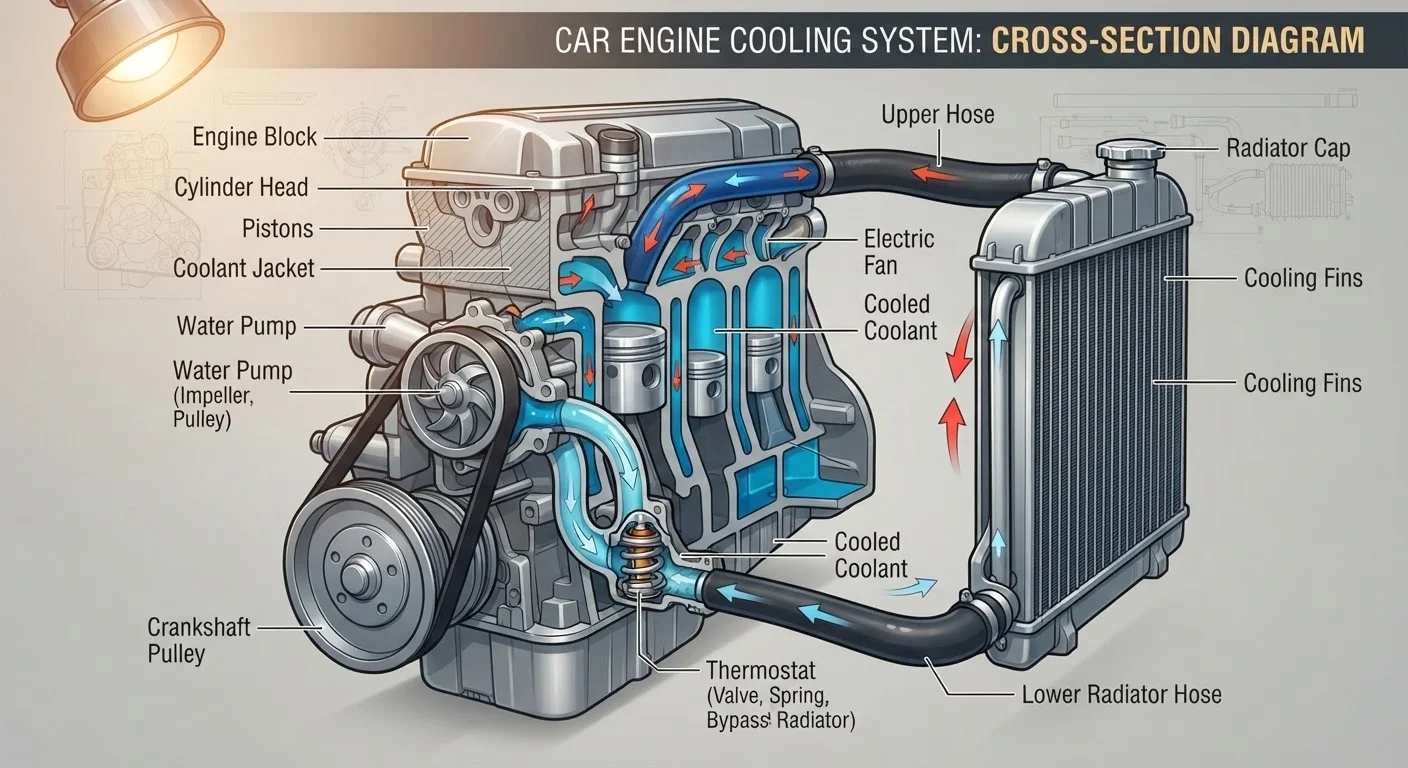
Photo: QuickAdvisor.net editorial
Key Takeaways
- The cooling system has several interdependent parts - a failure in any one can overheat the engine.
- Coolant (antifreeze) doesn't last forever; most manufacturers recommend flushing it every 30,000-50,000 miles.
- A rising temperature gauge, sweet smell, or steam from the hood are urgent warning signs that need immediate attention.
- Pulling over safely and shutting off the engine is the correct response to an overheating warning.
- Regular coolant level checks are a simple habit that can prevent expensive engine damage.
How Coolant Flows Through Your Engine
Internal combustion engines generate enormous heat as a byproduct of burning fuel. Left unmanaged, that heat would destroy engine components within minutes. The cooling system's job is to capture that heat and safely release it before temperatures climb into the danger zone.
The process starts with the water pump, which is driven by the engine's accessory belt. It pushes a mixture of coolant and water through passages cast into the engine block and cylinder head - the hottest areas of the engine. As the coolant flows through, it absorbs heat from the metal surfaces surrounding the combustion chambers.
Heated coolant then travels through the upper radiator hose into the radiator, a grid of thin tubes and fins mounted at the front of the vehicle. As air passes through the radiator - either from vehicle movement or a cooling fan - the coolant releases its heat. Cooled fluid then returns to the engine through the lower hose to repeat the cycle.
The thermostat acts as a gatekeeper. When the engine is cold, it stays closed so the engine reaches operating temperature quickly. Once the coolant hits the threshold temperature - usually around 195°F - the thermostat opens and allows full circulation through the radiator. A stuck-closed thermostat will cause rapid overheating; a stuck-open one will prevent the engine from warming up properly, reducing efficiency and increasing wear.
~50%
Roadside breakdowns caused by cooling system issues
According to the American Automobile Association (AAA), cooling system failures are among the most common causes of roadside vehicle breakdowns in the United States.
195-220°F
Normal engine operating temperature range
Most passenger vehicle engines are designed to operate within this temperature window for optimal combustion efficiency and minimal component wear.
30,000-50,000 mi
Typical coolant flush interval
Most vehicle manufacturers recommend this service interval for standard coolant formulations, though extended-life variants may allow longer intervals per the owner's manual.
The Role of Coolant - and Why It Degrades
Coolant, commonly called antifreeze, is a chemically engineered fluid that does more than just lower the freezing point of water. It also raises the boiling point, inhibits corrosion inside metal passages, and lubricates water pump seals. Most coolants are ethylene glycol-based and come premixed with water or as a concentrate to be mixed 50/50.
Over time, coolant degrades. Corrosion inhibitors break down, and the fluid becomes acidic - capable of damaging aluminum components, hoses, and the radiator itself. This is why a skipped coolant flush isn't just a minor oversight; it can accelerate corrosion damage in ways that compound quietly and expensively. Check your owner's manual for the correct coolant type and service interval for your specific vehicle.
For a broader look at all the fluids your car depends on, see our guide to car fluids you shouldn't ignore.
Check Coolant Level Monthly
Warning Signs of Cooling System Failure
Cooling system problems rarely happen without warning. Recognizing the early signs can mean the difference between a minor repair and a destroyed engine.
- Temperature gauge rising: The most direct indicator. If the needle climbs toward the red zone, take it seriously immediately.
- Sweet smell near the engine: Coolant has a distinctive, sweet odor. Smelling it while driving or after parking suggests a leak somewhere in the system.
- Steam or smoke from the hood: A visible plume of steam is a sign that coolant is boiling or escaping onto a hot surface. Pull over safely and shut off the engine.
- Coolant puddles under the car: A bright green, orange, or pink puddle (depending on coolant type) under the front of the car points to a leak from a hose, radiator, or water pump.
- Heater blowing cold air: The cabin heater uses engine heat via the heater core. If coolant is low or not circulating, the heater may blow cold even when the engine is warm.
Temperature extremes place added stress on cooling systems. For a full seasonal perspective, see our seasonal car care guide.
Never Add Cold Water to a Hot Engine
What to Do If Your Engine Overheats
If your temperature gauge moves into the red or a warning light appears, act quickly and calmly. Turn off the air conditioning immediately - it adds load to the engine. If traffic allows, turn on the cabin heater and blower at maximum heat; this draws heat away from the engine through the heater core and can buy a little time.
Pull over to a safe location as soon as possible and shut the engine off. Do not open the radiator cap while the engine is hot - the pressurized system can spray scalding coolant. Allow at least 30-45 minutes for the engine to cool before inspecting anything.
Once cooled, check the coolant reservoir. If it's empty or very low, topping it off with the correct coolant mixture may allow you to drive carefully to a repair facility - but only after confirming there's no active leak. If you see visible damage, hear unusual noises, or the temperature rises again quickly, do not continue driving. Have the vehicle towed and inspected by a qualified mechanic before returning it to the road.
This article is for informational purposes only. For specific repair decisions or safety concerns related to your vehicle, consult a qualified automotive technician.
Frequently Asked Questions
The content on this site is for informational purposes only and is not a substitute for professional advice. Always consult a qualified professional for guidance specific to your situation.