
What a Nutrition Label Is Actually Telling You

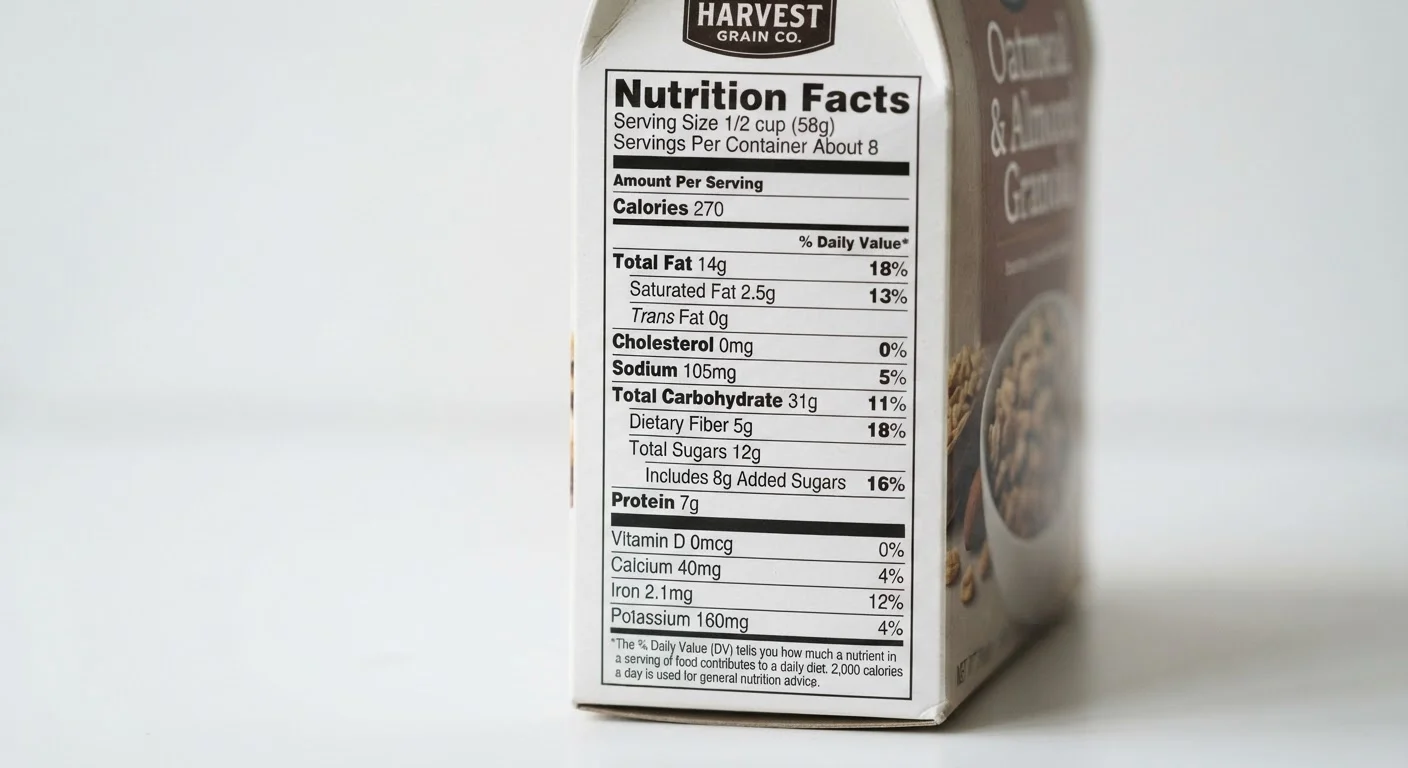
Photo: QuickAdvisor.net editorial
Key Takeaways
- Serving size is a standardized reference amount, not a recommendation for how much to eat.
- % Daily Value tells you how much of a nutrient one serving contributes to a 2,000-calorie daily diet.
- Added sugars are now listed separately from total sugars, making it easier to identify hidden sweeteners.
- 5% DV or less is considered low for a nutrient; 20% DV or more is considered high.
- Ingredient lists are ordered by weight - the first few ingredients make up the bulk of the product.
Start With Serving Size - It Changes Everything
The first thing to find on any Nutrition Facts panel is the serving size, listed at the very top. This number anchors every other figure on the label. All the calories, fat grams, and percentages below it apply only to that specific amount of food - not to the whole package.
This is where many shoppers get tripped up. A bag of chips might list 140 calories per serving, but if the bag contains three servings and you eat the whole thing, you've consumed 420 calories. The label isn't misleading - it's precise - but it requires you to do a small calculation when your portion doesn't match the reference amount.
Serving sizes aren't arbitrary. The FDA sets them based on what people typically eat in one sitting, using data collected from dietary surveys. But typical and recommended aren't the same thing. Understanding that distinction is one of the most useful things you can take away from our breakdown of portion size vs. serving size.
Quick Habit: Check Servings Per Container First
Calories and the % Daily Value System
Calories measure the total energy a serving provides. The updated label format makes this number larger and bolder than before - a deliberate design choice to help it stand out at a glance.
Directly below calories, the label shifts to nutrients with their amounts in grams or milligrams, each paired with a % Daily Value (DV). The DV system is built around a 2,000-calorie daily diet, a standard the FDA uses as a reference point. If you eat more or fewer calories than that, your personal nutrient targets will differ.
The practical rule of thumb: 5% DV or less is low for a nutrient; 20% DV or more is high. For nutrients you want to limit - saturated fat, sodium, and added sugars - you want lower percentages. For nutrients you want more of - fiber, calcium, iron, and vitamin D - higher percentages are better.
2,300mg
FDA daily reference value for sodium
The FDA sets 2,300mg as the Daily Value for sodium - many processed food servings can account for a third or more of this in a single portion.
~90%
Americans under-consuming dietary fiber
Research published in the American Journal of Lifestyle Medicine estimates that roughly 90% of Americans fall short of recommended daily fiber intake.
20%+
% DV considered 'high' for any nutrient
The FDA's official guidance defines 20% DV or more as a high amount of a nutrient per serving - useful for both nutrients to seek and those to limit.
The Nutrients Worth Paying Attention To
Not every line on the label deserves equal scrutiny. Here's how to read the key sections purposefully:
- Total fat, saturated fat, and trans fat: Total fat includes all types. Saturated fat is the one most associated in research with cardiovascular considerations - it has its own DV line. Trans fat should ideally be zero; even small amounts listed as "0g" may be present up to 0.5g per serving under FDA rounding rules.
- Sodium: A high-sodium diet is linked to elevated blood pressure in salt-sensitive individuals. Many processed foods carry a surprisingly high % DV for sodium even in modest-looking servings.
- Total carbohydrates, dietary fiber, and sugars: Fiber is a nutrient most Americans under-consume. Added sugars - now required on all labels - reveal how much sweetness was introduced during manufacturing, separate from sugars naturally present in ingredients.
- Protein: Listed in grams only, without a % DV in most cases, since protein needs vary widely by age, weight, and activity level.
- Vitamins and minerals: Vitamin D, calcium, iron, and potassium are required disclosures because deficiencies in these nutrients are common in the U.S. population.
If you're reading labels with a specific health goal in mind - managing sodium intake, tracking fiber, or watching blood sugar - our goal-oriented label reading guide offers a structured approach.
What the Ingredient List Adds to the Picture
The Nutrition Facts panel is a summary. The ingredient list is the full story. Ingredients appear in descending order by weight - whatever is listed first makes up the largest proportion of the product.
A few things to look for: if sugar (under any of its many names - cane syrup, maltose, dextrose, honey) appears several times throughout the list, those quantities add up even when no single entry ranks near the top. Similarly, seeing whole grains listed first in a bread is a meaningful signal about the product's actual composition versus one where enriched flour leads.
The ingredient list also reveals additives, preservatives, and allergens that the nutrition panel doesn't capture. For anyone navigating food allergies or sensitivities, this section is non-negotiable reading.
This article is for general informational purposes only and does not constitute dietary or medical advice. Consult a registered dietitian or qualified healthcare professional for personalized nutrition guidance.
Frequently Asked Questions
The content on this site is for informational purposes only and is not a substitute for professional advice. Always consult a qualified professional for guidance specific to your situation.