
Building a Home Workout Habit With Minimal Space and No Equipment

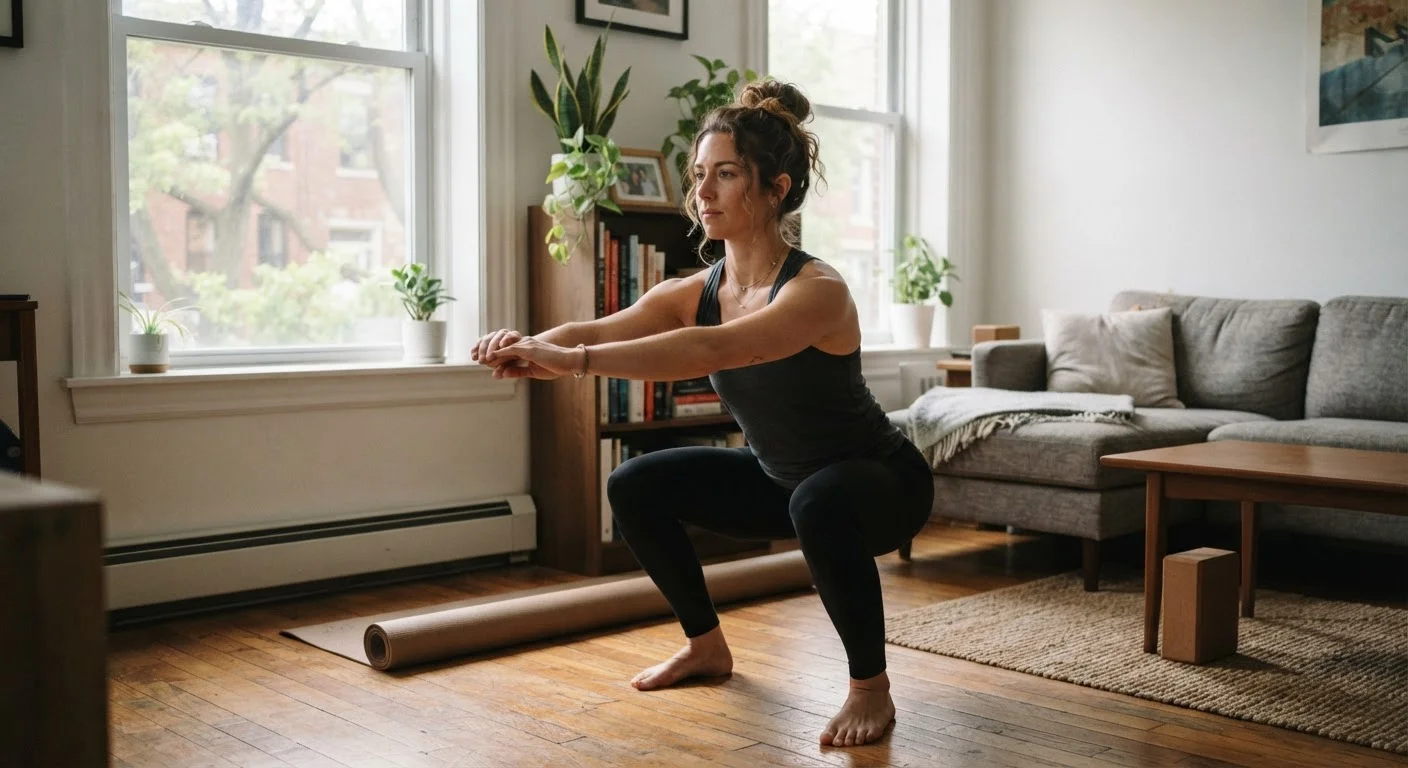
Photo: QuickAdvisor.net editorial
Key Takeaways
- You need only a few square feet of floor space to build a consistent, effective home workout routine.
- Bodyweight movements like squats, push-ups, and planks can provide meaningful cardiovascular and strength benefits.
- Habit formation - not workout intensity - is the primary driver of long-term fitness progress.
- Scheduling workouts at the same time each day significantly improves follow-through.
- Progression is possible without equipment by adjusting tempo, range of motion, and volume.
- Consistency over weeks matters more than the difficulty of any single session.
Why Equipment and Space Aren't the Real Barriers
Many people delay starting an exercise routine while waiting for the right conditions - a gym membership, more room at home, or a dedicated workout area. Research on behavior change consistently shows that environmental barriers are rarely the true obstacle. The bigger challenge is building the habit itself.
Bodyweight training has a well-established evidence base. Exercises like squats, push-ups, lunges, and planks engage multiple muscle groups, can elevate heart rate, and support both muscular endurance and cardiovascular health when performed with appropriate effort. You don't need a rack of dumbbells or a dedicated studio to benefit from movement. If you're weighing the trade-offs between training contexts, our guide on training at home vs. training at a gym breaks down what genuinely changes and what doesn't.
The goal of this guide is practical: help you clear your floor space, choose a handful of movements, and establish a routine that survives real life - including busy days, low motivation, and tight schedules.
What You'll Need Before You Start
Preparation is minimal by design, but a few things will make your first few sessions smoother.
What you will need
Exercise mat or folded blanket
Provides cushioning for floor-based movements like planks and lunges on hard surfaces.
Smartphone with a timer app
Used to track work intervals, rest periods, and total session duration.
Notebook or workout log
Tracking reps and sessions over time helps you see progress and stay accountable.
Step-by-Step: Building Your Routine
Follow these steps in order, especially if you're starting from scratch. Each one builds on the last. For a broader look at the behavioral principles behind lasting habits, see our companion piece on building a movement habit that actually sticks.
Choose three to five foundational movements
Select exercises that cover the main movement patterns: a push (push-up or incline push-up), a pull substitute (door-frame row or prone back extension), a squat (bodyweight squat or assisted squat), a hinge (glute bridge), and a core hold (plank). Starting with a short, defined list prevents decision fatigue and keeps your first sessions under 20 minutes.
Set a specific, recurring time slot
Anchor your workout to an existing daily event - right after your morning coffee, before your first video call, or immediately after dinner. Habit research shows that pairing a new behavior with an established cue dramatically increases follow-through. Block it on your calendar as a non-negotiable appointment.
Start shorter than feels necessary
Begin with 10 to 15 minutes per session, three days per week. This is intentionally modest. Sessions that feel almost too easy in the first two weeks are sessions you'll actually complete. The habit itself - showing up at the designated time - is more important than the workout's difficulty at this stage. For more on this approach, our guide on starting a workout routine when you've never trained before covers frequency, effort, and rest in detail.
Record what you did
After each session, write down the exercises, reps, and how the session felt on a scale of 1 to 10. Even a note in your phone works. This record serves two purposes: it shows objective progress over weeks (which is motivating), and it gives you a starting point for each session so you're not rebuilding a plan from scratch every time.
Add progression gradually after two to three weeks
Once completing your chosen sessions feels routine, introduce one small change at a time: add one more set, one more rep per set, or reduce rest by 15 seconds. Avoid overhauling your entire routine at once. Sustainable progress comes from small, consistent increases, not dramatic overhauls that increase injury risk or burnout. Check our weekly workout schedule guide when you're ready to structure multiple training days.
Short Sessions Count More Than You Think
Troubleshooting Common Sticking Points
Even well-designed routines hit rough patches. Here are the most common ones and how to navigate them.
- "I miss a day and then stop entirely."
- Missing one session has almost no physiological impact. The damage comes from turning one missed day into a week off. When this happens, the goal is simply to do your next scheduled session - no penalty workouts, no doubling up. Our workout consistency checklist outlines the foundational habits that keep routines alive through disruption.
- "My workouts feel too easy after a few weeks."
- That's a sign of progress - not a reason to buy equipment. Slow your tempo (take three to four seconds to lower into a push-up), reduce rest between sets, add a pause at the hardest point of the movement, or increase your total reps. These adjustments meaningfully increase demand without any gear.
- "I can't find time on busy days."
- Consider splitting your session into smaller blocks - two ten-minute windows instead of one twenty-minute session. Research suggests accumulated movement throughout the day provides similar benefits to a single continuous bout for general health. For practical scheduling strategies, see making movement fit a packed schedule.
This article is for general informational and educational purposes only. It is not a substitute for professional medical advice, diagnosis, or treatment. Consult a qualified healthcare provider before starting a new exercise program, particularly if you have any health conditions or have been inactive for an extended period.
The content on this site is for informational purposes only and is not a substitute for professional advice. Always consult a qualified professional for guidance specific to your situation.