
The Hidden Costs of Sitting All Day-and What Movement Breaks Actually Do

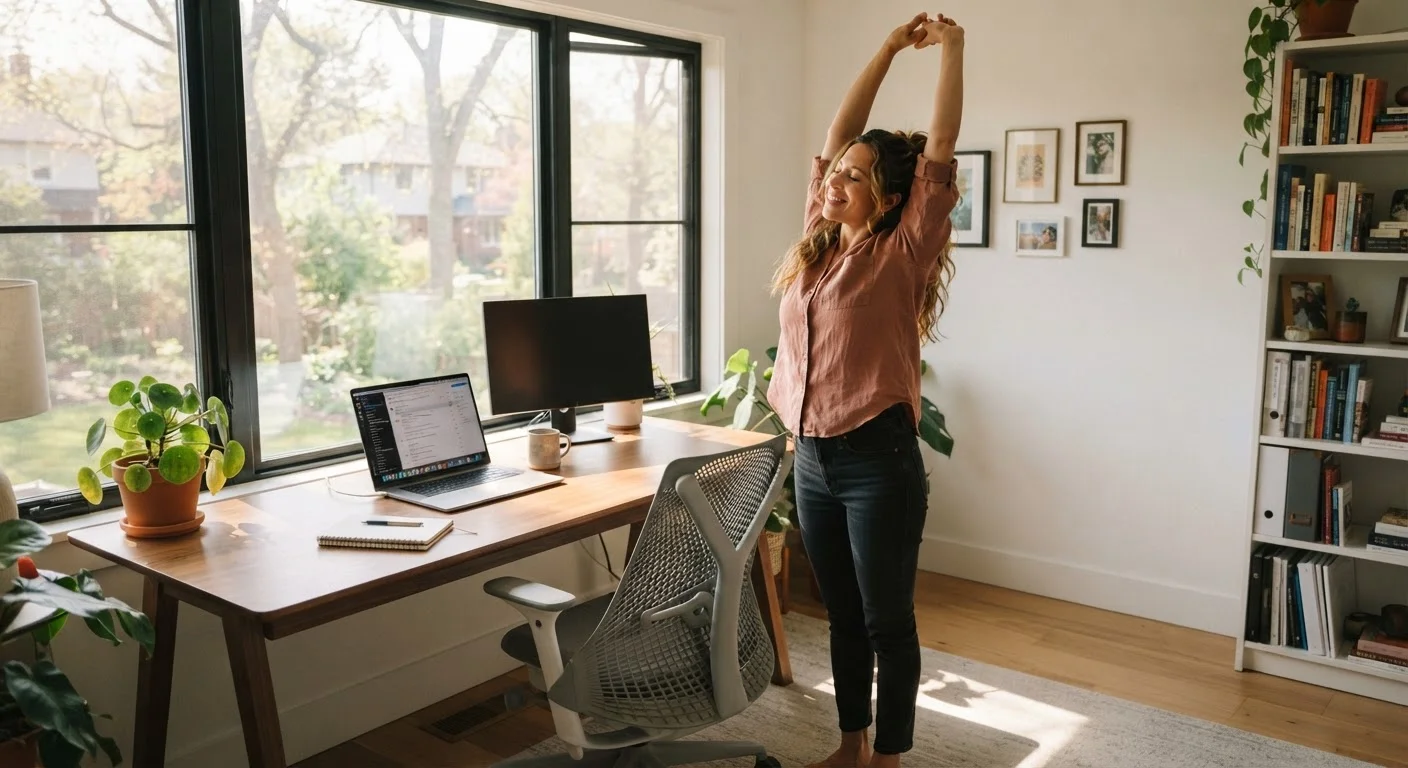
Photo: QuickAdvisor.net editorial
Key Takeaways
- Prolonged sitting is independently linked to cardiovascular and metabolic health concerns, even in people who exercise regularly.
- Short movement breaks - even a few minutes of light activity - can help interrupt the negative effects of extended sitting.
- You don't need a gym or a major schedule overhaul to reduce sedentary time meaningfully.
- The goal is to break up long sitting periods frequently throughout the day, not just to log one exercise session.
- Research supports brief walking, standing, or light stretching as effective ways to interrupt sedentary time.
Why Sitting All Day Is More Than Just Uncomfortable
Most Americans are aware that exercise matters for health - but far fewer think critically about what happens during the hours they aren't exercising. For a large share of the workforce, a typical day involves waking up, commuting (often seated), sitting at a desk for eight or more hours, then returning home to sit again. The cumulative seated time can easily exceed ten hours.
Public health researchers have described this pattern as a distinct risk factor, separate from whether a person meets physical activity guidelines. In other words, someone who runs three times a week but sits for most of the remaining waking hours may still face health concerns tied specifically to that sedentary time. This concept - sometimes called the "active couch potato" paradox - has reshaped how researchers think about movement and well-being.
The concern isn't just about calories. Extended sitting affects the body at a physiological level: muscles become underused, circulation slows in the lower body, and the metabolic processes that regulate blood sugar and fat can become less efficient over time. For a deeper look at how sedentary days compare to active ones, see what the research says about sedentary versus active days.
6.5 hrs
Average daily sitting time for U.S. adults
Research published in JAMA and cited by the CDC estimates that American adults spend roughly 6-8 hours per day in sedentary activities, with some desk-based workers exceeding that significantly.
34%
Adults meeting both aerobic and muscle-strengthening guidelines
According to CDC data, only about one in three U.S. adults meets both federal physical activity guidelines, meaning most are managing sedentary time with limited activity to offset it.
2-5 min
Duration of breaks shown to benefit blood sugar
Multiple controlled studies have found that walking breaks as short as two to five minutes, taken regularly throughout the day, are associated with measurable improvements in postmeal blood glucose levels.
What Movement Breaks Actually Do to Your Body
A movement break doesn't need to be intense to be effective. Research has examined what happens when people interrupt sitting with short bouts of light-to-moderate activity - even something as simple as a two-minute walk or standing up and doing a few steps in place.
Several studies have found that these brief interruptions are associated with improvements in blood sugar regulation and blood pressure compared to uninterrupted sitting. The mechanism is relatively straightforward: when large muscle groups in the legs and core are engaged - even mildly - they draw glucose from the bloodstream and stimulate circulation. Staying seated for long stretches suppresses this process.
There is also emerging evidence linking frequent movement breaks to better mood and sustained mental focus during work tasks. While the research is still developing, the consistency of findings across multiple study designs strengthens the case for regular interruptions to sitting time.
“Sitting is the new smoking is an oversimplification, but the core message has validity: the amount of time we spend sedentary is a genuine health variable, not just background noise.”
— Neville Owen, Professor and behavioral epidemiologist, Baker Heart and Diabetes Institute, Melbourne
It's worth noting that not all movement breaks are created equal. Walking, even at a leisurely pace, tends to show stronger associations with metabolic benefit than simply standing. If you work from home or in an office environment, everyday routines already contain movement opportunities that can be amplified without major changes to your schedule.
Building a Realistic Break Habit Without Overhauling Your Day
The most effective movement break strategy is one you'll actually follow. For many people, the biggest barrier isn't motivation - it's that sitting has become the invisible default, and breaking that default requires a deliberate trigger.
A few practical approaches that research and behavioral science support:
- Time-based reminders: Setting a phone or computer alert every 45-60 minutes prompts a break before the body's discomfort does. Many people find they can sit for hours without noticing, which makes an external cue helpful.
- Habit stacking: Pairing a movement break with something you already do - standing during phone calls, walking to a colleague's desk instead of messaging, or stepping outside briefly after lunch - reduces the friction of forming a new habit.
- Screen time interruption: Evening screen time is a major contributor to sedentary hours. Simple strategies, like standing or stretching during commercial breaks or between episodes, can reduce continuous sitting without requiring you to give up leisure activities. See how to turn screen time into step time for practical ideas.
The goal isn't perfection. Missing a break or having an unavoidably sedentary day doesn't undo progress. What matters most is the general pattern over time. If you're looking to build lasting activity habits, understanding why people drift away from active lifestyles can help you stay consistent.
This article is for general informational purposes only and is not a substitute for professional medical advice. If you have concerns about your health or physical activity level, consult a qualified healthcare provider.
Frequently Asked Questions
The content on this site is for informational purposes only and is not a substitute for professional advice. Always consult a qualified professional for guidance specific to your situation.