
Meditation vs. Mindfulness: Two Practices, One Important Distinction

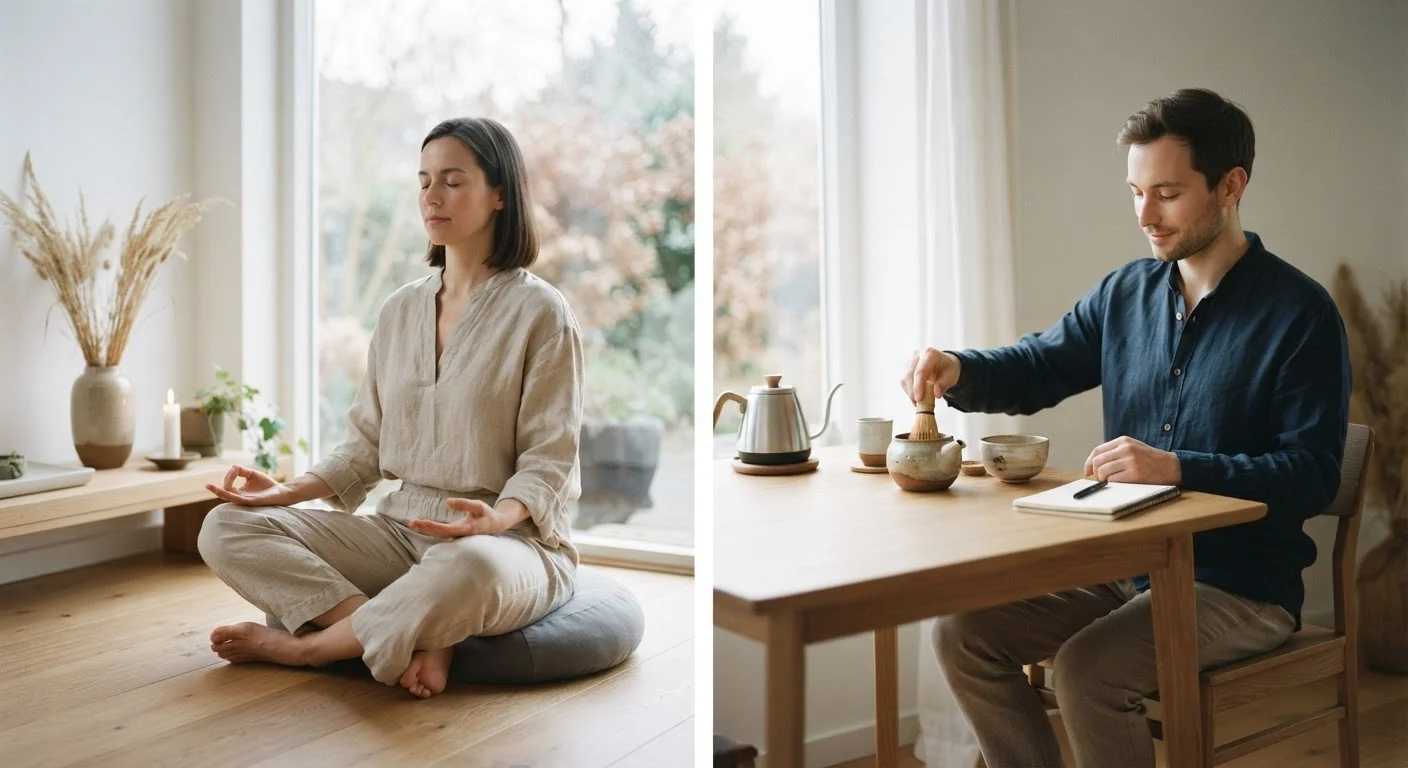
Photo: QuickAdvisor.net editorial
Key Takeaways
- Meditation is a formal practice with a defined beginning and end; mindfulness is an ongoing quality of attention.
- All meditation can involve mindfulness, but mindfulness does not require meditation.
- Research supports both practices for reducing stress and improving emotional regulation.
- Beginners can start with either approach - there is no required sequence.
- Consulting a mental health professional is advisable if you are using these tools to address a clinical condition.
Where the Confusion Comes From
The terms meditation and mindfulness are used interchangeably in wellness culture, on app store descriptions, and even in some clinical settings - but they describe different things. Understanding the distinction is not just semantic; it helps you choose the right tool for the right moment and set realistic expectations for both.
Mindfulness is a mental quality - a deliberate, non-judgmental awareness of the present moment. Meditation, on the other hand, is a formal practice - a set activity you perform for a defined period to train your mind. Think of mindfulness as a skill and meditation as one method of building it. Just as you can develop physical strength through many activities, you can develop mindfulness through many routes, meditation being one of the most studied.
This kind of conceptual clarity matters, especially when mental wellness tools are often oversimplified. For a broader look at how professional support categories get similarly blurred, see our guide to therapy, coaching, and counseling.
What Meditation Actually Is
Meditation refers to a structured mental exercise practiced intentionally, usually in a quiet setting, for a set period. Common forms include:
- Focused attention meditation: Directing awareness to a single object - typically the breath - and gently returning attention when the mind wanders.
- Open monitoring meditation: Observing all thoughts, sensations, and feelings without attachment, often used in mindfulness-based stress reduction (MBSR) programs.
- Loving-kindness meditation (Metta): Cultivating feelings of compassion toward oneself and others through structured mental phrases.
- Body scan meditation: Systematically moving attention through different parts of the body to develop somatic awareness.
Each style has a beginning, a middle, and an end. You sit (or lie) down, follow a method, and then return to your day. Research published in journals such as JAMA Internal Medicine has found regular meditation practice associated with reductions in anxiety, depression symptoms, and perceived stress - though researchers note that study quality varies and results are not universal.
| Criterion | Meditation | Mindfulness |
|---|---|---|
| Definition | Structured formal practice | Ongoing quality of awareness |
| Time required | Dedicated session (5-45 min) | Any moment, any duration |
| Location | Quiet, dedicated space preferred | Anywhere, anytime |
| Beginner accessibility | Moderate - some instruction helps | High - no training required |
| Research base | Extensive clinical study | Strong, especially in MBSR context |
| Primary benefit area | Focus, emotional regulation | Stress reduction, present-moment calm |
| Can include the other? | Yes - most meditation builds mindfulness | Not necessarily - mindfulness ≠ meditation |
What Mindfulness Actually Is
Mindfulness is the quality of paying full, deliberate, non-judgmental attention to what is happening right now - in your body, your thoughts, and your environment. It can be practiced during meditation, but it doesn't have to be. You can be mindful while washing dishes, listening to a colleague, or taking a walk.
Psychologists Jon Kabat-Zinn, who developed MBSR in the late 1970s at the University of Massachusetts Medical School, defined mindfulness as "paying attention in a particular way: on purpose, in the present moment, and non-judgmentally." This definition remains foundational in clinical and research settings.
Practicing mindfulness informally means intentionally noticing sensory details - the taste of food, the tension in your shoulders, the tone of a conversation - rather than running on autopilot. Because it requires no dedicated time or equipment, it's accessible even on the most demanding days.
47%
Time minds wander during daily tasks
A Harvard study found people's minds wander nearly half the time they are awake, underscoring why deliberate mindfulness practice is difficult but valuable.
~8 weeks
Duration of standard MBSR programs
Mindfulness-Based Stress Reduction (MBSR), developed at UMass Medical School, is typically delivered as an 8-week structured program in clinical settings.
38%
U.S. adults who have tried meditation
According to the National Health Interview Survey, meditation use among American adults has grown significantly over the past decade.
Practical Ways to Use Each
Neither practice is inherently superior. The better question is: what do you need right now?
Starting with meditation
Even five to ten minutes of daily seated, focused breathing can begin building attentional control over time. Consistency matters more than duration - a brief daily session generally outperforms an occasional long one according to most behavioral research on habit formation.
Weaving mindfulness into the day
Pause before you respond to a stressful email. Notice three physical sensations while standing in line. Take one slow, deliberate breath before a meeting. These micro-practices cost no extra time and accumulate meaningful effects over days and weeks.
If you find the body-awareness component of mindfulness useful, our explainer on flexibility, mobility, and stretching covers related concepts that often overlap in movement-based wellness routines like yoga.
This article is for general informational and educational purposes only and is not a substitute for professional medical or mental health advice. If you are experiencing significant anxiety, depression, or other mental health concerns, please consult a qualified healthcare professional.
The content on this site is for informational purposes only and is not a substitute for professional advice. Always consult a qualified professional for guidance specific to your situation.