
Why Ice Gets Slippery: The Physics Beneath Your Feet

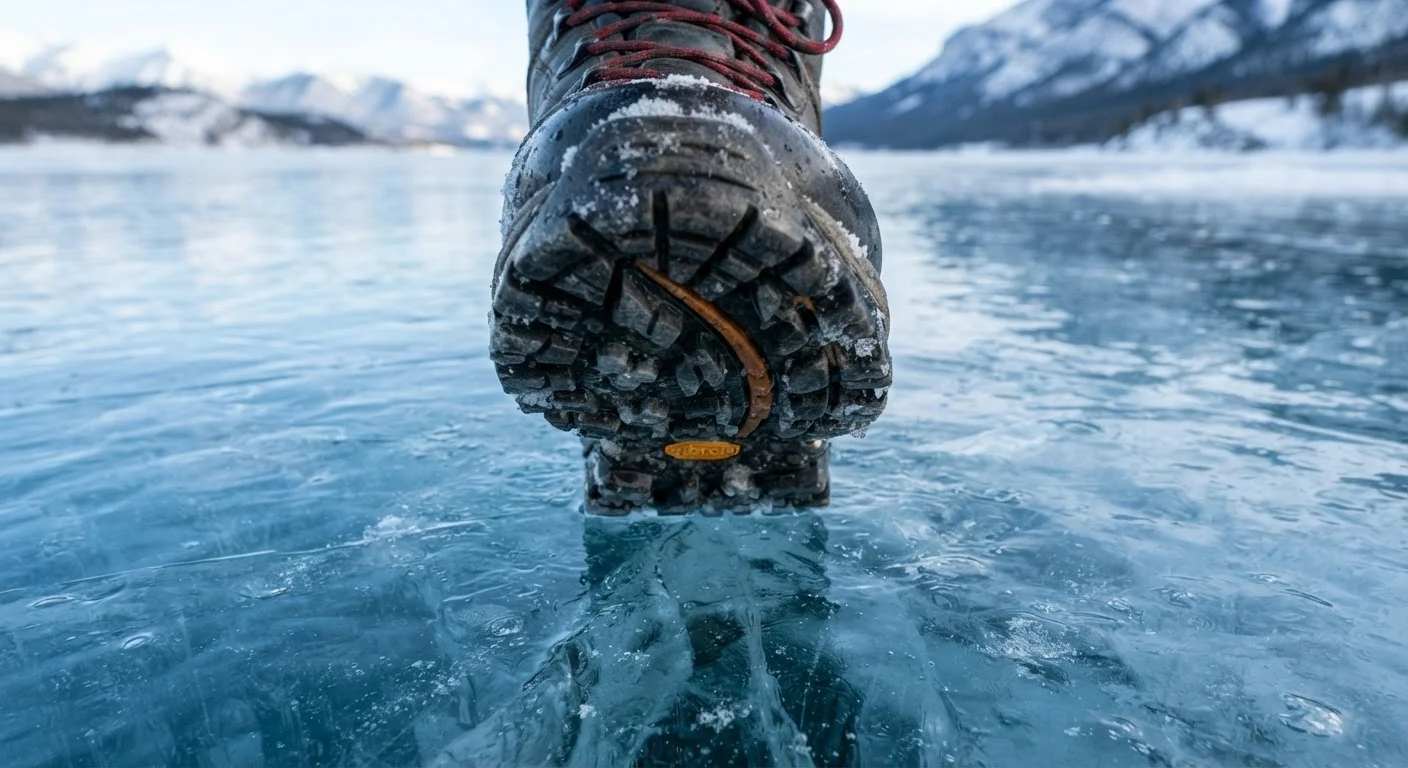
Photo: QuickAdvisor.net editorial
Key Takeaways
- Ice is slippery primarily because of a naturally occurring quasi-liquid layer on its surface, not just pressure alone.
- The old 'pressure melting' explanation has been largely revised by modern physics research.
- Friction from movement also generates localized heat that can thin the surface layer further.
- Temperature affects how slippery ice is - very cold ice can actually have more grip than ice near 32°F.
- Understanding ice friction has practical applications in winter safety, sports, and road engineering.
The Myth You Learned in School
For generations, textbooks offered a tidy explanation: you slip on ice because your weight creates pressure that melts a thin layer of water underfoot, and that water acts as a lubricant. It's an intuitive story, and it has a long scientific pedigree - the pressure-melting hypothesis dates back to the 19th century.
There's just one problem: the math doesn't hold up. An average adult standing on ice generates nowhere near enough pressure to lower ice's melting point significantly. You would need to be standing on a surface area smaller than a needle tip to produce the pressure required. Skaters in this model fared slightly better - their narrow blades concentrate force - but even then, calculations show pressure melting alone cannot explain why ice at, say, 14°F feels so slick.
So what's actually happening? The answer lies in the molecular behavior of water itself, and it's stranger and more fascinating than the pressure story ever was. Understanding it also helps explain why friction behaves so differently on ice compared to nearly every other surface you encounter.
The Quasi-Liquid Layer: Ice's Built-In Lubricant
Water molecules in solid ice are locked into a crystalline lattice, held in place by hydrogen bonds. But at the very surface of the ice - the outermost few nanometers - those bonds are incomplete. Surface molecules have fewer neighbors to bond with, so they vibrate more freely and behave less like a rigid solid and more like a disordered fluid.
This region is called the quasi-liquid layer (QLL), and it exists spontaneously, without any pressure or movement required. Think of it as ice that hasn't quite committed to being solid at its outer boundary. This layer is not the same as liquid water - it's a transitional state, more mobile than ice but less fluid than water.
The QLL is thicker and more mobile at temperatures close to 32°F, which is why sidewalk ice on a mild winter day feels far more treacherous than ice in a deep freeze. At extremely low temperatures, the layer becomes vanishingly thin, and ice can actually grip surfaces more like a conventional rough solid.
~1 nm
Thickness of ice's quasi-liquid surface layer
Research using surface-sensitive techniques has measured the quasi-liquid layer at just a few nanometers thick at temperatures near freezing.
800,000+
Emergency room visits from ice-related falls annually (U.S.)
The CDC estimates hundreds of thousands of Americans are treated in emergency departments each year for fall injuries on ice and snow.
~14°F
Temperature at which ice grip improves noticeably
Studies on ice friction show the quasi-liquid layer becomes thin enough at temperatures around -10°C (14°F) and below to significantly increase surface friction.
Friction, Heat, and the Role of Movement
The quasi-liquid layer explains resting slipperiness, but motion adds another layer of physics. When a boot, blade, or tire slides across ice, the friction generated - however small - produces heat at the contact point. That localized warmth can temporarily thicken the liquid-like layer directly beneath the moving object, further reducing resistance.
This is why ice skating works so elegantly: the thin steel blade generates just enough frictional heat as it moves to maintain an ultra-low friction interface, while the rigid blade edge allows the skater to push off and steer. The physics of that glide is similar in principle to why your coffee spills when a bus stops short - objects in motion tend to keep moving when friction suddenly changes, as explored in the science of inertia in everyday life.
“The slipperiness of ice is one of the most deceptively complex problems in surface physics. The quasi-liquid layer was proposed over a century ago, but we are still working out precisely how it behaves under different conditions.”
— Daniel Bonn, Professor of Physics, University of Amsterdam, and ice friction researcher
The interplay between the QLL and frictional heating also explains why spinning car tires on ice can make things worse rather than better - more spinning generates more heat, potentially thickening that slippery surface layer instead of finding grip.
Practical Takeaways for Walking on Ice
Understanding the physics gives real guidance for staying upright. The goal is to maximize contact area and minimize sliding motion - both reduce the contribution of frictional heating and allow whatever grip exists to work in your favor.
- Walk flat-footed: Spreading your weight across more surface area distributes pressure rather than concentrating it.
- Slow down: Less movement means less frictional heat and less disruption to the quasi-liquid layer.
- Use textured soles or ice cleats: These create mechanical interlocking with ice's surface, partially bypassing the QLL.
- Respect temperature: Ice near 32°F is measurably more dangerous than very cold ice - don't let a mild winter day make you complacent.
Salt and sand work through different mechanisms - salt disrupts the surface chemistry while sand adds physical texture - but both target the same fundamental challenge: providing something more grippable than that molecular near-liquid film.
This article is for general informational and educational purposes. Always exercise appropriate caution on icy surfaces and follow local safety guidelines for winter conditions.
Frequently Asked Questions
The content on this site is for informational purposes only and is not a substitute for professional advice. Always consult a qualified professional for guidance specific to your situation.