
The Immune System at a Glance: Innate and Adaptive Defenses

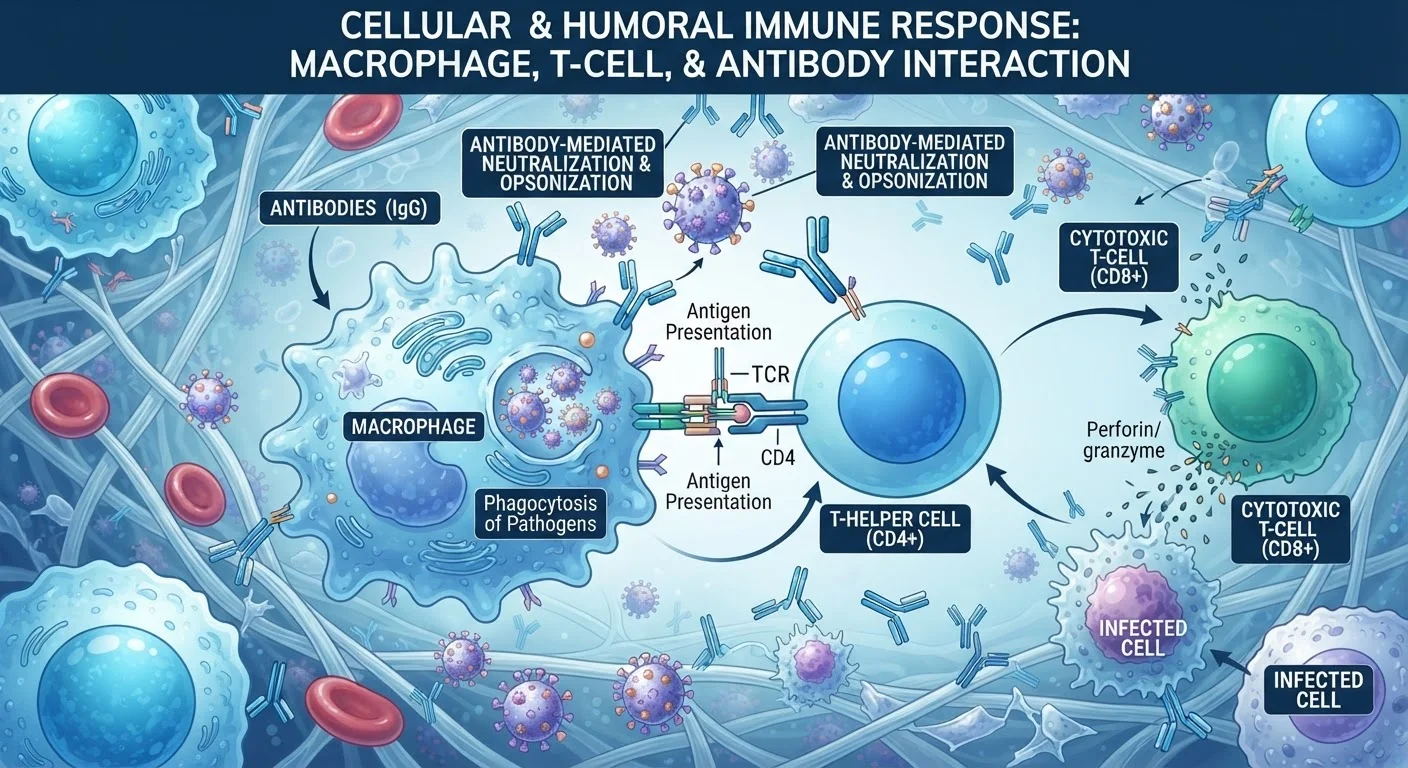
Photo: QuickAdvisor.net editorial
Two Layers of Defense
Every time you breathe, eat, or touch a surface, your body encounters microorganisms - bacteria, viruses, fungi, and parasites. Most never cause disease because your immune system intercepts them first. That system operates on two distinct but interlocking levels: the innate immune system, which responds immediately, and the adaptive immune system, which builds a targeted, lasting response over days.
Think of innate immunity as a general alarm - fast, broad, and always on. Adaptive immunity is more like a specialized strike force that needs time to mobilize but hits with precision. Both are essential. Neither works optimally without the other.
| Innate response speed | Minutes to hours (National Institutes of Health, immunology overview) |
| Adaptive response speed | 4-7 days (first exposure) (NIH National Library of Medicine) |
| Memory cell duration | Decades to lifetime (Immunological Reviews, general consensus) |
| Antibody types (immunoglobulins) | 5 classes (IgA, IgD, IgE, IgG, IgM) (Janeway's Immunobiology, 10th ed.) |
| White blood cell lifespan (neutrophils) | Hours to a few days (NIH National Library of Medicine) |
| Primary adaptive immune organs | Thymus, bone marrow, lymph nodes, spleen |
The Innate Immune System: Speed Over Specificity
When a pathogen breaches your skin or mucous membranes, innate immunity activates within minutes. It doesn't recognize specific threats - instead, it detects molecular patterns shared by broad classes of invaders. Key players include:
- Neutrophils: The most abundant white blood cells; they engulf and destroy bacteria rapidly through a process called phagocytosis.
- Macrophages: Larger cells that patrol tissues, consume pathogens, and release chemical signals (cytokines) that coordinate the broader response.
- Natural killer (NK) cells: Target virus-infected cells and early tumor cells without needing prior exposure.
- The complement system: A cascade of blood proteins that puncture pathogen membranes and mark invaders for destruction.
Inflammation - redness, swelling, warmth, pain - is a hallmark of innate immunity at work. It's uncomfortable, but it signals that resources are being routed to the site of infection.
Antigen
A molecule - usually a protein on the surface of a pathogen - that the immune system recognizes as foreign and mounts a response against.
Antibody
A Y-shaped protein produced by B cells that binds specifically to a particular antigen, neutralizing or marking the pathogen for destruction.
Phagocytosis
The process by which immune cells like neutrophils and macrophages engulf and digest pathogens or cellular debris.
Cytokines
Signaling proteins released by immune cells to coordinate and amplify the immune response, including triggering inflammation.
Memory cells
Long-lived B and T cells retained after an infection clears; they enable a faster, stronger immune response upon re-exposure to the same pathogen.
Innate immunity
The non-specific, rapid first line of immune defense present from birth, which responds to broad patterns shared by many pathogens.
The Adaptive Immune System: Precision and Memory
If innate defenses can't fully contain an infection, the adaptive immune system engages - typically within 4-7 days of first exposure. It has two defining features: specificity (targeting one particular pathogen) and memory (remembering it for future encounters).
Two cell types drive adaptive immunity:
- B cells: Produce antibodies - Y-shaped proteins that bind to specific antigens on pathogens, neutralizing them or flagging them for destruction.
- T cells: Come in helper and cytotoxic varieties. Helper T cells coordinate the immune response; cytotoxic T cells directly kill infected cells.
After the infection clears, a subset of B and T cells persist as memory cells. On re-exposure to the same pathogen, these cells trigger a faster, stronger response - which is why a second bout of chickenpox is rare, and why vaccines work.
The lymphatic system plays a critical supporting role here: lymph nodes are the sites where adaptive immune cells encounter antigens and undergo activation.
This article is for informational purposes only and is not a substitute for professional medical advice.
The content on this site is for informational purposes only and is not a substitute for professional advice. Always consult a qualified professional for guidance specific to your situation.