
The Lymphatic System: Your Body's Quiet Cleanup Crew

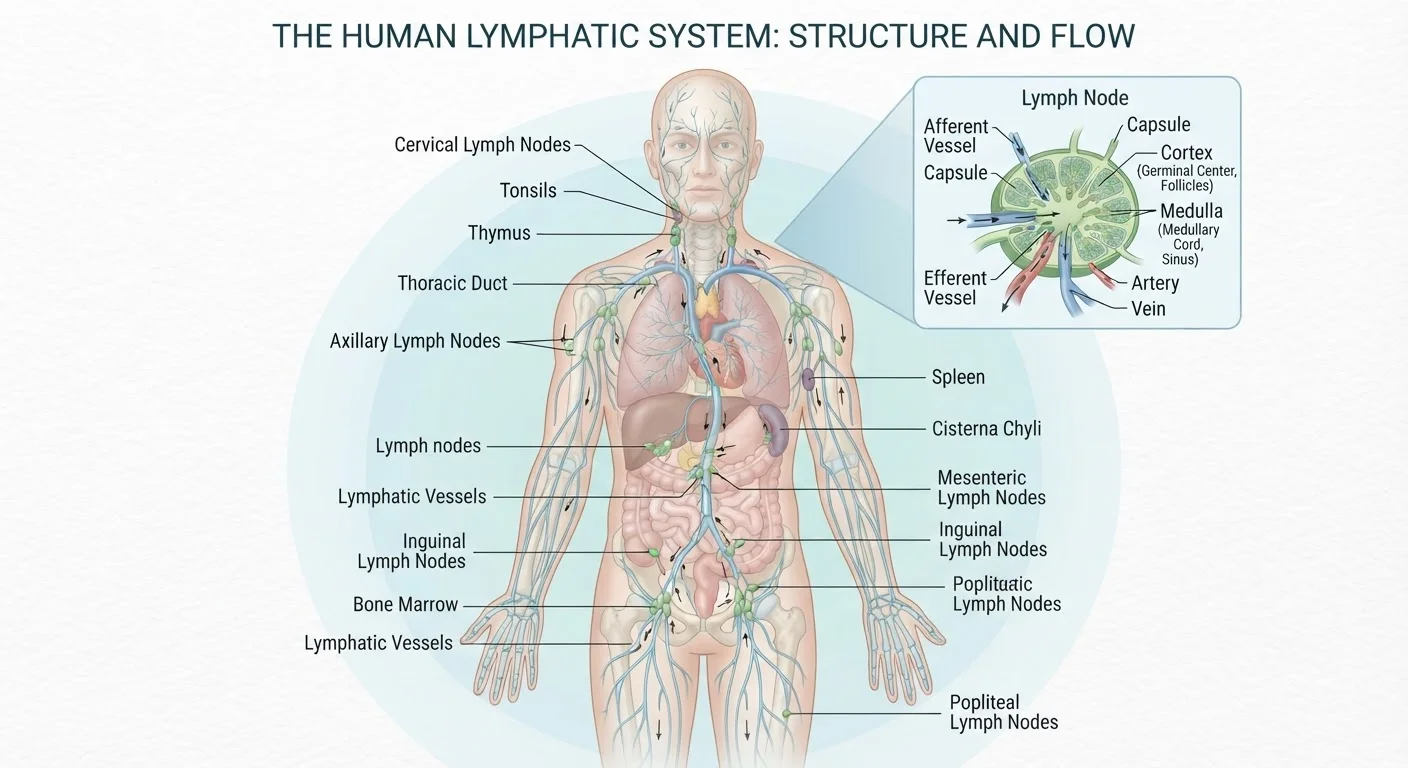
Photo: QuickAdvisor.net editorial
Key Takeaways
- The lymphatic system collects excess fluid from tissues and returns it to the bloodstream.
- Lymph nodes filter lymph fluid and house immune cells that detect and fight infection.
- Unlike the circulatory system, the lymphatic system has no central pump - movement depends on muscle contractions and breathing.
- Swollen lymph nodes are a common sign that the immune system is actively responding to something.
- The lymphatic system also absorbs dietary fats from the digestive tract.
What Is the Lymphatic System?
Most of us learned that the heart pumps blood through arteries and veins. Far fewer people know about the body's parallel fluid network - the lymphatic system - quietly running alongside it. Yet this system is just as essential, performing work that keeps your tissues from waterlogging, your blood chemistry balanced, and infection-fighting cells supplied to where they're needed.
The lymphatic system is a network of thin-walled vessels, small bean-shaped structures called lymph nodes, and several organs including the spleen, thymus, and tonsils. Together they collect a fluid called lymph - essentially the watery component that leaks out of blood capillaries into surrounding tissue - and cycle it back toward the heart.
Lymph
A clear, slightly yellowish fluid collected from body tissues. It contains water, proteins, and white blood cells, and is eventually returned to the bloodstream.
Lymph node
A small, bean-shaped filtering station along the lymphatic vessels. It traps pathogens and debris and houses immune cells that respond to threats.
Lymphocyte
A type of white blood cell central to immune responses. B lymphocytes produce antibodies; T lymphocytes directly attack infected or abnormal cells.
Interstitial fluid
The fluid that surrounds and bathes cells in body tissues. Excess interstitial fluid is collected by the lymphatic system to prevent tissue swelling.
Thoracic duct
The largest lymphatic vessel in the body. It collects lymph from most of the body and drains it into a large vein near the left collarbone.
Lacteals
Specialized lymphatic capillaries in the lining of the small intestine that absorb dietary fats and fat-soluble vitamins after a meal.
The Main Parts and What They Do
Understanding the lymphatic system is easier when you break it into its key components:
- Lymphatic capillaries: Microscopic, one-ended vessels that absorb excess interstitial fluid (the fluid between your cells) from virtually every tissue in the body.
- Lymphatic vessels: Larger channels, similar in structure to veins, that transport collected lymph fluid toward the chest. They contain one-way valves to keep fluid moving in the right direction.
- Lymph nodes: Hundreds of small filtering stations clustered along the vessels - prominent ones sit in the neck, armpits, and groin. They house lymphocytes (a type of white blood cell) that inspect the passing fluid for pathogens and abnormal cells.
- The spleen: The body's largest lymphatic organ, located in the upper left abdomen. It filters blood rather than lymph, removes old red blood cells, and stores immune cells.
- The thymus: A gland in the chest where a type of immune cell called a T lymphocyte matures. It is most active during childhood and shrinks with age.
- Tonsils and adenoids: Clusters of lymphatic tissue at the back of the throat that intercept pathogens entering through the mouth and nose.
How Lymph Actually Moves
Here's what surprises most people: the lymphatic system has no heart of its own. There's no dedicated pump pushing fluid through the vessels. Instead, the system relies on several passive and active mechanisms:
- Skeletal muscle contractions: When you walk, stretch, or exercise, nearby muscles squeeze the lymphatic vessels, pushing fluid forward. The one-way valves prevent it from sliding back.
- Breathing: The pressure changes in your chest cavity during inhalation and exhalation act like a gentle bellows, drawing lymph upward toward the thoracic duct - the main lymphatic drainage channel that empties into a large vein near the collarbone.
- Smooth muscle in vessel walls: Larger lymphatic vessels have a thin layer of smooth muscle that contracts rhythmically, providing some autonomous pumping action.
Movement Supports Lymphatic Flow
This dependence on movement explains why prolonged sitting can cause mild lower-limb swelling, and why physical activity is consistently associated with healthy lymphatic function.
The Lymphatic System and Your Immune Defense
The lymphatic system and the immune system are inseparable partners. As lymph passes through each lymph node, resident immune cells - particularly lymphocytes and macrophages - scan it for bacteria, viruses, cellular debris, and abnormal cells. When a threat is detected, those cells mount a local immune response and signal for reinforcements.
The system also plays a central role in transporting immune cells throughout the body. Lymphocytes produced in the bone marrow travel through lymphatic vessels to mature (in the thymus, for T cells) or to reach lymph nodes and other tissues where they patrol for foreign invaders.
Beyond its filtering role, the lymphatic system absorbs dietary fats and fat-soluble vitamins (A, D, E, and K) from the small intestine through specialized capillaries called lacteals, carrying them into the bloodstream. This is why lymph draining from the gut looks milky after a fat-rich meal - a substance called chyle.
For a broader look at how the body's defenses are organized, see our overview of innate and adaptive immune defenses.
When the System Signals a Problem
The lymphatic system is usually invisible in daily life - until something draws attention to it. Common signals include:
- Swollen lymph nodes: Typically a normal, temporary immune response to infection. Nodes that stay enlarged for weeks, are very large, or are painless warrant evaluation by a clinician.
- Lymphedema: Persistent swelling in a limb caused by blocked or damaged lymphatic drainage, most often seen after cancer treatment affecting nearby lymph nodes. Specialized physical therapy can help manage symptoms.
- Recurring infections: May indicate an underlying problem with lymphocyte production or function, warranting medical assessment.
Persistent Swollen Nodes Deserve Attention
The lymphatic system is also the route through which some cancers - particularly lymphoma (cancer of lymphatic tissue) and metastatic cancers - can spread. Regular checkups and awareness of persistent, unexplained node swelling are important for early detection.
This article is for general educational purposes only and is not a substitute for professional medical advice. Always consult a qualified healthcare provider about any symptoms or health concerns you may have.
Frequently Asked Questions
The content on this site is for informational purposes only and is not a substitute for professional advice. Always consult a qualified professional for guidance specific to your situation.