
What Happens to Your Body During Sleep, Hour by Hour

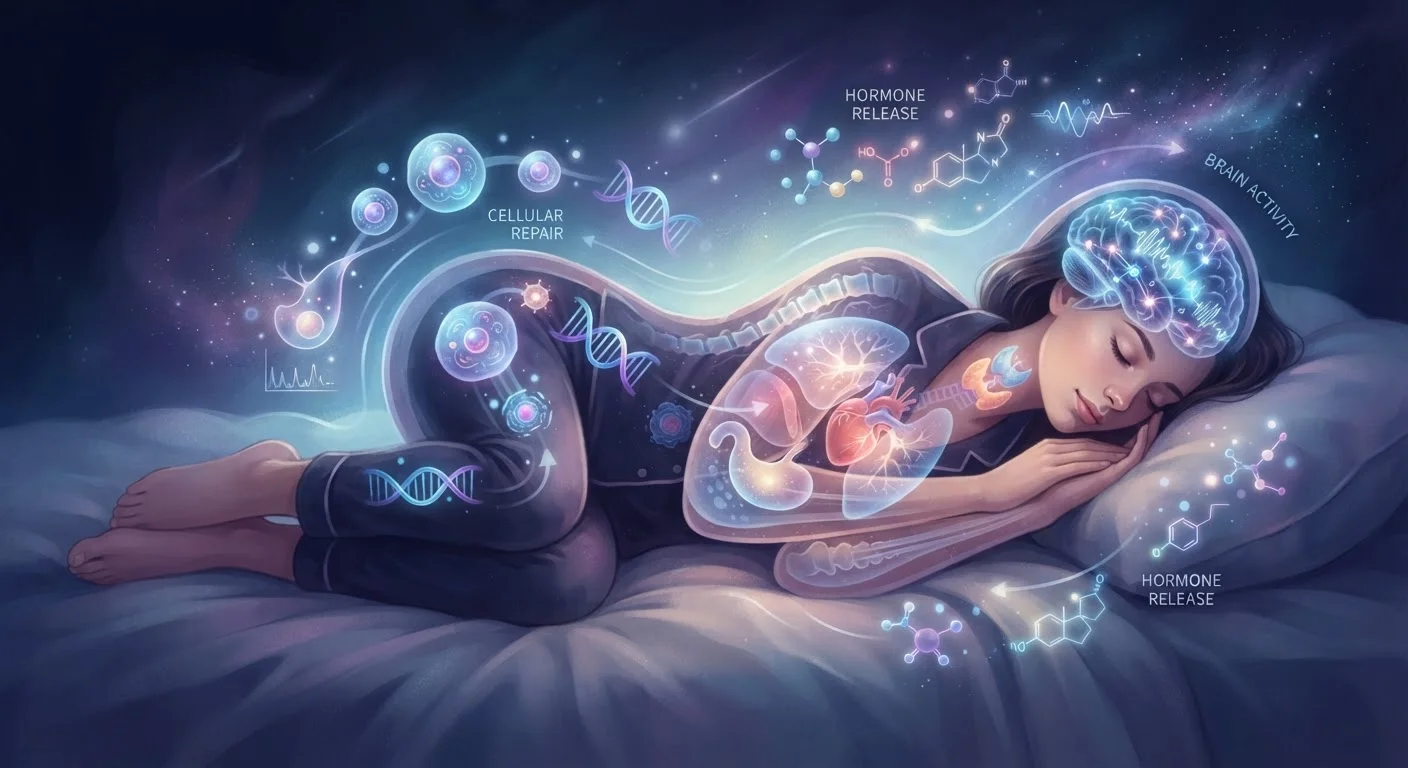
Photo: QuickAdvisor.net editorial
Key Takeaways
- Sleep cycles through distinct stages every 90 minutes, each with unique biological roles.
- Deep sleep, concentrated in the early part of the night, drives physical repair and immune function.
- REM sleep, dominant in the later hours, is critical for memory consolidation and emotional regulation.
- Growth hormone is released primarily during slow-wave deep sleep, not during waking hours.
- Cutting sleep short disproportionately reduces REM sleep, which falls mostly in the final hours.
The First 90 Minutes: Descending Into Deep Sleep
Within minutes of falling asleep, your body begins a carefully orchestrated descent through three progressively deeper stages of non-REM sleep. Stage 1 is the brief transition - your muscles relax, your heart rate slows, and your brain produces theta waves. Many people experience a sudden muscle jerk during this stage, called a hypnic jerk, a harmless reflex as your nervous system shifts gears.
Stage 2 brings a measurable drop in body temperature and the appearance of sleep spindles - short bursts of brain activity thought to protect sleep quality and support motor learning. Then comes Stage 3: slow-wave sleep, the deepest and most restorative phase. Blood pressure falls, breathing becomes regular, and the pituitary gland releases a surge of growth hormone. This is the stage where your body does the heavy lifting of physical repair - rebuilding muscle tissue, strengthening the immune system, and consolidating procedural memories like how to ride a bike.
90 min
Duration of a single sleep cycle
The American Academy of Sleep Medicine describes a typical sleep cycle as lasting 80-100 minutes, cycling four to six times per night.
20-25%
Portion of adult sleep spent in REM
Research published in sleep science literature consistently finds REM sleep accounts for roughly one-fifth to one-quarter of total sleep time in healthy adults.
1-2 hrs
Peak growth hormone release window
Studies indicate the largest pulse of growth hormone secretion occurs during the first slow-wave sleep episode of the night, typically within the first 90 minutes.
For this reason, athletic coaches and sports scientists have long emphasized that sleep is not just rest - it is active recovery. See our discussion of rest and recovery for a broader look at how the body rebuilds between exertion.
Hours Two Through Four: The First REM Window
After roughly 90 minutes of non-REM sleep, you surface briefly toward lighter sleep before entering your first REM period. This initial REM window lasts only about 10 minutes, but it marks a dramatic shift in brain activity. Your eyes move rapidly beneath closed lids, your breathing becomes irregular, and electrical signals in the brain resemble those of wakefulness. Vivid dreaming occurs here.
The hippocampus and neocortex collaborate during REM to transfer short-term memories into long-term storage - a process known as memory consolidation. This is why studying before sleep and sleeping afterward is associated with better retention than staying up late cramming. The brain is also doing emotional processing during REM, replaying experiences with reduced levels of norepinephrine, a stress chemical, which may blunt their emotional charge.
Protect Your Final Sleep Hours
The connection between sleep and mental health runs directly through this stage. Disrupted REM sleep is consistently associated with heightened anxiety, impaired emotional regulation, and mood disorders.
The Final Hours: REM Dominance and Hormonal Reset
As the night progresses, each new 90-minute cycle contains less deep sleep and more REM sleep. By the fifth or sixth hour, you may spend 45 to 60 minutes in a single REM period. This is also when the brain's glymphatic system - a network of channels that expands during sleep - is most active at flushing out metabolic waste, including proteins associated with neurological disease.
Cortisol levels, which are suppressed early in the night, begin rising in the final hours before waking. This is not a stress response - it's the body's natural alarm clock, preparing you for alertness. Simultaneously, melatonin production tapers off as light exposure (even through closed eyelids) signals the circadian clock.
Cutting sleep short by even 60 to 90 minutes eliminates a significant portion of your final REM cycle. Because REM is concentrated in the back half of the night, this disproportionate loss has real consequences for mood, cognitive sharpness, and emotional resilience the following day.
The surface you sleep on influences how well your body moves through these stages - the physics of sleep surfaces explains how pressure distribution and support affect sleep quality. And if you want to align your habits with your biology, the science of wind-down routines offers evidence-grounded starting points.
This article is for informational and educational purposes only and is not a substitute for professional medical advice. If you have concerns about your sleep or health, consult a qualified healthcare provider.
Frequently Asked Questions
The content on this site is for informational purposes only and is not a substitute for professional advice. Always consult a qualified professional for guidance specific to your situation.