
Key Consumer Protection Terms Every Shopper Should Recognize

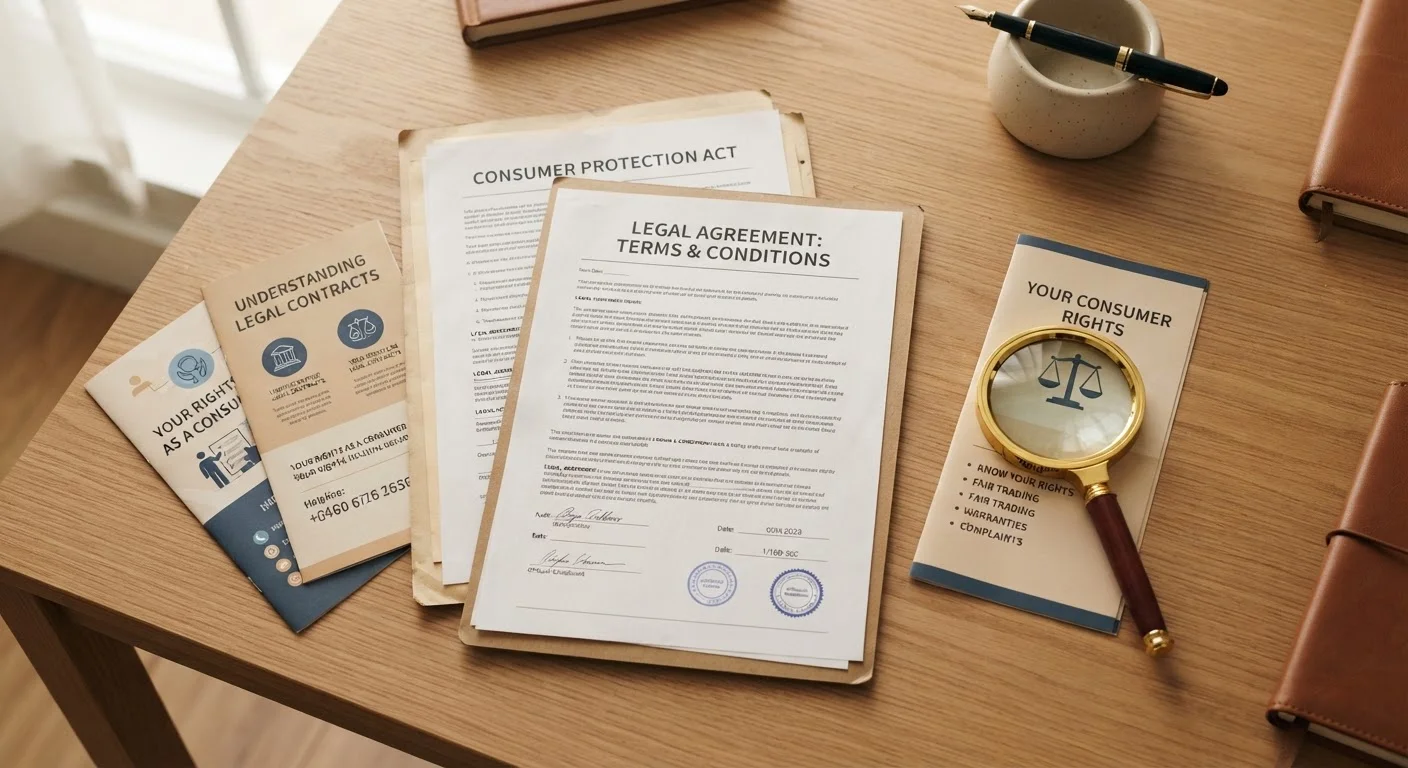
Photo: QuickAdvisor.net editorial
Why These Terms Matter Before You Need Them
Consumer protection law is full of specific vocabulary - and that vocabulary has real legal weight. When a retailer says a product is sold "as-is," or a contract mentions an "arbitration clause," those aren't just bureaucratic phrases. They define what you can and can't do if something goes wrong.
Most shoppers only encounter these terms mid-dispute, when time pressure makes it hard to research them properly. This reference guide is designed to fix that. Learning these terms in advance puts you in a position to recognize when your rights are being respected - and when they aren't.
For a broader look at who enforces these protections, see our guide to consumer protection agencies.
Cooling-Off Rule
An FTC regulation giving consumers three business days to cancel certain sales made away from a seller's permanent location, such as door-to-door sales. It does not apply to most standard retail or online purchases.
Magnuson-Moss Warranty Act
A federal law governing written warranties on consumer products sold in the United States. It requires warranties to be clearly labeled as 'full' or 'limited' and sets minimum standards for each type.
Implied Warranty of Merchantability
An unwritten, automatic guarantee under the Uniform Commercial Code that a product will function for its ordinary, intended purpose. Most states recognize this protection even without a written warranty.
Chargeback
A credit card transaction reversal initiated by the card issuer on behalf of the cardholder. Common grounds include non-delivery of goods, items significantly not as described, or unauthorized charges.
Arbitration Clause
A contract provision requiring disputes to be resolved through private arbitration rather than the court system. These clauses typically limit discovery rights and may waive the right to a jury trial.
Class-Action Waiver
A contractual provision that prevents a consumer from joining or initiating a class-action lawsuit against a company. Often paired with mandatory arbitration clauses.
As-Is Sale
A transaction in which the seller explicitly disclaims all warranties, meaning the buyer accepts the product in its current condition with no guarantee of fitness or quality. State laws vary on whether implied warranties can be fully disclaimed.
Full Warranty
Under the Magnuson-Moss Warranty Act, a warranty that obligates the seller to repair or replace a defective product within a reasonable time and at no charge to the consumer.
Core Terms Decoded
The terms below come up most frequently in warranty disputes, refund requests, subscription cancellations, and fraud claims. Each one reflects a specific right or legal mechanism worth understanding.
| Cooling-Off Rule window | 3 business days (Federal Trade Commission (FTC)) |
| Law governing written warranties | Magnuson-Moss Warranty Act (1975) (U.S. Federal Law) |
| Chargeback time limit (typical) | 60-120 days from billing date (Varies by card network and issuer) |
| Agencies handling consumer complaints | FTC, CFPB, State Attorneys General (Federal and state level) |
| States with expanded consumer protections | Includes CA, NY, MA (and others) (State law varies; verify locally) |
Terms Covering Warranties
A full warranty (under the Magnuson-Moss Warranty Act) requires a seller to repair or replace a defective product within a reasonable time at no charge. A limited warranty is narrower - it may restrict coverage by duration, geography, or what it covers. Always read which type applies before purchasing a high-ticket item.
An implied warranty of merchantability is an unwritten, automatic guarantee that a product will work for its ordinary purpose. Even if a seller provides no written warranty, this implied protection exists in most states - though sellers sometimes try to disclaim it using "as-is" language.
Terms Covering Cancellations and Returns
The cooling-off rule, enforced by the Federal Trade Commission (FTC), gives consumers three business days to cancel certain sales made away from a seller's permanent place of business - such as door-to-door sales. Note that this rule does not apply to most online or retail store purchases.
A chargeback is a reversal of a credit card transaction initiated by your card issuer, typically used when a merchant fails to deliver goods, delivers something materially different from what was advertised, or engages in unauthorized billing.
Terms Covering Dispute Resolution
A mandatory arbitration clause in a contract requires you to resolve disputes through a private arbitrator rather than a court. These clauses often limit your ability to join a class-action lawsuit. Spotting them before signing gives you the chance to negotiate or walk away.
A class-action waiver frequently appears alongside arbitration clauses and explicitly prevents you from participating in group litigation against a company. Courts have generally upheld these waivers, making pre-purchase awareness especially important.
If you're newer to navigating these protections, our article on common consumer rights misconceptions explains what most people get wrong before they've ever filed a complaint.
Putting the Terms to Practical Use
Recognition alone isn't enough - knowing when and how to invoke these terms is what matters in practice. A few principles help:
- Document everything. Emails, receipts, and screenshots of product listings establish the basis for warranty claims and chargebacks.
- Check your state's laws. Several states, including California, New York, and Massachusetts, extend consumer protections beyond federal minimums. State attorneys general offices are a good starting point for state-specific guidance.
- Use written communication. When disputing a charge or invoking a warranty, written requests create a paper trail that's useful if a complaint escalates to a regulatory agency or small claims court.
- File complaints strategically. The FTC, Consumer Financial Protection Bureau (CFPB), and your state attorney general each handle different categories of complaints. Routing yours correctly speeds up response time.
Consumer protection vocabulary isn't just legal trivia - it's a practical toolkit. The more fluent you are in these terms before a problem arises, the faster and more effectively you can respond when one does.
The content on this site is for informational purposes only and is not a substitute for professional advice. Always consult a qualified professional for guidance specific to your situation.