
Myths About Store Return Policies That Cost Shoppers Money

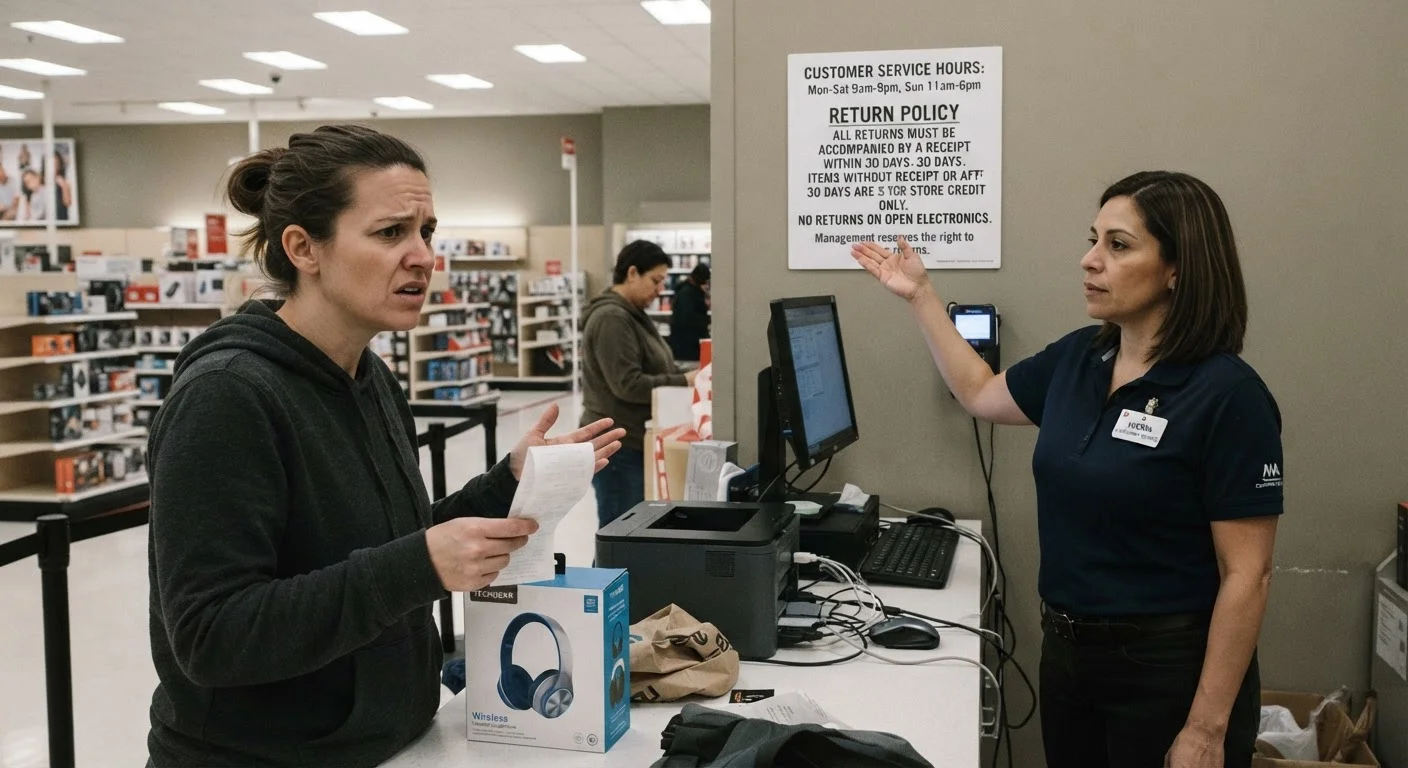
Photo: QuickAdvisor.net editorial
Key Takeaways
- Stores are generally not legally required to accept returns unless the item is defective or misrepresented.
- A posted return policy is a binding contract once you've made a purchase under it.
- Credit card chargebacks exist as a consumer tool but have specific conditions and shouldn't be overused.
- Restocking fees, final sale designations, and shortened windows are all legal if disclosed before purchase.
- Keeping your receipt and original packaging materially improves your chances of a successful return.
Why Return Policy Myths Are Expensive
Return policies are one of the most misunderstood corners of consumer rights. Many shoppers operate on assumptions - that stores must give refunds, that paying by credit card guarantees a return, that a missing receipt is always fatal - and those assumptions cost real money when they turn out to be wrong. Other myths work the opposite way: shoppers give up on legitimate returns they'd easily win if they understood the rules.
The gap between what the law actually requires and what shoppers assume is wide. Most return policy rules in the U.S. are set by individual retailers, not federal law. That means your rights vary dramatically by store, by product category, and by how you paid. Getting this right starts with separating the persistent myths from verified facts. See also our companion piece on traps buried in return policy fine print for what to check before you buy.
Myth
Stores are legally required to give you a refund if you're unhappy with a purchase.
Fact
In most U.S. states, retailers have no legal obligation to accept returns on non-defective merchandise. Return policies are voluntary unless state law specifies otherwise.
Federal law does not mandate a general right to return merchandise. A handful of states require stores to post their return policy conspicuously, but posting a policy and being required to offer one are different things. If a store posts no policy, some states default to allowing returns within a specific window - but that's the exception, not the rule. The practical takeaway: read the posted policy before you buy, not after. If nothing is posted, ask. You can find a deeper look at category-specific carve-outs in our article on return policy exceptions that catch buyers off guard.
Myth
Paying by credit card means you can always get your money back through a dispute.
Fact
Credit card chargebacks are available under specific conditions - not as a blanket undo button for any purchase you regret.
Chargebacks are governed by card network rules and the Fair Credit Billing Act. Valid grounds include items not received, items materially different from their description, or unauthorized charges. Simple dissatisfaction or a change of mind does not meet the threshold. Filing a chargeback for buyer's remorse when the store's policy is clear and was disclosed at purchase is unlikely to succeed and may flag your account with the retailer.
Myth
Without a receipt, a store can't do anything for you.
Fact
Many retailers can look up purchases using a credit card, loyalty account, or order number - no paper receipt required.
Physical receipts are increasingly optional in an era of email confirmations and loyalty programs. Most large retailers can pull transaction records from card swipes or account history. That said, without any proof of purchase, stores are within their rights to offer store credit at the current selling price rather than what you paid - which matters if the item has been marked down. Keep digital receipts in a dedicated email folder as a minimal, effective habit.
Myth
Final sale means you have no recourse if the item is defective.
Fact
Final sale limits your return rights for change-of-mind situations, but a genuinely defective or misrepresented product is a different legal matter.
"Final sale" language waives the store's voluntary return policy. It does not waive implied warranties under the Uniform Commercial Code (UCC), which most states have adopted in some form. An implied warranty of merchantability means a product should function as a reasonable buyer would expect. If a "final sale" blender won't turn on out of the box, you likely still have recourse - either through the retailer or the manufacturer's warranty. The distinction is between returning something you simply don't want versus something that doesn't work as represented.
Myth
Restocking fees are illegal or always negotiable.
Fact
Restocking fees are legal when disclosed before purchase, and retailers are not obligated to waive them.
Restocking fees - typically 10-25% of the purchase price, commonly applied to electronics, appliances, and special-order items - are enforceable when disclosed upfront. The FTC requires that material terms like these be clear before a transaction completes. If a restocking fee wasn't disclosed at point of sale, you have a stronger argument to dispute it. But if it was in the posted policy or on a receipt you signed, you agreed to it. Before buying high-ticket items, ask specifically about restocking fees and get the answer in writing.
What Shoppers Can Actually Do When a Return Goes Wrong
Even when a store's return policy doesn't favor you, options often remain. First, escalate within the store - floor staff enforce policy, but managers sometimes have discretion to override it, especially on high-value items or clear defects. Document the defect with photos before you return anything.
Second, check your credit card benefits. Many cards extend return windows or offer purchase protection - terms vary by card issuer, so verify yours directly. A chargeback is a separate mechanism: it disputes the charge with your bank on grounds such as item not as described or item not received. Chargebacks are legitimate consumer tools but are not a general-purpose workaround for buyer's remorse; misusing them can result in the retailer banning your account.
Third, if an item is genuinely defective, the manufacturer's warranty is independent of the store's return policy. Filing a warranty claim directly with the manufacturer often resolves situations where the store's window has closed. For a broader grounding in these protections, our guide on what new shoppers get wrong about their legal protections covers warranty disputes and fraud claims in plain language.
Defective Items Follow Different Rules
Understanding these escalation paths before you need them - not after a dispute begins - puts you in a measurably stronger position as a consumer.
The content on this site is for informational purposes only and is not a substitute for professional advice. Always consult a qualified professional for guidance specific to your situation.