
Building a Weekly Workout Schedule That You'll Actually Stick To

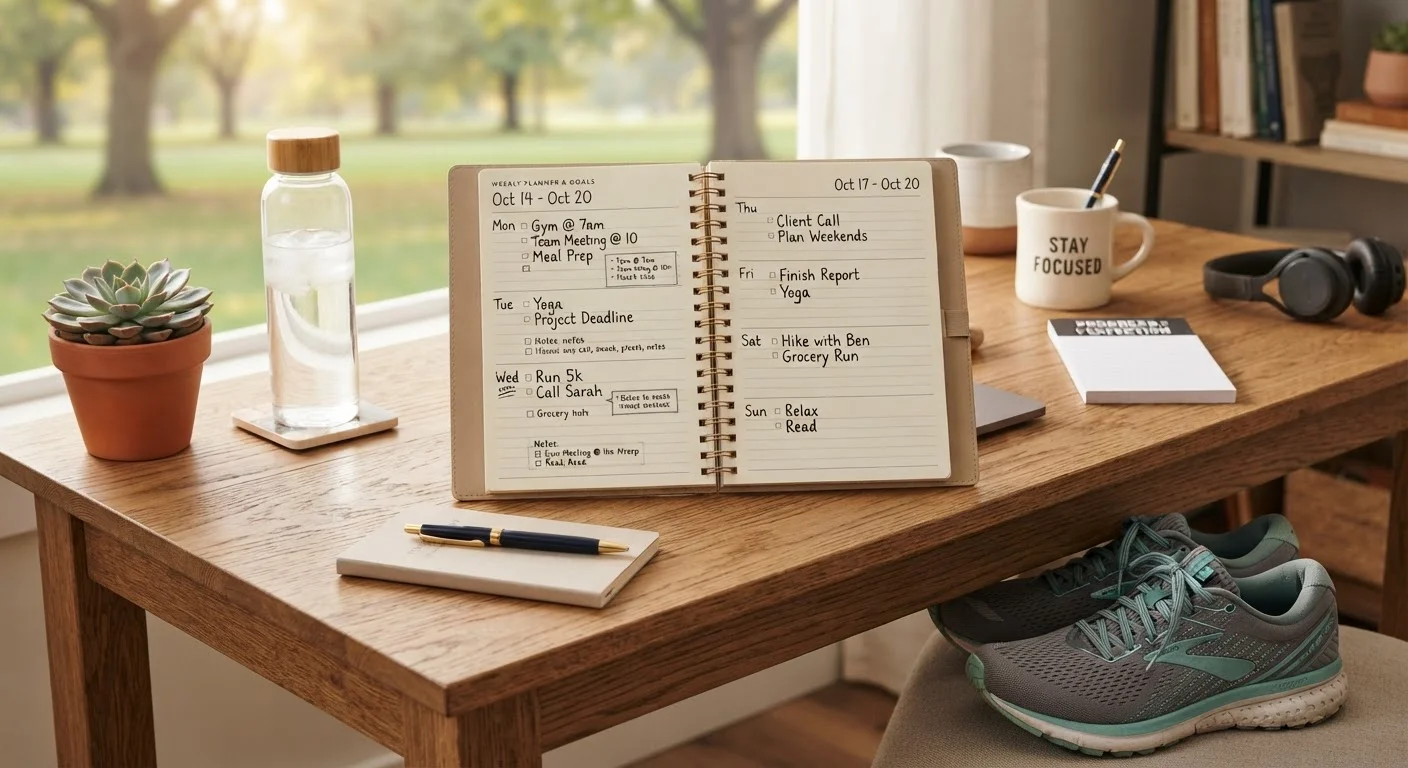
Photo: QuickAdvisor.net editorial
Key Takeaways
- A sustainable schedule is built around your real availability, not an ideal week.
- Balancing effort and recovery is just as important as choosing the right exercises.
- Starting with fewer days per week builds consistency before intensity.
- Rest days are a structural part of training, not a sign of weak commitment.
- Small, repeatable sessions outperform ambitious plans that get abandoned.
Why Most Workout Schedules Fall Apart
The most common reason a workout plan fails is not lack of motivation - it is a mismatch between the plan and real life. Schedules designed around an idealized week with unlimited energy and time collapse when an ordinary Tuesday arrives with traffic, a late meeting, and a tired body.
Research in behavioral science consistently finds that implementation intentions - specific plans that tie a behavior to a time, place, and situation - dramatically improve follow-through compared to vague commitments. Translating that to fitness means your schedule should answer three questions before you start: When specifically will you train? What will you do in that session? And what happens if that window disappears?
Foundational consistency habits matter more than programming sophistication, especially in the first 8-12 weeks. A modest, executable plan outperforms an optimized one you abandon.
What you will need
How to Structure Your Week
A well-balanced training week has three structural layers: training sessions, active recovery, and full rest. Most beginners benefit from starting with three training days; intermediate exercisers may progress to four or five. Going beyond five sessions per week is rarely productive for general fitness goals and increases burnout risk.
Use the tools below to help plan and track your schedule, then follow the step-by-step process to build yours.
Weekly calendar or planner
Maps out available training windows alongside existing commitments so you can identify realistic slots.
Training journal or notes app
Tracks completed sessions, perceived effort, and how your body responds week to week.
Fitness timer or interval app
Structures work and rest periods during sessions, especially useful for circuit or interval formats.
Audit your actual weekly availability
Before choosing exercises, map your real week. Pull up your calendar and mark every firm commitment - work hours, family responsibilities, commutes. What remains are your potential training windows. Most people overestimate free time; this step prevents that mistake.
Look for at least three windows of 30-60 minutes. If you only find two, start there. A consistent two-day schedule beats an ambitious five-day plan that collapses by week two.
Define your primary training goal
A schedule built around a vague intention to 'get fit' rarely holds. Identify one primary goal for the next 8-12 weeks - building general cardiovascular fitness, increasing muscular strength, improving flexibility, or a combination. Your goal determines which types of sessions belong in the week and in what proportion.
For example, a cardiovascular focus might lean on three aerobic sessions per week, while a strength focus centers on two or three resistance sessions with one aerobic complement.
Choose your training days and rest days deliberately
Distribute effort and recovery across the week rather than clustering all training on consecutive days. A common effective structure for beginners is three training days with rest or light movement days in between - for example, Monday, Wednesday, and Friday - though the specific days matter less than the spacing.
For those training four or five days, plan at least one full rest day and one active recovery day (light walking, stretching, or yoga). Rest days are when adaptation happens, not a concession to laziness.
Assign session types to each training day
Give each training slot a clear purpose. Avoid programming the same session type back to back on consecutive days - for example, heavy strength training two days in a row stresses the same muscle groups before they have recovered. A simple rotation might alternate between lower-body strength, upper-body strength, and aerobic or cardio sessions.
Keep session length realistic for the time slot you identified in Step 1. A focused 35-minute session performed consistently is more valuable than a 90-minute plan that gets skipped because it feels overwhelming.
Set an intensity progression plan
Adaptation requires gradually increasing demand over time - this principle is called progressive overload. Plan to add a modest layer of challenge every one to two weeks: slightly more resistance, one additional set, or 5 more minutes of aerobic work. Small increments reduce injury risk and keep progress visible.
Check your schedule against the markers of a sound program. Signs that a training program is well-designed include planned progressions and built-in deload or easier weeks every four to six weeks.
Build in a weekly review habit
At the end of each week, spend five minutes reviewing what you completed, what you missed, and why. This is not about judgment - it is about data. If a particular session consistently gets skipped, that slot or format needs adjustment, not more willpower. Modifying your schedule based on real patterns is how a plan evolves from a template into a habit.
For deeper guidance on the behavioral side of consistency, building a movement habit that actually sticks covers the science of making physical activity second nature.
Start Smaller Than Feels Necessary
Adapting the Schedule When Life Interrupts
Every realistic fitness plan includes contingencies. When a planned session gets displaced, the productive response is a same-week substitution rather than writing off the week. A 20-minute home session is a valid replacement for a missed gym session. If you are working out at home, building a home workout habit with minimal space and no equipment provides practical strategies that require no gear.
The goal of a weekly review (Step 6) is to spot recurring disruptions and redesign around them - shifting a session to a different day, shortening the format, or replacing a session type that isn't working. Flexibility in structure, not rigidity, is what sustains a schedule over months rather than weeks.
Avoid Overhaul-and-Restart Cycles
This article provides general fitness education and is not a substitute for personalized advice from a qualified fitness professional or healthcare provider. Consult a professional before beginning a new exercise program, particularly if you have existing health conditions or injuries.
The content on this site is for informational purposes only and is not a substitute for professional advice. Always consult a qualified professional for guidance specific to your situation.