
Fitness Terms Every Beginner Should Know

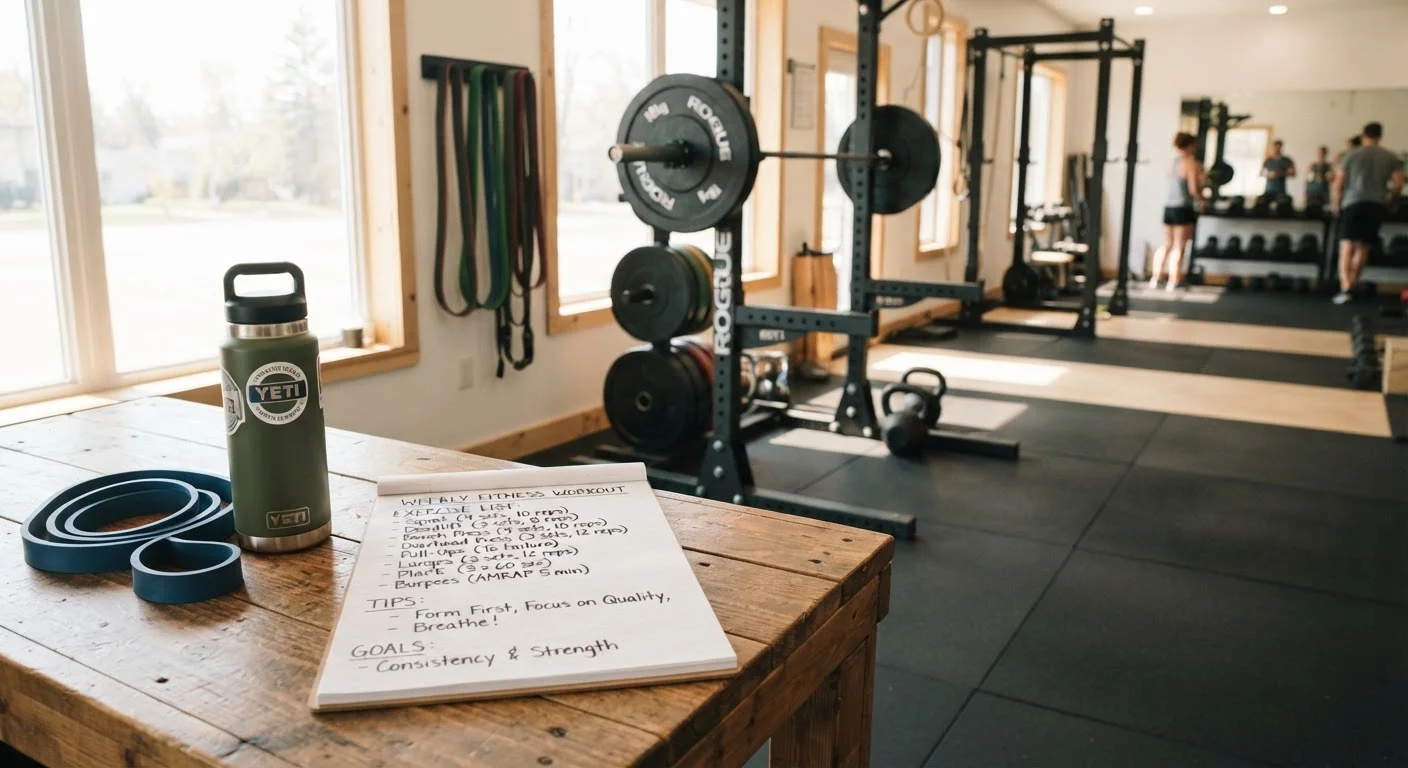
Photo: QuickAdvisor.net editorial
Why Fitness Jargon Matters
Walk into any gym or open a training app and you'll be hit with a wall of terminology - reps, sets, RPE, HIIT, progressive overload. For someone just starting out, this language can feel like a barrier rather than a guide. Understanding these terms isn't just academic; it directly affects how safely and effectively you train.
This reference covers the core vocabulary you'll encounter across workout programs, gym signage, and fitness guides. Bookmark it, return to it, and use it as a foundation as you build your routine. If you're still figuring out where to begin, see our practical introduction to starting a workout routine for guidance on frequency, effort, and consistency.
Rep (Repetition)
One complete execution of an exercise movement - for example, one squat or one push-up. Reps are grouped into sets to form the structure of a workout.
Set
A group of consecutive repetitions performed without rest. Workout programs typically prescribe a certain number of sets per exercise.
Progressive Overload
The gradual increase of training demand over time - through added weight, more reps, or reduced rest - to encourage continued physical adaptation.
RPE (Rate of Perceived Exertion)
A self-reported 1-10 scale that measures how hard an exercise feels. It's used to regulate training intensity based on daily readiness and individual response.
1RM (One-Rep Max)
The maximum amount of weight a person can lift for one complete repetition of an exercise. Used as a benchmark to set training loads.
VO2 Max
The maximum volume of oxygen the body can use during intense exercise. It is a standard marker of aerobic fitness and can be improved through consistent cardiovascular training.
HIIT
High-Intensity Interval Training - a format alternating short high-effort work periods with recovery intervals. It is time-efficient and well-researched, but requires adequate recovery.
Compound Movement
An exercise that engages multiple joints and muscle groups at once, such as a squat or deadlift. These movements are generally efficient and form the core of most strength programs.
Eccentric Phase
The portion of a movement where the muscle lengthens under load - typically the lowering phase. Controlled eccentric training is associated with strength gains and injury prevention.
Concentric Phase
The portion of a movement where the muscle shortens under load - the lifting or exertion phase. Most people focus on this phase while undertraining the eccentric.
Rest Interval
The period of recovery taken between sets. Duration influences training outcomes - shorter rest builds endurance; longer rest supports strength and power.
Functional Fitness
Training focused on movements that support everyday physical tasks like lifting, carrying, or maintaining balance. It prioritizes practical strength over isolated muscle development.
Training Structure Terms
Most workout programs are built around a handful of structural concepts that govern how exercise is organized and progressed over time.
| Most common set/rep structure for beginners | 3 sets of 8-12 reps (Widely supported in beginner strength training literature) |
| RPE scale range | 1 (no effort) to 10 (maximal effort) (Based on the Borg CR10 and modified RPE scales) |
| Typical HIIT work-to-rest ratio | 1:1 to 1:2 (e.g., 30 sec on, 30-60 sec off) (Common protocols in exercise science research) |
| Compound vs. isolation exercises | Compound = multi-joint; Isolation = single muscle group (Standard exercise classification) |
| VO2 max trainability | Can improve 5-20% with consistent aerobic training (General range cited in exercise physiology research) |
Reps and sets are the foundational unit of resistance training. A rep (repetition) is one complete movement - one squat, one push-up. A set is a group of consecutive reps performed without rest. So "3 sets of 10 reps" means you perform 10 squats, rest, and repeat that block twice more.
Progressive overload is the principle of gradually increasing demand on the body - whether through more weight, more reps, shorter rest, or greater range of motion - so that the body continues to adapt. It's one of the most consistently supported principles in exercise science.
Rest intervals refer to the time you take between sets. Shorter rest (30-60 seconds) tends to stress cardiovascular and muscular endurance; longer rest (2-3 minutes) better supports strength and power development.
Understanding how these pieces fit together makes written programs far easier to follow. For a broader look at evidence-backed structures, see training approaches that hold up across fitness levels.
Effort and Intensity Terms
Knowing how hard to work is just as important as knowing what exercises to do. These terms help you calibrate effort objectively.
RPE (Rate of Perceived Exertion) is a self-reported scale - typically 1 to 10 - that captures how hard an exercise feels. An RPE of 6 means moderate effort; 9 means near-maximal. Many coaches prefer RPE over fixed percentages because it accounts for daily variation in how your body feels.
1RM (One-Rep Max) is the maximum weight you can lift for a single complete repetition of a given exercise. It's used as a benchmark and to calculate training loads. Beginners rarely need to test their true 1RM; estimated values from multi-rep sets are safer and widely accepted.
VO2 max is the maximum rate at which your body can consume oxygen during intense exercise - a standard measure of cardiovascular fitness. Higher values generally indicate better aerobic capacity. It's trainable, though genetics set a ceiling.
HIIT (High-Intensity Interval Training) refers to alternating short bursts of high-effort work with recovery periods. It's time-efficient and well-studied, but it's also demanding - appropriate programming and adequate recovery matter.
If you're just getting started and fitness culture feels overwhelming, the starting from zero guide offers realistic, low-barrier entry points before intensity becomes a concern.
Muscle and Movement Terms
A working knowledge of how muscles and movements are described helps you read exercise instructions, prevent imbalances, and understand what a program is targeting.
Compound movements involve multiple joints and muscle groups simultaneously - squats, deadlifts, rows, and presses are classic examples. Isolation exercises target a single muscle group with minimal involvement from others, such as a biceps curl.
Concentric and eccentric phases describe the two directions of muscle action. The concentric phase is when the muscle shortens under load (lifting the weight); the eccentric is when it lengthens under load (lowering it). Eccentric control is frequently undertrained and is associated with injury prevention.
Functional fitness refers to movements that translate to everyday physical tasks - carrying groceries, climbing stairs, maintaining balance. It's a concept worth understanding before dismissing as a buzzword: see what functional fitness actually means for a clear breakdown.
Building consistency with these movement patterns - before adding significant load - is the habit most experts agree matters most. The workout consistency checklist covers exactly that foundation.
This article is for informational purposes only and does not constitute medical or personal training advice. Consult a qualified healthcare professional or certified fitness trainer before beginning any new exercise program, especially if you have existing health conditions.
The content on this site is for informational purposes only and is not a substitute for professional advice. Always consult a qualified professional for guidance specific to your situation.