
NHL vs. AHL: What Separates the Two Biggest Levels of Professional Hockey

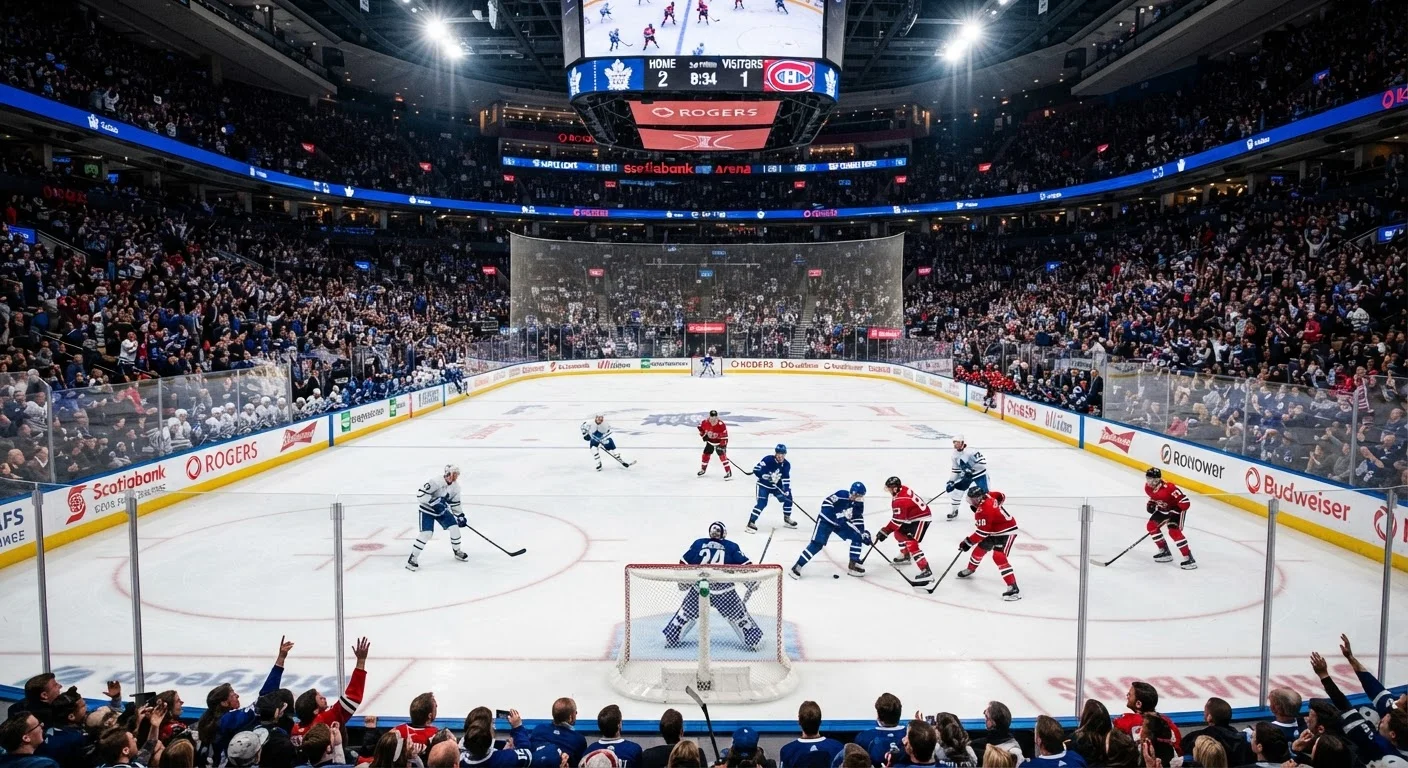
Photo: QuickAdvisor.net editorial
Key Takeaways
- The NHL is the top professional hockey league; the AHL is the primary developmental league one step below.
- Most AHL teams are formally affiliated with an NHL franchise, serving as the club's top minor-league affiliate.
- AHL rosters are filled with prospects, waiver-eligible veterans, and players shuttling back and forth to the NHL.
- Both leagues play under largely the same rules, though the AHL has historically tested rule changes before NHL adoption.
- Salaries, arenas, and media exposure differ significantly between the two leagues.
Understanding the League Structure
Professional hockey in North America is organized in a tiered structure. The NHL sits at the top - 32 franchises operating as the sport's highest competitive level. Directly below it is the AHL, which functions as the primary development circuit. Most AHL franchises maintain a formal affiliation agreement with an NHL club, meaning the NHL team controls much of the AHL roster and uses it as a pipeline for developing prospects and managing injured players.
This relationship is somewhat analogous to MLB's farm system, though hockey's structure has fewer tiers feeding into the top league. Players can be called up from the AHL to an NHL roster - and sent back down - throughout the season, giving the AHL a fluid, constantly shifting makeup that differs from the more stable NHL rosters.
Just as rulebook differences create fascinating contrasts in gridiron sports - see our comparison of American and Canadian football for a parallel example - the NHL and AHL share a sport but operate under distinct organizational purposes.
Rules, Play Style, and On-Ice Differences
Both leagues play under rules that are largely identical - the same ice dimensions, the same overtime formats in recent years, and the same fundamental gameplay. However, the AHL has historically served as a testing ground for rule changes before the NHL considers adopting them. For example, the AHL experimented with a three-on-three overtime format and several other modifications before those concepts were evaluated at the NHL level.
The most noticeable on-ice difference isn't in the rulebook - it's in execution. NHL players skate faster, make decisions quicker, and sustain elite-level play across an 82-game regular season. AHL games can be highly competitive and entertaining, but the pace and precision of NHL play is a clear step above.
| Criterion | NHL | AHL |
|---|---|---|
| League tier | Top professional level | Primary developmental league |
| Number of teams | 32 franchises | 32 franchises (approx.) |
| Salary range | $750K+ to $10M+ per year | ~$50K-$150K (standard AHL) |
| Roster size | 23-man active roster | Larger, fluid rosters |
| Arena capacity | 17,000-21,000 seats | 6,000-11,000 seats |
| Rule testing | Establishes final rules | Historically tests new rules first |
| Player movement | Limited mid-season roster changes | Frequent call-ups and send-downs |
The AHL also tends to feature more physical, rough-edged play as younger players work to establish themselves, while NHL veterans generally play a more disciplined, structured game shaped by years of high-level coaching.
Rosters, Salaries, and Player Pathways
NHL rosters carry a maximum of 23 players, with contracts governed by the league's Collective Bargaining Agreement (CBA) and subject to a salary cap. NHL salaries range widely - from the league minimum (over $750,000 USD in recent seasons) to contracts exceeding $10 million annually for elite players.
AHL rosters are larger and more fluid. Players on two-way NHL contracts earn one salary when in the NHL and a lower salary when assigned to the AHL. Many AHL players are on standard AHL contracts with significantly lower earnings - salaries in the AHL typically range from roughly $50,000 to $150,000 per season, though two-way earners can exceed that while in the minors.
32
Affiliated NHL-AHL team pairings
Each NHL franchise maintains a primary AHL affiliate, creating a direct one-to-one development pipeline across the league.
~$750K+
NHL league minimum salary (recent seasons)
The NHL's CBA sets a minimum salary that far exceeds what most AHL players earn on standard minor-league contracts.
1-3 years
Typical AHL development window for prospects
Most drafted NHL prospects spend one to three seasons in the AHL before earning a regular spot on an NHL roster, though timelines vary significantly.
The typical career arc for an NHL prospect runs through the AHL. Most players drafted by NHL teams spend one to three seasons developing in the AHL before earning a regular NHL roster spot. Some players carve out long AHL careers without ever becoming established NHL regulars, while others use strong AHL performances as leverage for NHL opportunities.
Fan Experience and League Footprint
The NHL operates in major metropolitan markets - cities like New York, Los Angeles, Toronto, and Chicago - with arenas seating 17,000 to 21,000 fans. Ticket prices reflect the premium product, with average NHL ticket costs often exceeding $100 for regular-season games in many markets.
The AHL has a strong presence in mid-sized North American cities, bringing professional hockey to markets that don't host NHL franchises. Arenas typically seat 6,000 to 11,000 fans, and the experience is notably more intimate. Ticket prices are considerably lower, making AHL games an accessible entry point for families and casual fans.
For many communities, the local AHL team represents their only exposure to professional hockey, and those franchises often build deep regional followings. The grassroots connection between AHL teams and their host cities is a meaningful part of what makes the league distinct - it's professional hockey at a community scale.
This article is for informational purposes only. League rules, salary figures, and organizational structures may change; consult official NHL and AHL sources for the most current information.
The content on this site is for informational purposes only and is not a substitute for professional advice. Always consult a qualified professional for guidance specific to your situation.