
Soccer for First-Timers: Understanding Offside, Extra Time, and the Laws of the Game

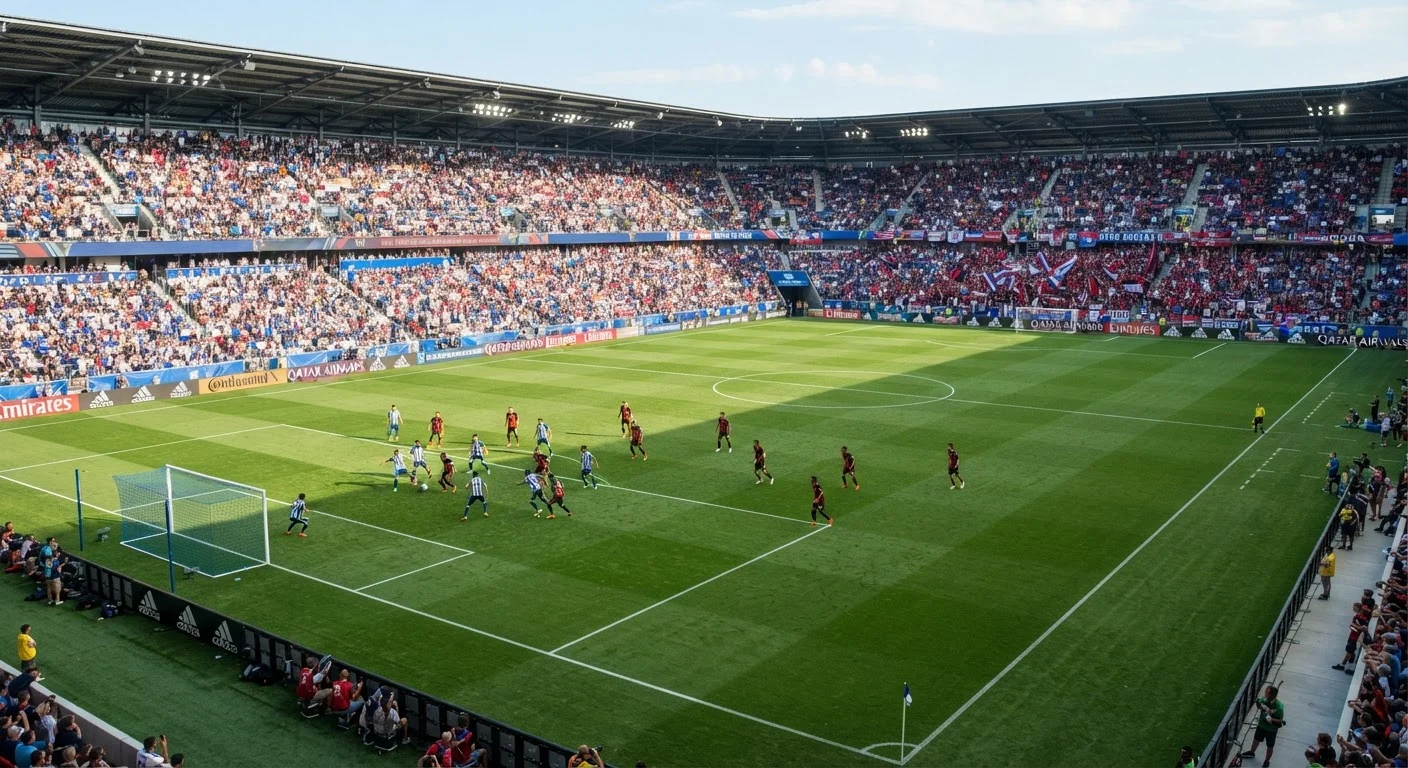
Photo: QuickAdvisor.net editorial
Key Takeaways
- Soccer is governed by 17 Laws of the Game maintained by the International Football Association Board (IFAB).
- The offside rule prevents attackers from gaining an unfair advantage by lurking near the opponent's goal.
- Yellow cards warn players; two yellows or a single red card results in ejection from the match.
- Extra time adds two 15-minute periods when knockout matches are tied after 90 minutes.
- Penalty shootouts - not regular play - determine the winner if extra time ends level.
- Set pieces like corner kicks and free kicks are among the most strategic moments in any match.
The Basic Setup: Field, Teams, and Positions
Soccer - known as football outside the United States - is played on a rectangular grass or artificial turf field called a pitch. Each team fields 11 players, including one goalkeeper whose job is to stop the ball from crossing the goal line. The remaining 10 players are generally organized into defenders, midfielders, and forwards, though a team's exact formation (such as 4-4-2 or 4-3-3) is a tactical decision made by the coach.
The pitch is divided by a center line, with a center circle where kickoffs take place. Near each goal is the penalty area - a large rectangle that is critical for understanding fouls and penalty kicks. The Laws of the Game, maintained by the International Football Association Board (IFAB), define every element of official play worldwide.
Pitch
The playing field in soccer - a rectangular surface of grass or artificial turf where the match takes place.
Penalty Area
The large rectangular zone in front of each goal. Fouls committed by the defending team inside this area result in a penalty kick for the attackers.
Offside
A situation where an attacking player is positioned closer to the opponent's goal than both the ball and the second-to-last defender when the ball is played to them.
Set Piece
A restart of play following a stoppage, such as a free kick, corner kick, or penalty kick. These are planned, practiced moments that teams use strategically.
Stoppage Time
Extra minutes added by the referee at the end of each half to compensate for time lost to injuries, substitutions, or other delays during regular play.
VAR
Video Assistant Referee - a technology system used in professional matches to review and correct major officiating decisions, including goals and offside calls.
How the Game Is Played and Scored
A match begins with a kickoff at the center circle and consists of two 45-minute halves. The objective is straightforward: put the ball into the opposing team's net more times than the other team does. A goal is scored when the entire ball crosses the goal line between the posts and under the crossbar.
The clock in soccer runs continuously - it does not stop for the ball going out of bounds or for minor stoppages. Instead, the referee tracks delays and adds stoppage time (also called injury time) at the end of each half. This is why you'll sometimes see a match seemingly extend past 45 or 90 minutes.
Players advance the ball by passing, dribbling, or shooting. Only the goalkeeper may use their hands, and only within the penalty area. All other players must use their feet, chest, or head to control the ball.
The Offside Rule Explained Clearly
The offside rule is the concept that trips up most newcomers. Here is the clearest way to understand it: an attacking player is in an offside position if, at the exact moment a teammate plays the ball forward to them, they are nearer to the opponent's goal line than both the ball and the second-to-last defender (usually the last outfield player).
Crucially, being in an offside position is not automatically a foul. The referee only stops play if the player in that position becomes actively involved - receiving the ball, interfering with an opponent, or gaining an advantage from that position. A player cannot be offside from a goal kick, corner kick, or throw-in.
Modern matches use VAR (Video Assistant Referee) technology to review offside decisions, which is why you'll sometimes see a goal celebrated briefly before being disallowed after review.
Watch the Defenders, Not Just the Ball
Fouls, Cards, and Set Pieces
When a player commits a foul - such as tripping, pushing, or handling the ball - the opposing team is awarded a free kick from the spot of the infraction. A direct free kick can be shot straight at goal; an indirect free kick must touch another player before a goal can be scored. If a foul occurs inside the defending team's penalty area, the attacking team receives a penalty kick - a one-on-one shot from 12 yards out against the goalkeeper.
Referees manage misconduct using cards. A yellow card is a formal warning; a player who receives two yellow cards in one match is shown a red card and must leave the field. A red card can also be issued directly for serious offenses like violent conduct. The team plays short-handed for the rest of the game - no replacement is allowed.
Other important set pieces include corner kicks (awarded when a defender puts the ball out over their own goal line) and throw-ins (when the ball goes out along the sideline). For a broader look at how fouls and violations work across sports, see our guide to basketball fouls and violations.
Extra Time, Penalty Shootouts, and Tiebreakers
In league play, a match that ends level after 90 minutes simply results in a draw - each team receives one point in the standings. But in knockout competitions (like the World Cup's elimination rounds or domestic cup tournaments), a winner must be determined.
If the score is tied after regulation, the match moves to extra time: two additional 15-minute halves played in full regardless of goals scored. If the teams remain level after extra time, the match is decided by a penalty shootout. Each team alternates taking kicks from the penalty spot, with five kicks apiece to start. If still tied, it continues in sudden-death rounds until one team misses and the other scores.
It is worth noting that a penalty shootout result is considered separate from the match result for statistical purposes - the game itself is recorded as a draw. If you're new to watching other sports and want a similar breakdown, our first-time baseball viewer's guide applies the same approach to America's other beloved pastime.
Competition Rules Can Vary
Frequently Asked Questions
The content on this site is for informational purposes only and is not a substitute for professional advice. Always consult a qualified professional for guidance specific to your situation.