
The Timeline of the NBA: How Professional Basketball Grew Into a Global Sport

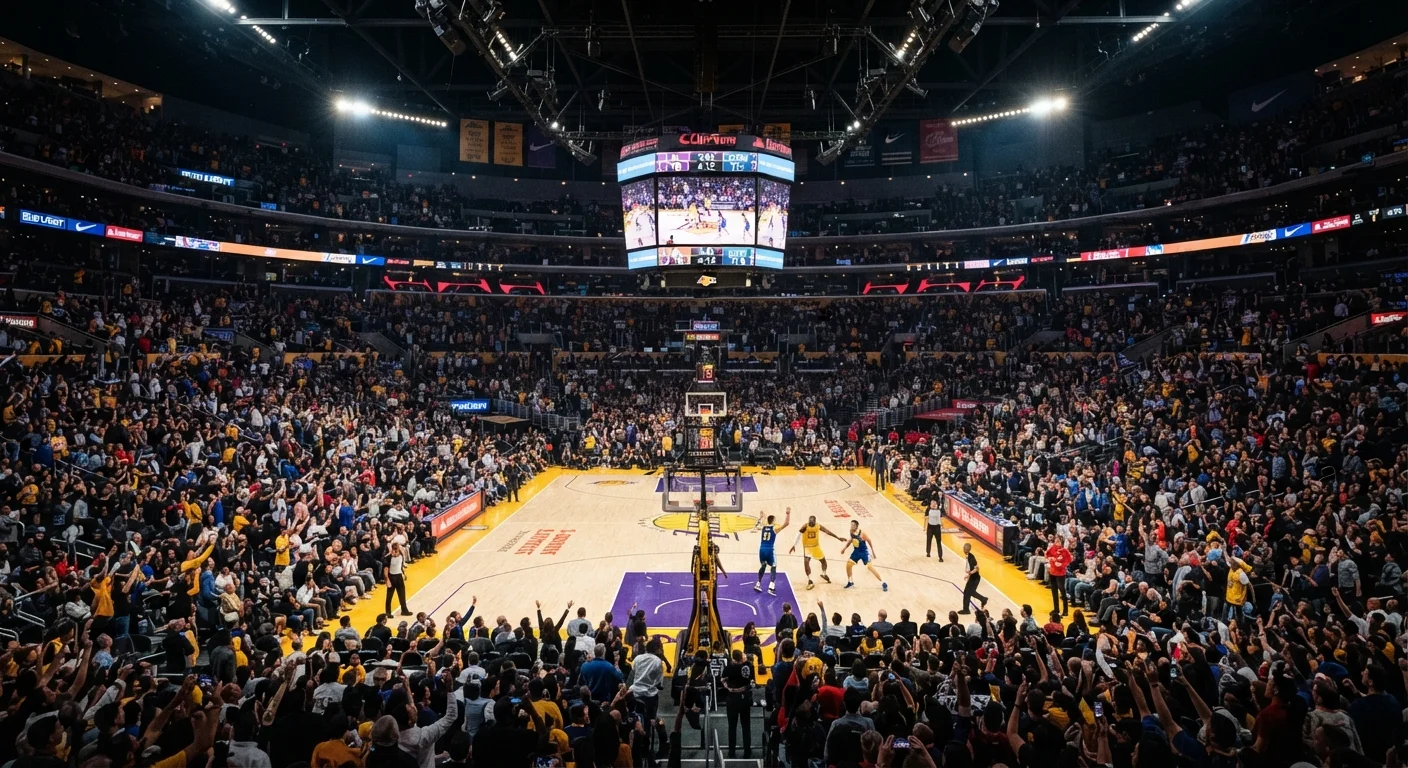
Photo: QuickAdvisor.net editorial
Key Takeaways
- The NBA formed in 1949 after two rival leagues merged into one professional circuit.
- Television partnerships in the 1980s transformed the league's reach and revenue.
- The 1992 Olympic Dream Team accelerated basketball's global popularity dramatically.
- International players now make up roughly a quarter of all NBA rosters.
- Rule changes and player empowerment have continuously reshaped how the game is played.
The Founding Years: BAA and the Birth of the NBA
Professional basketball didn't start with the NBA. In 1946, arena owners looking to fill off-nights formed the Basketball Association of America (BAA). The league featured eleven franchises and played its first game on November 1, 1946, in Toronto. A rival circuit, the National Basketball League (NBL), had been operating since 1937 and controlled much of the sport's best talent at the time.
Competition between the two leagues was fierce but financially draining for both. In 1949, they merged to create the National Basketball Association - the NBA. The newly combined league started with seventeen franchises, though many folded within a few seasons. By 1954-55, the NBA had stabilized at eight teams, concentrated mostly in the Northeast and Midwest.
Early basketball was a low-scoring, methodical game. Stalling tactics could drag games to a crawl. In 1954, the league introduced the 24-second shot clock - requiring teams to attempt a shot within 24 seconds - a rule change widely credited with saving the sport's commercial appeal by forcing continuous action.
When studying basketball history, pay attention to rule changes as much as players - structural shifts like the shot clock or the three-point line often drive eras more than any individual star.
If you want to understand the modern NBA's global reach, trace the career paths of international players who grew up watching the 1992 Dream Team - the generational pipeline that created is still producing talent today.
Merger, Expansion, and Early Growing Pains
Through the 1960s, the Boston Celtics dominated the league under coach Red Auerbach, winning eleven championships in thirteen seasons between 1957 and 1969. Center Bill Russell anchored those teams and redefined what defensive excellence looked like in professional basketball.
A second rival league, the American Basketball Association (ABA), launched in 1967 and competed aggressively for players and markets. The ABA introduced the three-point line and a red-white-blue ball, playing a flashier, more up-tempo style. Financial instability plagued many ABA franchises, and in 1976 the NBA absorbed four surviving ABA teams: the Denver Nuggets, Indiana Pacers, New York Nets, and San Antonio Spurs. The three-point shot, initially resisted by NBA traditionalists, was adopted by the league in 1979.
24 sec
Shot clock introduced in 1954
The shot clock was credited with fundamentally transforming the pace and commercial viability of professional basketball.
40+
Countries represented on NBA rosters
By the mid-2020s, international players from more than 40 countries made up roughly one-quarter of all NBA roster spots.
11
Celtics championships in 13 seasons
The Boston Celtics under coach Red Auerbach won eleven NBA titles between 1957 and 1969, a record dynasty in professional team sports.
The 1980s Renaissance: Bird, Magic, and the Modern Era
By the late 1970s, the NBA faced real challenges: declining attendance, a drug scandal involving several players, and television ratings that had slipped enough that the NBA Finals aired on tape delay. The league's revival came largely through two players whose rivalry captured the imagination of casual fans across the country.
Larry Bird, playing for the Boston Celtics, and Magic Johnson, leading the Los Angeles Lakers, entered the league in 1979 and immediately elevated the sport's profile. Their teams met in the NBA Finals three times during the decade. Simultaneously, Commissioner David Stern - who took office in 1984 - pursued aggressive marketing strategies, licensing deals, and a landmark partnership with television networks that brought live playoff games to a massive national audience.
Just as major sports leagues have complex origin stories, the NBA's rise required the right personalities at the right moment. For comparison, see how similar forces shaped America's other great pastime.
Michael Jordan and Global Lift-Off
Michael Jordan joined the Chicago Bulls in 1984 and over the following decade became the most recognizable athlete on the planet. His six championships between 1991 and 1998 coincided with an era of unprecedented global marketing for the sport. The NBA's international broadcast rights expanded dramatically, and games were watched regularly across Europe, Asia, and Latin America.
The defining moment of basketball's global expansion came at the 1992 Barcelona Olympics. For the first time, the United States sent professional NBA players to the Games. The resulting roster - including Johnson, Bird, Jordan, Charles Barkley, and others - was labeled the "Dream Team" by media. The team went 8-0 and won by an average margin of nearly 44 points, but the lasting impact was cultural: players from dozens of countries grew up watching those games and dreaming of reaching the NBA.
Avoid Oversimplifying NBA History
The International Era and Today's NBA
The Dream Team's influence showed up in roster sheets over the following two decades. Dirk Nowitzki from Germany, Pau Gasol from Spain, Manu Ginóbili from Argentina, and Yao Ming from China - among many others - became All-Stars and champions. By the mid-2020s, international players represented roughly one-quarter of all NBA rosters, drawn from more than 40 countries.
The modern NBA has continued to evolve structurally. Rule changes protecting offensive players, the rise of analytics-driven roster construction, and a shift toward perimeter-oriented play - epitomized by the growing importance of the three-point shot - have transformed strategy at every level. Player movement and empowerment, through trades and free agency, has also become a defining characteristic of how rosters are shaped.
Today the NBA operates 30 franchises across the United States and Canada, runs a developmental G League, fields a competitive esports division, and generates billions in annual revenue through broadcast, merchandise, and international licensing. What started as a practical solution for filling arena schedules in 1946 has become one of the world's most-watched professional sports leagues.
This article is for informational and educational purposes only. Historical details reflect established public record; specific figures may vary across sources.
The content on this site is for informational purposes only and is not a substitute for professional advice. Always consult a qualified professional for guidance specific to your situation.