
The Origins of Baseball: Myth, History, and How America's Pastime Actually Evolved

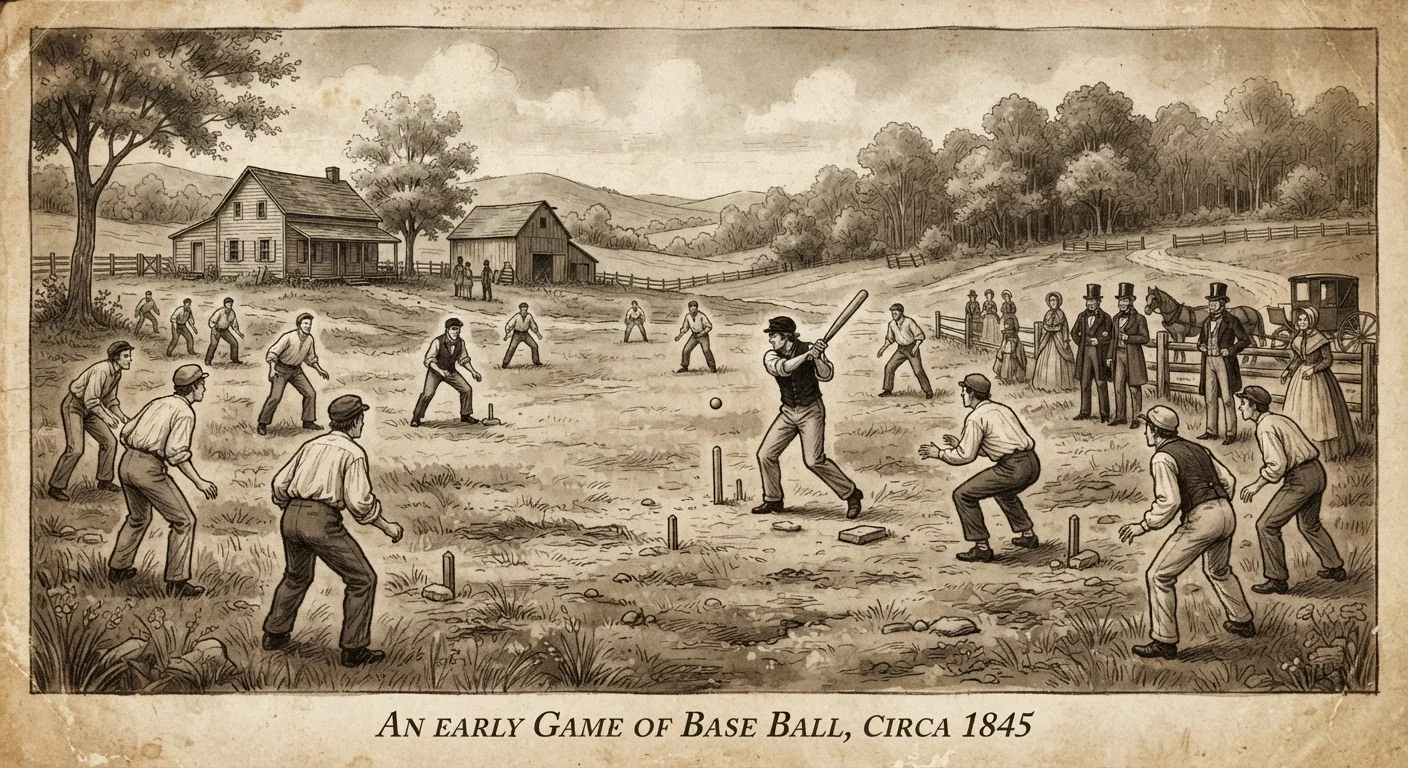
Photo: QuickAdvisor.net editorial
Key Takeaways
- Abner Doubleday did not invent baseball; the claim originated from a biased 1907 commission.
- Baseball evolved gradually from older English bat-and-ball games, not a single invention.
- The Knickerbocker Rules of 1845 were a landmark in standardizing the modern game.
- Professional baseball emerged after the Civil War, shaped by many players, clubs, and cities.
- Baseball has roots in multiple cultures - it was never purely an American creation.
The Doubleday Myth - and Why It Stuck
Ask most Americans who invented baseball and a surprising number will say Abner Doubleday - a Civil War general who supposedly laid out the first diamond in Cooperstown, New York, in 1839. The story is tidy, patriotic, and almost entirely fictional.
The Doubleday origin story was popularized by the Mills Commission, a panel convened in 1907 by sporting goods entrepreneur Albert Spalding to settle a long-running debate about whether baseball was American-born or descended from English games. The commission relied heavily on a single letter from a man named Abner Graves, who claimed to have witnessed Doubleday's invention as a child. Historians have since noted that Graves was elderly, the letter was uncorroborated, and Doubleday himself never mentioned baseball in any of his extensive writings.
The myth persisted because it served a purpose: it gave the sport a clean founding moment and a national hero. Cooperstown became the home of the Baseball Hall of Fame largely on the strength of that story - though the Hall opened in 1939, well after scholars had begun questioning the commission's findings.
Myth
Abner Doubleday invented baseball in Cooperstown, New York, in 1839.
Fact
There is no credible historical evidence linking Doubleday to baseball's invention. The claim stems from a single unverified letter reviewed by a commission with a predetermined conclusion.
The Mills Commission was charged with proving baseball had American origins. Its 1907 report relied on testimony from Abner Graves, whose account was never corroborated. Doubleday was a prolific writer and military figure who left no mention of baseball in his own papers. Historians broadly regard the Doubleday story as myth.
Myth
Baseball is a uniquely American invention with no foreign predecessors.
Fact
Baseball descended from English bat-and-ball games, including rounders and an early game called "base ball" documented in 18th-century English sources.
The English roots of baseball are well-documented. References to "base-ball" appear in English publications from the 1740s. Rounders - a game still played in the United Kingdom - shares many structural features with early American baseball. The sport evolved on American soil but was not created in a vacuum.
Myth
Alexander Cartwright single-handedly invented the modern rules of baseball.
Fact
Cartwright was one of several Knickerbocker Club members involved in codifying early rules in 1845, and baseball's rules continued to evolve significantly for decades after.
Cartwright has often been credited as a sole founder, but the Knickerbocker Rules were a collective effort and represented just one step in a long evolution. Rules around pitching distance, the number of balls for a walk, and the size of the strike zone all changed substantially throughout the 19th and 20th centuries.
Myth
Professional baseball began immediately after the Civil War as a fully organized national sport.
Fact
Professional baseball emerged gradually, with the first openly professional team appearing in 1869 and the first major league not forming until 1876.
The Cincinnati Red Stockings became the first openly salaried professional team in 1869. The National League was established in 1876, and the American League followed in 1901. The two-league structure and World Series format we recognize today took shape over several more decades of institutional development.
What the Historical Record Actually Shows
Baseball almost certainly evolved from older English bat-and-ball games - particularly rounders and a game simply called base ball, references to which appear in English literature as far back as the 18th century. A 1744 children's book, A Little Pretty Pocket-Book, includes an illustration of a game called "base-ball" with players, a pitcher, and bases arranged in a pattern.
By the early 1800s, informal versions of the game were being played across the northeastern United States. Rules varied town by town. Then in 1845, a New York volunteer fire company called the Knickerbocker Base Ball Club - often credited to Alexander Cartwright - codified a set of rules that moved the game meaningfully toward its modern form: foul lines, three-strike outs, and the elimination of the practice of retiring a runner by hitting them with a thrown ball (called "soaking").
1845
Year the Knickerbocker Rules were codified
The Knickerbocker Base Ball Club's written rules are considered a foundational document in the standardization of modern baseball.
1876
Year the National League was founded
The National League, established in 1876, is the oldest surviving major professional sports league in the United States.
The game spread rapidly after the Civil War, when soldiers from different regions had played together and carried a more standardized version home. By 1869, the Cincinnati Red Stockings had become the first openly all-professional team, and the National League followed in 1876. If you want to understand the strategy built on top of these rules, our guide for first-time viewers walks through how the modern game actually unfolds.
Understanding Baseball's Evolution in Context
Compared to sports with documented inventors - basketball was formally designed by Dr. James Naismith in 1891 - baseball's origins are diffuse and democratic. No single person sat down and invented it. That makes its history more accurate but less mythically satisfying, which is exactly why the Doubleday story filled a void.
The sport also reflects broader American social history in ways the legend obscures. The Negro Leagues, founded in the early 20th century after Black players were systematically excluded from the major leagues, produced exceptional athletes and contributed innovations to the game itself. Baseball's integration in 1947 with Jackie Robinson joining the Brooklyn Dodgers was a pivotal cultural moment, not just a sports one.
Some of the rules that emerged from this long evolution can still trip up fans today - for context on how specific regulations developed and why they exist, see this breakdown of baseball's most confusing rules. For comparison, the NBA's history shows how a sport with a known inventor still took decades to reach its current form - suggesting that even clear origins don't guarantee a smooth path to the modern game.
What baseball actually is - a game refined by countless players, administrators, and communities over two centuries - is a richer story than any single founding myth could capture.
The content on this site is for informational purposes only and is not a substitute for professional advice. Always consult a qualified professional for guidance specific to your situation.