
Group Travel vs. Solo Travel: What Each Style Demands of You

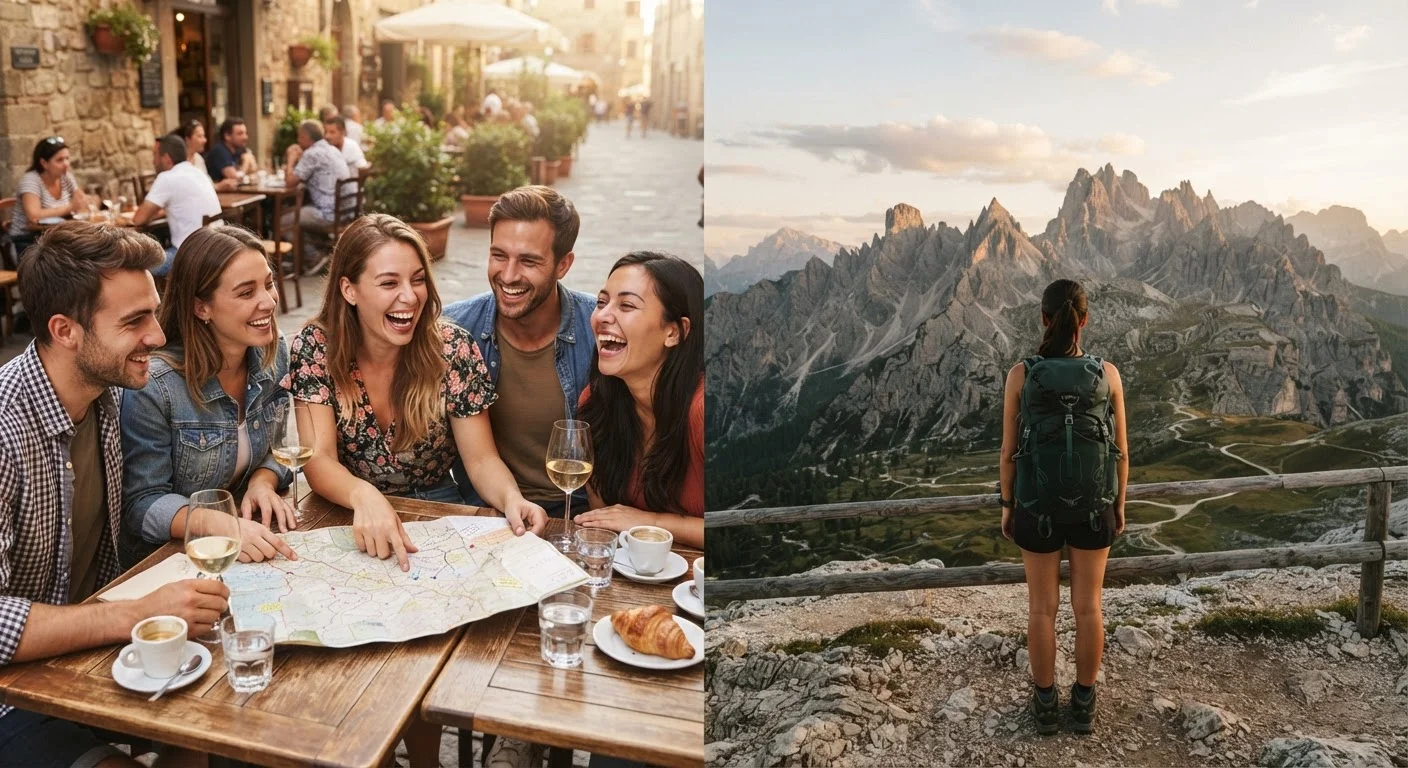
Photo: QuickAdvisor.net editorial
Key Takeaways
- Solo travel offers maximum flexibility but places full logistical and safety responsibility on you.
- Group travel reduces per-person costs and provides built-in companionship, but requires compromise.
- Neither style is universally better - the right choice depends on your destination, budget, and personality.
- Safety dynamics shift meaningfully between solo and group travel, especially for solo women travelers.
- Mixing both styles across different trips is a practical strategy many experienced travelers use.
Complete control over your itinerary and pace
Solo travelers can pivot plans instantly without consulting anyone, which often leads to the most authentic and spontaneous travel experiences.
Stronger likelihood of meaningful local connections
Traveling alone signals openness - locals and other travelers are more likely to approach a solo person than a group, creating organic conversations and connections.
Forces genuine self-reliance and problem-solving
Handling challenges independently builds confidence and practical skills that carry well beyond travel - a reason many experienced travelers credit solo trips with changing their outlook.
Customized budget with no group compromise
Solo travelers set their own spending threshold, choosing the $30 hostel or the boutique hotel based entirely on personal preference and financial situation.
Full responsibility for safety and logistics falls on you
There's no backup if you get sick, lose your wallet, or face an emergency. Solo travelers need to be more deliberate about contingency planning and staying in contact with someone at home.
Can be more expensive in per-person terms
Single-occupancy rooms, solo car rentals, and private tours add up; many travel costs are structured around pairs or groups, making solo travel pricier than it first appears.
Loneliness is a real and underacknowledged factor
Extended solo travel can feel isolating, particularly during meals or at communal experiences designed for sharing. Not everyone finds solo dining or solo sightseeing comfortable.
What Solo Travel Actually Demands
Traveling alone sounds liberating - and it often is. But solo travel is less about freedom and more about self-sufficiency under pressure. Every decision, from navigating a missed train to finding a safe neighborhood to eat dinner, lands squarely on you. That's exhilarating for some people and exhausting for others.
On the upside, solo travelers move entirely on their own schedule. You can linger at a museum for four hours or ditch your original plan entirely without negotiating with anyone. This kind of flexibility is genuinely hard to replicate in a group, and it tends to produce more spontaneous, memorable experiences. Research consistently finds that solo travelers report stronger feelings of personal growth and self-confidence after a trip.
The real demands are practical: you carry all the cognitive load. You monitor your belongings constantly, manage your budget alone, and handle emergencies solo. Safety planning matters more - particularly for solo women travelers, who face a different risk landscape in many destinations and should research local conditions thoroughly before arrival. For guidance on structuring your time effectively, see the itinerary planning approaches compared article for strategies that hold up whether you're alone or with a crew.
Complete control over your itinerary and pace
Solo travelers can pivot plans instantly without consulting anyone, which often leads to the most authentic and spontaneous travel experiences.
Stronger likelihood of meaningful local connections
Traveling alone signals openness - locals and other travelers are more likely to approach a solo person than a group, creating organic conversations and connections.
Forces genuine self-reliance and problem-solving
Handling challenges independently builds confidence and practical skills that carry well beyond travel - a reason many experienced travelers credit solo trips with changing their outlook.
Customized budget with no group compromise
Solo travelers set their own spending threshold, choosing the $30 hostel or the boutique hotel based entirely on personal preference and financial situation.
What Group Travel Actually Demands
Traveling with others introduces a different kind of work: coordination and compromise. Even the most harmonious group has to align on budgets, wake-up times, dietary preferences, and pacing. The more people involved, the more complex that negotiation becomes. Group dynamics can make or break a trip in ways that have nothing to do with the destination.
That said, group travel has real structural advantages. Shared accommodations, split transportation costs, and group booking discounts can reduce what each person spends significantly - a meaningful factor for longer or more expensive trips. There's also a built-in safety net: someone notices if you're unwell, someone helps problem-solve when things go sideways, and certain destinations that feel daunting solo become comfortably accessible in company.
Perhaps the most underrated asset of group travel is shared experience itself. Witnessing something remarkable alongside people you care about creates a different kind of memory than witnessing it alone. For a complementary perspective on how structure affects the group experience, guided tours vs. independent exploration is worth reading alongside this.
Full responsibility for safety and logistics falls on you
There's no backup if you get sick, lose your wallet, or face an emergency. Solo travelers need to be more deliberate about contingency planning and staying in contact with someone at home.
Can be more expensive in per-person terms
Single-occupancy rooms, solo car rentals, and private tours add up; many travel costs are structured around pairs or groups, making solo travel pricier than it first appears.
Loneliness is a real and underacknowledged factor
Extended solo travel can feel isolating, particularly during meals or at communal experiences designed for sharing. Not everyone finds solo dining or solo sightseeing comfortable.
The Factors That Should Actually Drive Your Choice
Strip away the romanticized version of both and the decision comes down to a handful of honest questions:
- Destination risk profile: Some regions are statistically safer in groups. Others are perfectly manageable solo. Verify current travel advisories through official government sources before deciding.
- Your social battery: Do you recharge alone or with people? A two-week trip that fights your natural temperament will wear you down regardless of the scenery.
- Budget flexibility: Solo travel can be cheaper in some contexts (one budget room, one cheap meal) and more expensive in others (no one to split a rental car or a private tour).
- Trip type: Adventure itineraries with complex logistics often benefit from group support. City trips and slow-travel stays tend to work well solo.
Safety Considerations Vary Widely by Destination
For bigger-picture trip planning considerations, the Trip Planning hub covers budgeting, timing, and logistics that apply to both travel styles.
The most experienced travelers often don't choose one style permanently - they match the approach to each specific trip. A solo week in a walkable European city might be followed by a group road trip through national parks. Both have a place in a well-rounded travel life.
The content on this site is for informational purposes only and is not a substitute for professional advice. Always consult a qualified professional for guidance specific to your situation.