
The Complete Guide to Navigating Airports Without Losing Your Mind

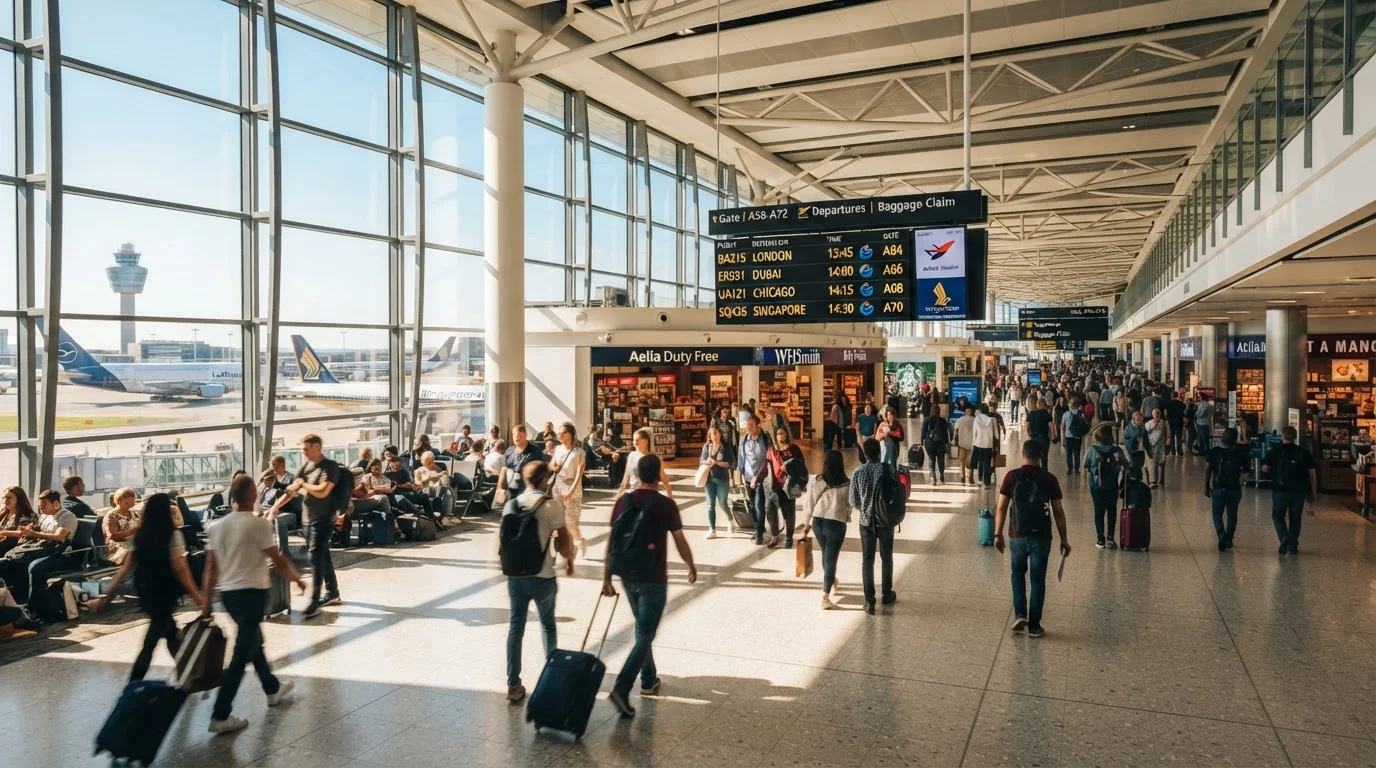
Photo: QuickAdvisor.net editorial
Key Takeaways
- Arriving early and checking in online eliminates most airport stress before it starts.
- Trusted Traveler programs like TSA PreCheck meaningfully reduce security wait times.
- Always verify your connection time is realistic - minimum 60 minutes domestic, 90 minutes international.
- Customs forms must be completed honestly; errors cause delays regardless of innocence.
- When a flight is disrupted, go to the airline app first - it's often faster than a gate agent line.
- Lost luggage claims must be filed before leaving the baggage claim area.
Before You Even Arrive: The Prep That Pays Off
The travelers who glide through airports aren't lucky - they've done their homework. Start with online check-in, which typically opens 24 hours before departure. It locks in your seat, generates a mobile or printed boarding pass, and lets you skip the ticket counter entirely if you're traveling with a carry-on only.
Download your airline's app and the airport's app if one exists. Many large US airports - including LAX, O'Hare, and Denver - publish real-time terminal maps, parking availability, and security wait times. Knowing which terminal your gate is in before you leave home is a simple move that saves genuine confusion on arrival.
Build in buffer time honestly. For domestic flights, most travel advisors suggest arriving at least 90 minutes before departure; for international, two to three hours. If you're departing during peak hours (early morning or late afternoon on weekdays), add extra margin. See our pre-trip checklist for a full rundown of everything to handle before you leave home.
Pack Your Carry-On With Security in Mind
Mastering the Security Checkpoint
Security is the part most travelers dread, but it's also highly controllable. The single biggest upgrade you can make is enrolling in a Trusted Traveler program. TSA PreCheck ($78 for five years as of the program's current fee structure) lets eligible travelers use dedicated lanes where laptops stay in bags, shoes stay on feet, and lines move noticeably faster. Global Entry includes PreCheck and adds expedited customs clearance on return from international travel - worth considering if you fly internationally even occasionally. Verify current fees and eligibility directly with the TSA and CBP websites, as these can change.
For everyone else: wear slip-on shoes, keep your liquids (each 3.4 oz or less) in a clear quart-sized bag accessible at the top of your carry-on, and put metal items in your bag before you reach the conveyor belt. Have your boarding pass and ID ready - not buried in a bag. These micro-preparations shave minutes and prevent the frantic scramble that slows everyone down.
~45 min
Average TSA security wait time at peak hours
TSA reports that standard lanes at major US airports can average 30-45 minutes during peak travel periods, while PreCheck lanes average under 10 minutes.
60-90 min
Recommended minimum connection time
Most airline booking systems and travel advisors recommend at least 60 minutes for domestic and 90 minutes for international connections to account for gate changes and transit.
$800
US duty-free exemption per traveler
US Customs and Border Protection sets the standard duty-free exemption at $800 per returning resident; verify current thresholds at cbp.gov before travel.
Reading the Terminal: Gates, Transfers, and Connections
Airports are essentially small cities, and like any city, they reward people who understand the layout. On arrival, look for the large overhead display boards first - they're your map to gates, baggage claim, and inter-terminal transportation. Most hub airports use a letter-and-number system (Gate B22, Concourse D) that becomes intuitive quickly.
Connecting flights deserve special attention. A connection is only as safe as the time you've built around it. Sixty minutes is a reasonable minimum for domestic connections at airports you know; plan for 90 minutes or more at unfamiliar or very large hubs like Dallas/Fort Worth or Atlanta's Hartsfield-Jackson. International connections often require clearing customs and re-clearing security, which can easily consume 45-60 minutes on its own.
If you're connecting between terminals, check whether the airport has a free inter-terminal shuttle, a people-mover train, or requires exiting and re-entering security. This detail, confirmed in advance, is what separates a comfortable connection from a sprint. For broader trip-planning context, our Trip Planning hub covers everything from booking strategy to packing.
Long Layovers: How to Use the Time Well
A layover of three hours or more doesn't have to be a sentence to serve. Most major airports have significantly improved their amenities - food halls with local restaurant concepts, yoga rooms, meditation pods, pay-per-use shower facilities, and rooftop observation decks. Research what your layover airport offers before you arrive.
Airport lounges, once exclusive to first-class passengers, are increasingly accessible. Many are available through premium credit cards, day-pass purchases, or airline status. If you have a very long layover (typically six hours or more) at certain international airports, ask the airline or check their website about complimentary hotel accommodations - some carriers offer this on overnight connections, though policies vary and should be confirmed directly.
For layovers of five or more hours in an international city, a brief city excursion can be genuinely feasible - provided you have the correct visa or transit permissions for that country. Always verify entry requirements through official government sources before leaving the airport. Our guide on your first international trip covers transit visas and entry rules in detail.
Screenshot your boarding pass, gate information, and terminal map before your flight - airport Wi-Fi is unreliable and you don't want to be hunting for a signal when you need to move fast.
If your connecting flight is at risk, notify a flight attendant on the inbound plane - crews can sometimes radio ahead or help you deplane early to make your connection.
Clearing Customs and Immigration
Re-entering the US after international travel means passing through Customs and Border Protection (CBP). Every traveler - including US citizens - must complete a customs declaration. Fill it out honestly and completely; CBP officers can and do ask follow-up questions, and inaccurate forms cause delays regardless of intent.
Declare all food items, agricultural products, and purchases above the duty-free exemption threshold (currently $800 per person for US residents returning from most destinations - verify current thresholds with CBP before travel). Penalties for non-declaration are real and aren't worth risking over a few dollars of goods.
Global Entry kiosks allow eligible travelers to complete customs processing in minutes using automated kiosks. If you're enrolled, use them - the time savings are substantial at busy international airports. Non-enrolled travelers who fly into airports with CBP's Mobile Passport Control app can also expedite the process; check CBP's official site for participating airports. Always consult official government sources for the most current rules, as regulations can change.
When Things Go Wrong: Delays, Missed Flights, and Lost Bags
Disruptions happen. The travelers who recover fastest are the ones who act quickly and know where to turn. The moment a delay or cancellation is announced, open the airline's app - rebooking options often appear there before gate agents can process the crowd forming in front of them. Call the airline's customer service line simultaneously if rebooking is urgent; international lines sometimes have shorter hold times than domestic.
If you miss a connection due to the airline's delay (mechanical issue, late inbound aircraft), you're typically entitled to rebooking at no charge and potentially a meal voucher depending on the duration of delay. Policies vary by carrier - ask specifically rather than assuming. Document everything: take photos of departure boards showing delays.
For lost or damaged luggage, file a Property Irregularity Report (PIR) at the airline's baggage desk before leaving the baggage claim area - this is a firm requirement for any compensation claim. Keep all receipts for essential items you need to purchase while waiting for delayed bags, as airlines may reimburse reasonable expenses under their policies. If you're still in the planning stages of your journey, our first-timer's trip planning roadmap is a great place to start building your travel confidence from the ground up.
Don't Leave Baggage Claim Without Filing a Report
The content on this site is for informational purposes only and is not a substitute for professional advice. Always consult a qualified professional for guidance specific to your situation.