
Booking Early vs. Booking Late: What the Evidence Actually Suggests

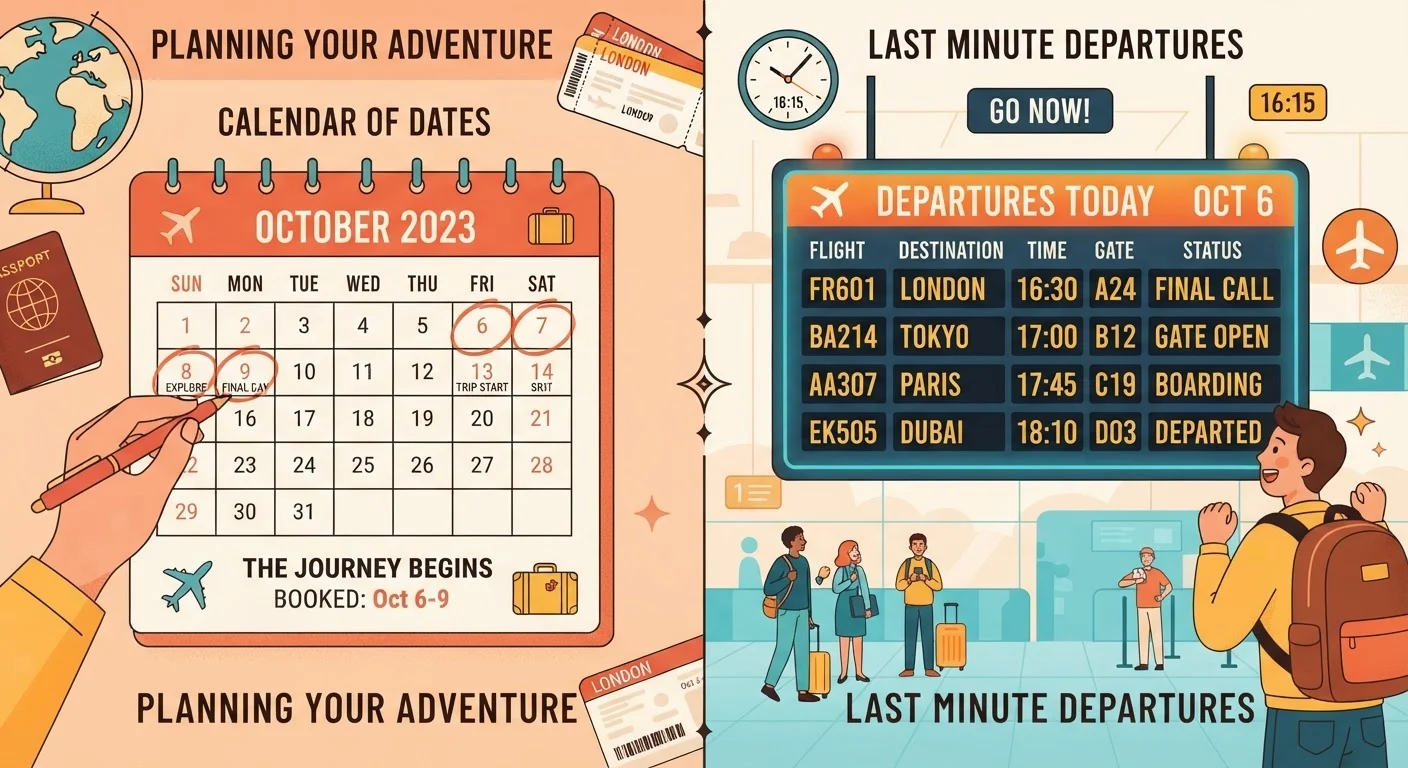
Photo: QuickAdvisor.net editorial
Key Takeaways
- Flights to popular destinations generally cost less when booked one to four months in advance, not at the last minute.
- Last-minute hotel deals are more reliably available than last-minute flight discounts, particularly in non-peak periods.
- Peak season, holidays, and major events consistently reward early bookers across both flights and accommodations.
- Flexibility in dates and destinations is the single biggest factor that makes late booking viable.
- No universal rule applies - the right strategy depends on your destination, travel dates, and personal risk tolerance.
Why the Conventional Wisdom Oversimplifies Things
Ask ten seasoned travelers when to book, and you'll get ten confident - and contradictory - answers. The truth is messier than any single rule. Pricing for flights and hotels is driven by dynamic algorithms that respond to demand, competition, time of year, and remaining inventory. What works brilliantly for a February city-break can backfire completely for a summer beach vacation.
Research into airline pricing patterns - notably studies from travel data firms and fare-tracking platforms - consistently finds that domestic US flights tend to hit their lowest average fares somewhere between one and three months before departure. Book much earlier and you may pay a higher introductory price; book much later and you're competing for the last seats at the highest prices. But averages obscure a lot. A sold-out holiday weekend looks nothing like a sleepy Tuesday in November.
For hotels, the calculus shifts. Properties have a harder deadline - an unsold room tonight is revenue that evaporates forever - so last-minute discounting is more common in hospitality than in aviation. Still, peak season vs. off-season timing plays a huge role in whether that dynamic actually works in your favor.
| Criterion | Booking Early | Booking Late |
|---|---|---|
| Flight pricing | Generally more predictable, often lower | Typically higher; last-minute deals are rare |
| Hotel availability | Full selection of room types | Discounts possible, but limited inventory |
| Peak season reliability | Strong - secures availability | Risky - prices and inventory both suffer |
| Flexibility required | Low - works with fixed dates | High - needs open dates and destination |
| Stress level | Lower - certainty is locked in | Higher - outcome unknown until close to departure |
| Best for groups | Yes - secures coordinated options | No - group needs rarely met last-minute |
| Off-season mid-week hotels | Fine, but may overpay slightly | Can yield genuine discounts |
When Early Booking Genuinely Protects You
Certainty has real value - and it's consistently underrated by optimistic late-bookers. For flights to popular destinations during summer, Thanksgiving, spring break, or around major events, early booking isn't just about price. It's about availability. Flights don't just get expensive; they get full.
International itineraries are a particular case for booking well in advance. Transatlantic and transpacific routes have fewer daily departures than domestic hops, meaning seat options thin out faster. If your trip requires connecting flights timed precisely, waiting is a gamble with high stakes.
Group travel is another clear early-booking scenario. Airlines and hotels that might have availability for two travelers may have nothing suitable for eight. The logistical cost of a group being split across different flights or floors of a hotel is real - and avoidable with an early reservation.
1-3 months
Typical lowest-fare window for domestic US flights
Fare-tracking analyses from platforms like Hopper and Google Flights consistently identify this window as the general sweet spot for domestic airfare.
3-6 months
Recommended advance booking for international flights
Industry guidance from travel researchers suggests international fares tend to rise steeply within eight weeks of departure as remaining seats sell out.
48-72 hours
Window when hotels most commonly discount unsold rooms
Hospitality industry data indicates properties are most likely to reduce rates within the final two to three days before check-in to fill vacant rooms.
One underappreciated benefit of booking early is stress reduction. Knowing your flights and accommodation are locked in lets you shift mental energy to the enjoyable parts of planning - activities, restaurants, packing. If that peace of mind matters to you, it's worth factoring in alongside price.
When Waiting Can Actually Pay Off
Late booking isn't inherently reckless - it just requires the right conditions. The best scenario: a solo traveler or couple with no fixed dates, no specific destination requirement, and genuine willingness to go wherever deals appear. In that situation, last-minute hotel discounts and promotional fares can deliver real savings.
Hotels in secondary cities and resort areas frequently discount rooms within 48 to 72 hours of check-in during off-peak periods. Mid-week stays, shoulder-season travel, and less-visited destinations are the sweet spots. Off-season travel and late booking can combine into a genuinely cost-effective approach - though both come with trade-offs worth understanding before committing.
For domestic US road trips where accommodation is flexible - choosing a town the night before based on how far you've driven - late booking is just the practical reality and often works fine outside of holiday weekends.
The risk is real, though. Flexibility sounds liberating until you're staring at a sold-out city during a conference you didn't know was happening, or paying twice the normal hotel rate because you waited one week too long. Late booking rewards preparation of a different kind: researching local events, understanding seasonal demand, and having backup options ready. For a smarter approach to comparing prices without spiraling, see efficient price comparison strategies.
Building a Booking Strategy That Fits Your Trip
Rather than committing to one approach, think in terms of the specific components of your trip. Flights and high-demand hotels in popular destinations during busy periods? Book early - ideally two to four months out for domestic, three to six for international. Accommodation in flexible, lower-demand settings? You have more room to wait and watch.
Set a personal decision deadline for yourself. If you haven't found a significantly better price by a specific date - say, six weeks before departure - book what's available rather than gambling further. This prevents decision paralysis without forcing premature commitment.
Also worth knowing: common planning pitfalls often involve timing errors - ignoring visa lead times, skipping travel insurance, or misreading cancellation policies. Whether you book early or late, understanding refund and change policies before confirming a reservation is non-negotiable. A cheap, non-refundable fare only stays cheap if your plans don't change.
The most empowered travelers aren't dogmatic about either approach - they read the specific situation and act accordingly. That judgment, more than any fixed rule, is what actually leads to smarter travel decisions.
A Note on Price Guarantees and Alerts
The content on this site is for informational purposes only and is not a substitute for professional advice. Always consult a qualified professional for guidance specific to your situation.