
Decoding a Car Window Sticker Before You Sign Anything

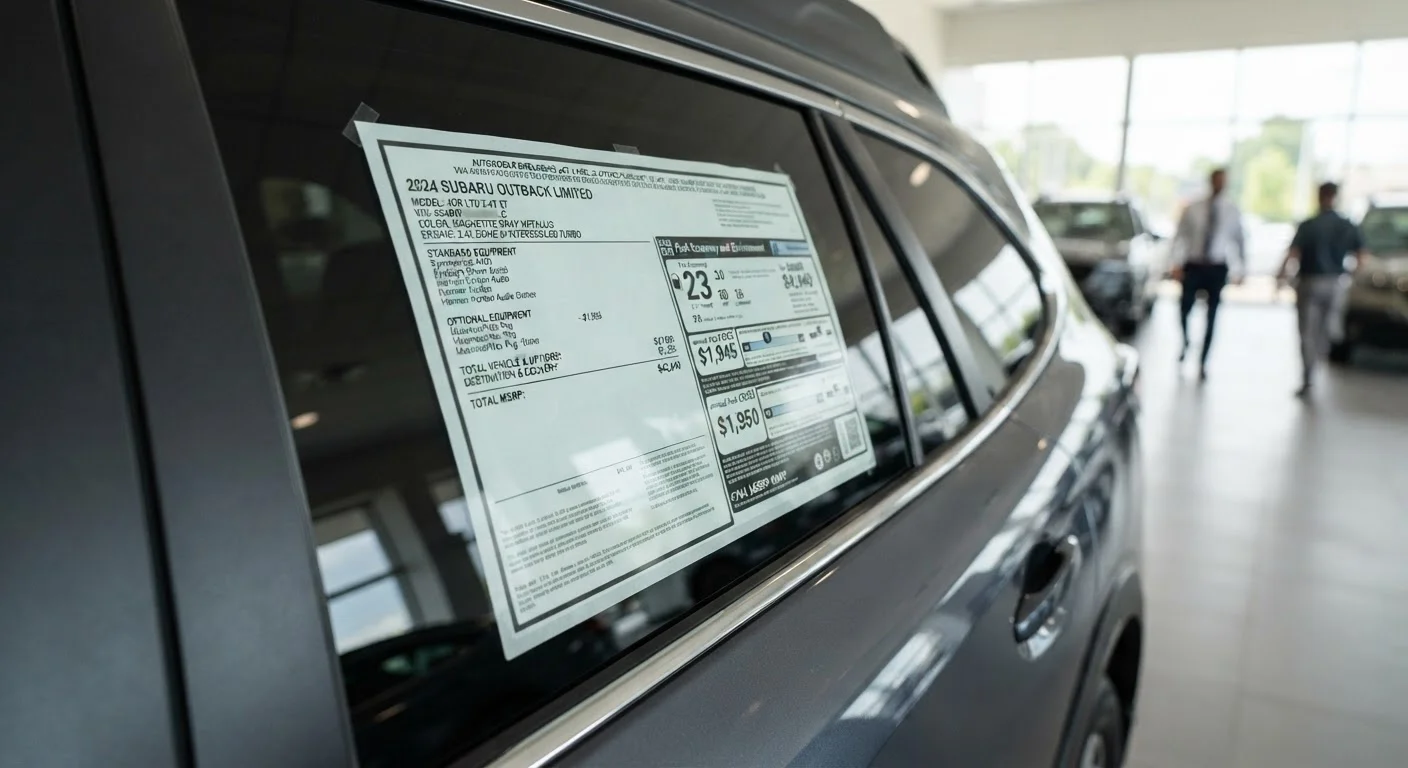
Photo: QuickAdvisor.net editorial
What the Monroney Sticker Is and Why It Exists
Every new vehicle on a U.S. dealer lot carries a specific label affixed to the window - the Monroney sticker. Federal law requires it, and only the buyer can legally remove it before the sale is completed. Its purpose is straightforward: give consumers a standardized, manufacturer-produced disclosure of what a vehicle is, what it includes, and what the manufacturer suggests it should cost.
Understanding this label before you negotiate puts you in a fundamentally stronger position. The sticker isn't marketing copy - it's a structured document with legally defined sections, each carrying specific meaning. Treating it as a checklist rather than background noise can save you from overlooking costly add-ons or misreading what's actually included in the vehicle you're considering.
Monroney Sticker
The federally mandated window label found on every new vehicle sold in the U.S., named after Senator Mike Monroney who sponsored the 1958 Automobile Information Disclosure Act. It discloses the manufacturer's suggested retail price, standard and optional equipment, and fuel economy ratings.
MSRP
Manufacturer's Suggested Retail Price - the price the automaker recommends a dealer charge for the vehicle. It is a starting point for negotiation, not a fixed sale price.
EPA Fuel Economy
A standardized miles-per-gallon estimate produced by the U.S. Environmental Protection Agency under controlled testing conditions. Real-world mileage typically varies based on driving habits, load, and conditions.
Destination Charge
A fixed fee covering the cost of transporting the vehicle from the manufacturing plant to the dealership. It is set by the manufacturer and is non-negotiable.
Standard Equipment
Features and components included in the base price of a specific trim level, such as safety systems, interior materials, or driver-assist technology.
Optional Equipment
Add-ons beyond the base trim that the dealer or buyer has selected, each listed with its own price. These are frequently negotiable or removable from the deal.
Breaking Down Each Section of the Sticker
The Monroney sticker follows a consistent layout. Here's what each area covers:
- Vehicle identification: The top section lists the make, model, trim level, and Vehicle Identification Number (VIN). Confirm the VIN matches the vehicle's dashboard and title paperwork.
- Standard equipment: This block describes what's included at the quoted trim level - safety systems, infotainment, upholstery, and mechanical specs. Read this carefully; two similarly priced trims can differ substantially in what they actually include.
- Optional equipment and packages: Each add-on is itemized with its individual price. These are choices made either by the manufacturer building a specific configuration or the dealer ordering the vehicle. Some optional items may already be installed and difficult to remove, but their prices are often a starting point for negotiation.
- Destination and delivery charge: This line is set by the manufacturer and covers shipping from the factory to the dealership. It is not negotiable.
- MSRP total: The bottom of the sticker shows the total Manufacturer's Suggested Retail Price - base price plus options plus destination. This is the anchor figure for your negotiation, not a ceiling.
| Legal Requirement | Federal law requires Monroney stickers on all new vehicles (Automobile Information Disclosure Act, 1958) |
| Removal Restriction | Only the buyer (not the dealer) may legally remove the sticker before sale (15 U.S.C. § 1232) |
| Fuel Economy Source | EPA testing under standardized laboratory conditions (U.S. Environmental Protection Agency) |
| Destination Charge | Non-negotiable; set by the manufacturer |
| Safety Ratings | NHTSA and IIHS ratings may appear or be referenced on the sticker (National Highway Traffic Safety Administration) |
For fuel economy figures, always cross-reference with FuelEconomy.gov, the official federal database, to verify ratings and compare similar vehicles under the same EPA methodology.
Fuel Economy and Environmental Data
A dedicated section displays the EPA's estimated fuel economy in city, highway, and combined miles per gallon. Treat these as a comparative tool, not a guarantee - real-world mileage varies based on driving style, climate, payload, and road conditions. The sticker also includes an estimated annual fuel cost based on a standard number of miles driven and an assumed fuel price, which provides a rough baseline for budgeting.
Newer vehicles may also carry a greenhouse gas rating and smog rating on a scale from 1 to 10. Higher scores indicate fewer emissions. These figures can matter if you're weighing long-term operating costs or environmental considerations alongside the purchase price.
What the Sticker Won't Tell You - and Where to Look Next
The Monroney sticker is a disclosure of the new vehicle as configured. It does not tell you the dealer's actual cost, current market conditions, available incentives, or the dealer's willingness to negotiate below MSRP. It also won't reflect any financing terms, trade-in value, or fees added later in the contract process.
Watch for Addendum Stickers
Before committing to any figures, review the full purchase agreement line by line. Questions about fees, warranties, and financing deserve clear answers before you sign. Our guide on questions worth asking at a dealership walks through exactly that conversation. If you're also considering a used vehicle, understanding what a vehicle history report actually tells you is equally important to reading any sticker. And for longer-term protection, review warranty terms decoded before the finance office conversation begins.
The content on this site is for informational purposes only and is not a substitute for professional advice. Always consult a qualified professional for guidance specific to your situation.