
What a Vehicle History Report Actually Tells You

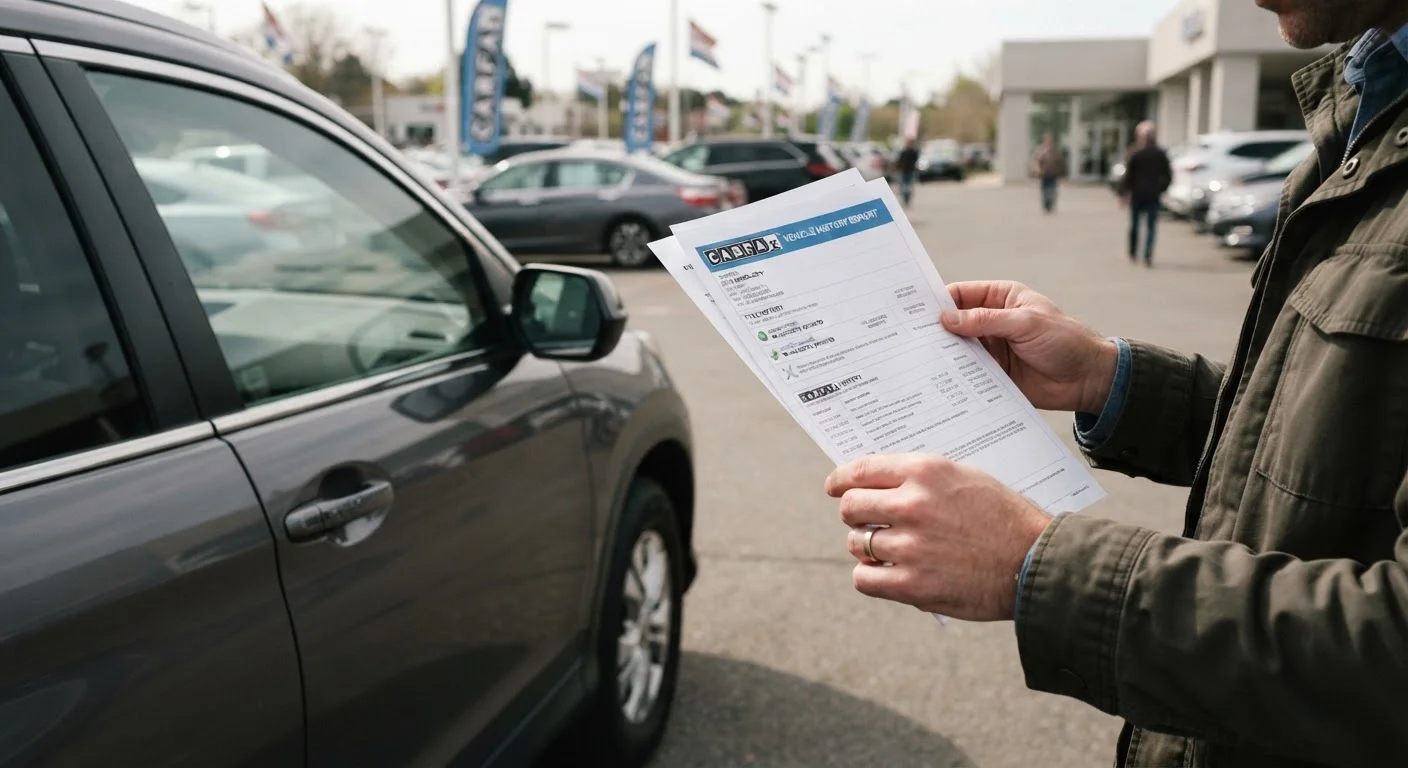
Photo: QuickAdvisor.net editorial
Key Takeaways
- A vehicle history report is based on a car's VIN and aggregates data from multiple official sources.
- Reports commonly cover accident history, title problems, odometer readings, and number of previous owners.
- No report captures everything - gaps in data are normal and don't guarantee a clean history.
- A history report should complement, not replace, a professional pre-purchase inspection.
- Certain red flags - like salvage titles or odometer rollbacks - are serious enough to reconsider a purchase.
What Goes Into a Vehicle History Report
A vehicle history report pulls data from dozens of sources - state motor vehicle departments, insurance companies, salvage yards, auto auctions, and in some cases, repair shops or dealerships that contribute service data. All of it is linked to one unique identifier: the car's 17-character VIN.
The core categories most reports cover include:
- Title history: Whether the title is clean, or has been flagged as salvage, rebuilt, flood-damaged, or lemon law buyback.
- Accident and damage records: Incidents reported to insurance companies or noted at auction inspections.
- Odometer readings: Mileage logged at different points in time, which helps identify potential rollback fraud.
- Ownership history: How many owners the vehicle has had and, in some cases, whether it was used as a rental, fleet, or lease vehicle.
- Service and maintenance records: If a dealer or shop reported the service event, it may appear here.
Understanding the full lifecycle of vehicle ownership can help you put this data in context - a vehicle that spent three years in a rental fleet, for instance, may have higher mileage but more consistent maintenance than one with a single private owner.
Red Flags Worth Taking Seriously
Not every blemish in a history report is a deal-breaker, but some findings warrant serious caution.
Salvage or rebuilt titles indicate the vehicle was once declared a total loss by an insurer. Even if professionally repaired, these vehicles can be difficult to finance, insure, and resell - and structural damage may not be fully correctable.
Odometer discrepancies are a major warning sign. If mileage jumps backward between recorded readings, that's a strong indicator of tampering - a federal offense under the Truth in Mileage Act.
Multiple owners in a short time can mean the vehicle has had recurring problems that frustrated previous buyers. It doesn't confirm an issue, but it's worth investigating further.
Flood damage notations are particularly consequential. Water intrusion can cause long-term electrical and mechanical problems that are difficult to detect and expensive to repair.
Structural Damage Warrants Closer Scrutiny
If the report shows a history of structural or airbag damage, that information should be a central topic in any pre-purchase inspection with a qualified mechanic. Some repairs are sound; others are not.
What a History Report Can't Tell You
A history report is only as complete as the data that was reported into it. Significant gaps are common and expected.
Private-party accidents that were settled without an insurance claim won't show up. Maintenance performed by an owner at home or at a non-reporting shop leaves no trace. In some states, certain title events may take time to propagate through national databases.
Always Pair the Report With an Inspection
This is why a vehicle history report should always be used alongside - not instead of - an independent mechanical inspection. The report tells you what the paper trail says; a trained mechanic can evaluate the actual condition of the vehicle. Together, they give you a much fuller picture than either tool alone.
When evaluating a certified pre-owned versus a standard used vehicle, a history report provides an independent data point that doesn't rely on the seller's representations.
How to Read a Report Without Getting Overwhelmed
Reports can run several pages and include terminology that isn't immediately intuitive. Here's a practical approach:
- Start with the title status. A clean title is the baseline. Anything else - salvage, rebuilt, flood - requires a clear explanation from the seller.
- Check the odometer trend. Mileage should increase consistently over time. Any drop or suspicious gap is worth questioning.
- Count the owners and use types. More owners isn't automatically bad, but the context matters. A corporate fleet vehicle is different from multiple short-term private owners.
- Look at accident entries carefully. Minor parking lot damage is different from a reported structural or airbag deployment event. Reports often categorize damage severity.
- Note what's absent. A vehicle with very few records isn't necessarily cleaner - it may simply mean less was documented.
If you have questions about what you're seeing, bring the report to your conversation with the seller and ask them to walk through any entries you don't understand.
Sellers who maintain thorough records - as outlined in guidance on keeping a maintenance log - may also be able to fill in gaps the report leaves open, giving you a more complete picture of the vehicle's care history.
Frequently Asked Questions
The content on this site is for informational purposes only and is not a substitute for professional advice. Always consult a qualified professional for guidance specific to your situation.