
The Ongoing Costs of Car Ownership Most People Underestimate

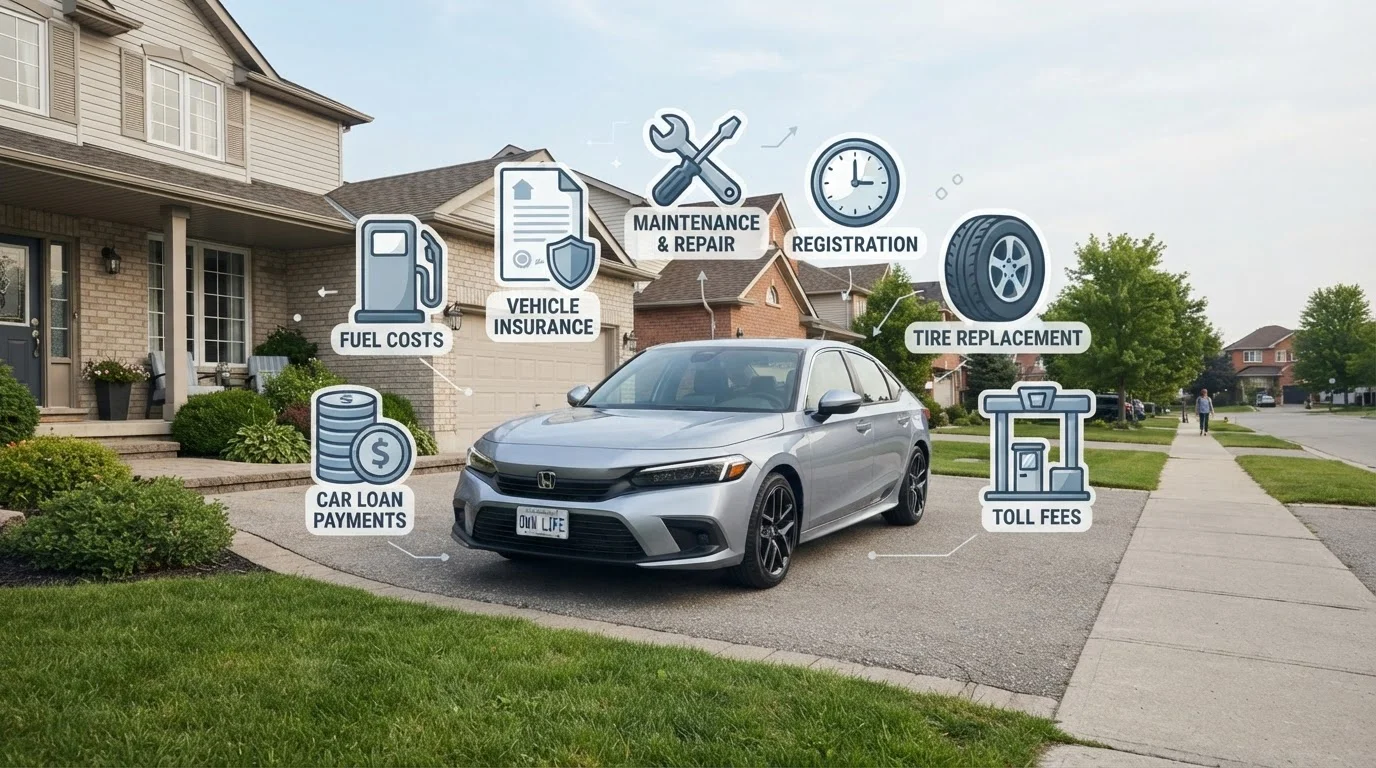
Photo: QuickAdvisor.net editorial
Key Takeaways
- Depreciation is typically the largest ownership cost, yet it never appears on a single bill.
- Insurance, registration, and taxes recur annually and vary significantly by location and vehicle type.
- Routine maintenance and unexpected repairs often exceed what owners budget for across a vehicle's life.
- Fuel costs compound over years and depend heavily on driving habits and vehicle efficiency.
- Financing interest can add thousands of dollars to a vehicle's true total cost.
What 'Owning a Car' Really Costs
Most people evaluate a vehicle purchase based on the monthly payment or the sticker price. That's understandable - those numbers are concrete and immediate. But the full financial picture of car ownership is considerably broader, and understanding it before you commit can make a meaningful difference in your long-term budget.
The full lifecycle of vehicle ownership includes costs that are easy to overlook because they're spread out, baked into other bills, or invisible entirely - like depreciation. The expenses listed below aren't rare or unusual; they apply to virtually every driver in America. What varies is how prepared you are for them.
Total Cost of Ownership vs. Purchase Price
The Costs That Catch Owners Off Guard
Depreciation
Depreciation is the single largest cost of ownership for most drivers, yet it never appears on a receipt. It's the loss in market value a vehicle experiences over time - and it begins the moment you drive off the lot. A new vehicle can lose a substantial portion of its value within the first few years of ownership, though the exact rate varies by make, model, and market conditions.
Because it's invisible, depreciation is easy to discount when budgeting. But it becomes very real at trade-in or resale time. Understanding how depreciation works and why it shapes every car purchase is essential for anyone trying to assess the true cost of ownership over the long run.
Depreciation is often the largest ownership cost - and it never shows up on a single bill.
Insurance Premiums
Auto insurance is legally required in nearly every U.S. state, and premiums are paid monthly or semi-annually for as long as you own the vehicle. Rates vary considerably based on your location, driving history, age, the type of vehicle, and the coverage levels you carry. A driver in a high-cost urban area with a newer vehicle may pay substantially more than someone with an older car in a rural zip code.
It's worth reviewing your coverage annually rather than letting it auto-renew without scrutiny - your circumstances, and the available options, change over time. Liability minimums set by states are often lower than what financial advisors recommend carrying, so coverage choices involve real trade-offs.
Auto insurance is a recurring legal requirement - and rates can shift significantly year to year.
Fuel
For most drivers, fuel is the most visible ongoing expense - you feel it at every fill-up. But its cumulative weight is easy to underestimate. A driver who commutes 15,000 miles per year in a vehicle averaging 25 miles per gallon will pump through 600 gallons annually. At varying fuel prices, that figure compounds over years into a significant total.
Driving habits matter as much as vehicle efficiency. Aggressive acceleration, highway speeds, and idling all reduce fuel economy. Understanding your real-world fuel usage - rather than relying solely on advertised estimates - helps build a more accurate ownership budget.
Fuel costs compound quietly over years, often totaling far more than owners initially anticipate.
Routine Maintenance
Oil changes, tire rotations, air filters, brake pads, wiper blades, coolant flushes - these are predictable expenses that follow a schedule outlined in your owner's manual. They're not emergencies, but they're non-negotiable if you want the vehicle to remain reliable and hold its value. Skipping or delaying scheduled maintenance doesn't eliminate the cost; it typically increases it down the line.
For drivers new to managing service schedules, the car maintenance hub offers practical guidance on building a consistent upkeep routine. Budgeting roughly for these items annually, based on your vehicle's service intervals, prevents sticker shock when they come due.
Skipping routine maintenance doesn't eliminate the cost - it usually multiplies it.
Unexpected Repairs
Even well-maintained vehicles experience unplanned repairs. Alternators fail. Tires pick up nails. Sensors malfunction. These events don't follow a schedule, which makes them harder to budget for - but they're not rare, either. Industry data consistently shows that a meaningful percentage of drivers face a significant unplanned repair expense in any given year.
Having a dedicated vehicle repair fund, separate from general savings, is a practical way to absorb these costs without disrupting your broader budget. The older and higher-mileage a vehicle gets, the more this reserve matters. A qualified mechanic can also help identify developing issues before they become expensive emergencies.
An unplanned repair fund isn't optional - it's one of the most practical tools an owner can have.
Registration, Taxes, and Fees
Vehicle registration must be renewed periodically - typically annually - and often includes state taxes tied to the vehicle's assessed value. These costs vary significantly by state and even by county. In states with ad valorem (value-based) taxes, owners of newer or higher-value vehicles pay considerably more each year.
These fees are easy to forget about when calculating the cost of ownership, partly because they feel administrative rather than transactional. But for a higher-value vehicle in a tax-heavy state, annual registration costs can run into the hundreds of dollars - a figure worth including in any pre-purchase analysis.
State registration fees and value-based taxes recur annually and vary widely by location.
Financing Interest
If you financed your vehicle, the purchase price on the window sticker isn't what you'll actually pay. Interest accumulates over the life of the loan, and depending on the loan term, interest rate, and down payment, that additional cost can run into thousands of dollars. Longer loan terms reduce monthly payments but increase the total interest paid - a trade-off that's frequently misunderstood.
Understanding auto loan basics - including how APR, loan term, and amortization interact - helps buyers make financing decisions that reflect the true total cost, not just the monthly number. It's also worth noting that common buyer habits often lead to worse loan terms than necessary.
Financing interest adds real dollars to every purchase - longer terms cost more in the long run.
Track All Vehicle Expenses in One Place
Building a Realistic Ownership Budget
Taken individually, each of the costs above can feel manageable. Taken together - across five, seven, or ten years of ownership - they often amount to significantly more than the vehicle's original purchase price. That gap between perceived and actual cost is where most ownership budgets fall short.
A useful starting point is calculating a rough annual total across all these categories before you buy, not after. Fuel, insurance, and registration can be estimated in advance. Maintenance and repair costs can be anticipated using manufacturer service schedules and ownership data for the specific vehicle you're considering. Depreciation, while harder to control, can be factored using historical value retention data.
For readers just starting this process, the first-time car owner's maintenance primer is a practical starting point for understanding what upkeep will realistically involve. And if you're still weighing purchase options, the leasing vs. buying breakdown can help you think through which path better fits your financial situation. The goal isn't to make ownership seem daunting - it's to make sure the decision is grounded in the full picture.
The content on this site is for informational purposes only and is not a substitute for professional advice. Always consult a qualified professional for guidance specific to your situation.