
Before You Start Cooking: A Prep Checklist That Saves Time and Reduces Errors

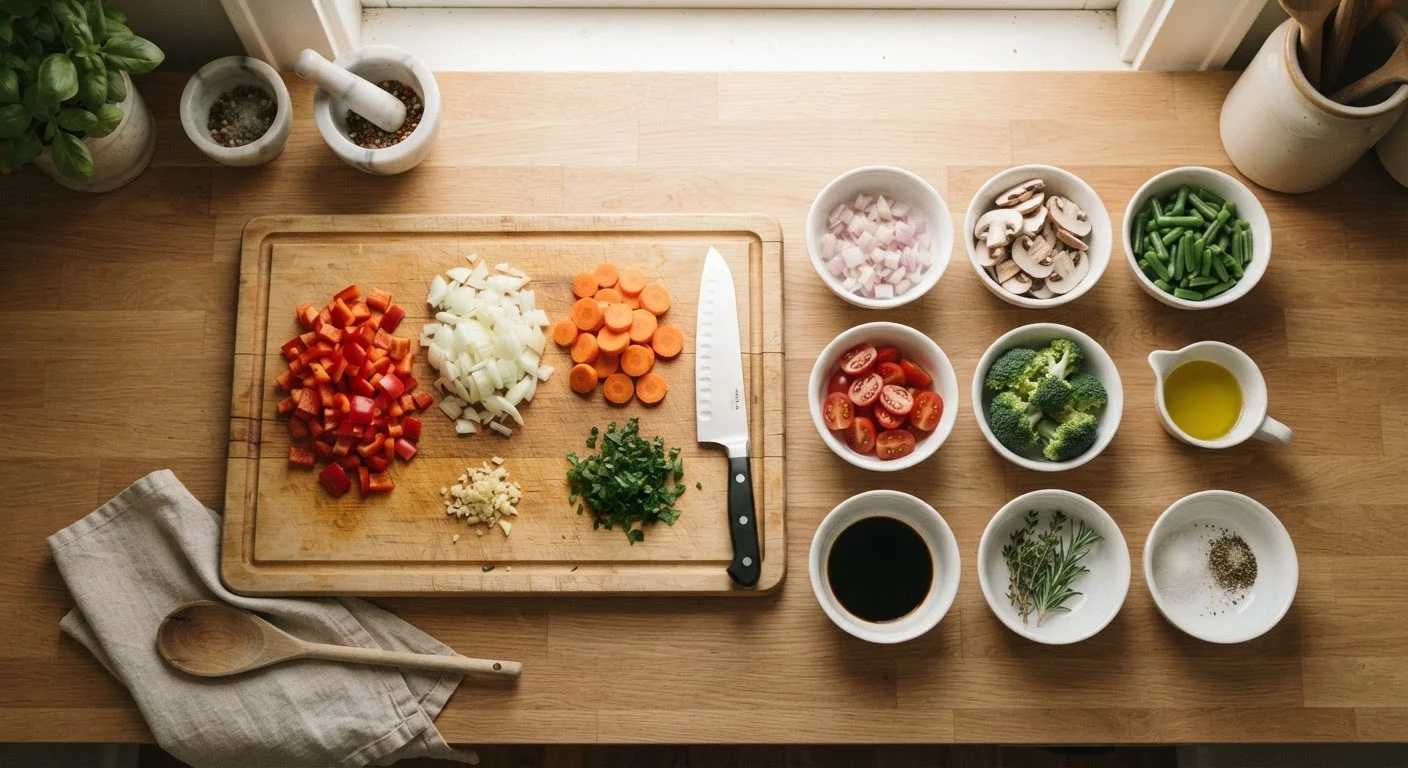
Photo: QuickAdvisor.net editorial
Key Takeaways
- Reading your recipe completely before touching a single ingredient prevents the most common cooking mistakes.
- Prepping and measuring all ingredients before cooking starts reduces errors and kitchen stress significantly.
- Checking equipment and workspace organization is as important as gathering the right food.
- Proper food safety and temperature awareness should be built into every prep routine.
- A consistent pre-cooking checklist builds long-term kitchen confidence and efficiency.
Why Prep Work Is the Real Skill
Professional kitchens run on a French concept called mise en place - literally "everything in its place." Every ingredient measured, every tool within reach, every step mentally rehearsed before the burner ever ignites. Home cooks who adopt this discipline, even in a simplified form, report fewer burned dishes, fewer frantic last-minute grocery runs, and far more enjoyment at the stove.
The checklist below translates professional prep habits into an approachable routine for everyday cooking. Whether you're making a quick weeknight dinner or tackling something more ambitious on a weekend, running through these steps before you start will consistently save you time and reduce errors. For deeper context on decoding recipe instructions before you begin, see how to read a recipe like a cook.
Recipe Review
Ingredient Inventory
Measuring and Portioning
Chopping and Cutting
Equipment and Workspace
Food Safety Basics
How to Use This Checklist
Work through these groups in order - they're sequenced to match the logical flow of kitchen prep. The must items are non-negotiable; skipping them is the direct cause of most cooking failures at home. The should items represent strong professional practice that pays off quickly once habitual. The nice-to-have items are refinements that matter more as recipes grow in complexity.
Don't Skip the Full Recipe Read-Through
One practical tip: treat your first full read-through of the recipe as untimed. Sit with it, visualize the process, and flag any steps that are unfamiliar. Understanding what "fold" means versus "stir," or recognizing a timing cue in the instructions, can be the difference between a dish that works and one that doesn't. Safe cooking also means understanding heat - refer to key kitchen temperatures to build a reliable mental reference for doneness and food safety.
Digital kitchen scale
Weighing ingredients by mass is significantly more accurate than volume measurements, especially for baking.
Dry and liquid measuring cup sets
Correct volume measurement requires the right tool for the ingredient type - dry cups for solids, liquid cups for fluids.
Instant-read thermometer
Confirms safe internal temperatures for meat, poultry, and fish without guessing.
Small prep bowls or ramekins
Hold pre-measured and pre-chopped ingredients so everything is ready to add at the right moment.
Separate cutting boards (at least two)
Dedicated boards for raw proteins and produce are essential for preventing cross-contamination.
Kitchen timer or phone timer
Tracks multiple simultaneous cooking times without relying on memory.
The content on this site is for informational purposes only and is not a substitute for professional advice. Always consult a qualified professional for guidance specific to your situation.