
Kitchen Temperatures You Should Actually Know by Heart

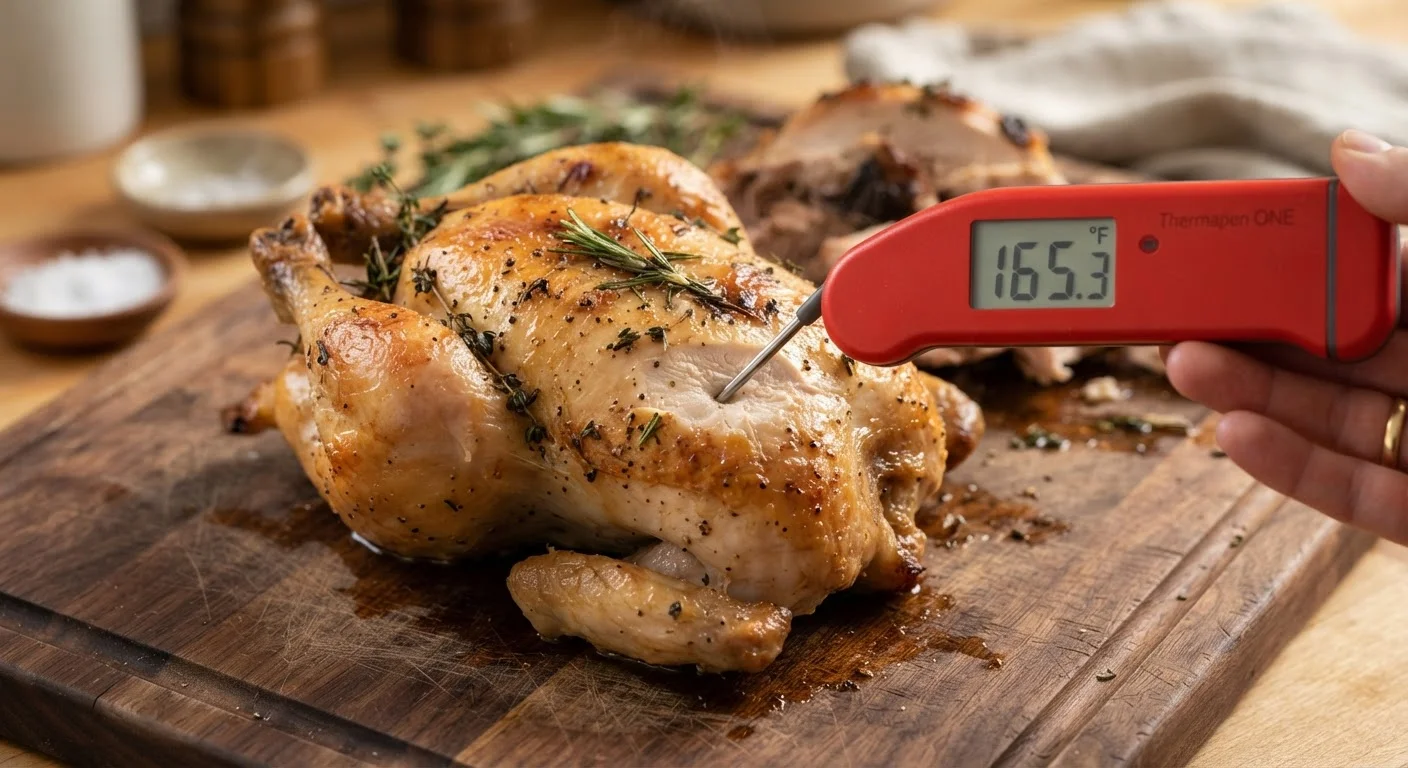
Photo: QuickAdvisor.net editorial
Why Temperatures Are the Foundation of Good Cooking
Heat transforms food - but only when it's applied at the right level. Too low, and proteins stay gelatinous or bacteria survive. Too high, and perfectly good ingredients burn or dry out. Most cooking failures aren't caused by bad recipes; they're caused by guessing at temperatures instead of knowing them.
That's the case for reading recipes like a cook: understanding the why behind an instruction - including heat levels - changes how confidently you execute it. This reference covers the numbers that appear most often and matter most: food safety thresholds, pan and oven temperatures, and a few water-behavior benchmarks every cook should recognize.
| Safe temp: poultry | 165°F (74°C) (USDA Food Safety and Inspection Service) |
| Safe temp: whole cuts of beef/pork/lamb | 145°F (63°C) + 3-min rest (USDA Food Safety and Inspection Service) |
| Safe temp: ground meats | 160°F (71°C) (USDA Food Safety and Inspection Service) |
| Water boiling point (sea level) | 212°F (100°C) |
| Typical home oven calibration error | Up to ±50°F (Commonly cited in culinary education resources) |
| Gentle simmer range | 160-180°F (71-82°C) |
Food Safety Temperatures: The Numbers That Can't Be Improvised
The U.S. Department of Agriculture (USDA) publishes minimum safe internal cooking temperatures based on the heat required to eliminate harmful pathogens. These aren't conservative suggestions - they reflect the science of microbial kill rates.
Carryover cooking
The continued rise in internal temperature that occurs after food is removed from a heat source. Residual heat stored in the outer layers moves inward, often raising the core temp by 5-10°F.
Safe internal temperature
The minimum core temperature at which harmful pathogens in a specific food are reliably destroyed. These thresholds are established by food safety authorities based on scientific research.
Simmer
Cooking liquid held just below a full boil, typically 160-180°F, where small bubbles rise intermittently. Simmering is gentler than boiling and prevents proteins and emulsions from breaking.
Oven calibration
The accuracy of an oven's actual temperature relative to its dial setting. Many ovens run hotter or cooler than indicated; an oven thermometer reveals the true temperature at the rack level.
- Poultry (whole birds, ground turkey, ground chicken): 165°F (74°C)
- Ground beef, pork, lamb, veal: 160°F (71°C)
- Whole cuts of beef, pork, lamb, veal: 145°F (63°C), followed by a 3-minute rest
- Fish and shellfish: 145°F (63°C)
- Egg dishes: 160°F (71°C)
- Leftovers and casseroles: 165°F (74°C)
A 3-minute rest after removing meat from heat allows carryover cooking to finish the job and lets juices redistribute - both safety and quality benefits in one step. Always verify with a calibrated instant-read thermometer rather than relying on color alone. Pink pork can be safe; brown chicken can be overcooked.
This article provides general food safety education. For specific guidance on food handling and storage, refer to resources from the USDA Food Safety and Inspection Service or your local health authority.
Pan and Oven Temperatures: A Practical Range Map
Stovetop burners and oven dials rarely tell you actual surface temperatures - they tell you percentage of maximum output. Knowing what heat ranges do helps you translate vague recipe language into reliable technique.
±50°F
Common home oven temperature variance
Many residential ovens deviate significantly from their dial setting, making an oven thermometer a practical kitchen tool.
165°F
Minimum safe internal temp for poultry
Established by the USDA as the threshold at which Salmonella and other pathogens in poultry are effectively eliminated.
3 minutes
Required rest time for whole cuts of meat
USDA guidelines require a 3-minute rest after cooking whole cuts of beef, pork, lamb, or veal to 145°F to ensure pathogen reduction.
Skillet and Sauté Pan Heat Ranges
| Heat Level | Approximate Surface Temp | Best Used For |
|---|---|---|
| Low | 200-300°F | Melting butter, gentle reductions, keeping food warm |
| Medium-low | 300-350°F | Sweating aromatics, scrambled eggs, slow caramelizing |
| Medium | 350-400°F | Sautéing vegetables, pancakes, most everyday cooking |
| Medium-high | 400-450°F | Searing chicken thighs, stir-fry, reducing sauces quickly |
| High | 450-500°F+ | Hard sears on steak, wok cooking, charring |
Common Oven Temperature Benchmarks
- 250-300°F: Low and slow - braises, keeping dishes warm
- 325-350°F: Standard roasting and baking; most cake and cookie recipes
- 375-400°F: Roasted vegetables, sheet-pan dinners, many quick breads
- 425-450°F: Crispy roasting, pizza, high-heat fish fillets
- 475-500°F: Neapolitan-style pizza, artisan breads, high-heat finishing
Oven calibration matters: many home ovens run 25-50°F off from their display. An inexpensive oven thermometer placed on the center rack gives you a true reading. If your baked goods consistently undercook or burn, recalibrate your expectations around what your oven's dial actually delivers - not what it claims.
For context on common kitchen misunderstandings - including the myth that a hot pan seals in juices - see cooking myths that even experienced home cooks still believe.
Water Temperature: More Useful Than You Think
Water's behavior at different temperatures is one of the most practical guides in cooking, and you can observe it without any equipment.
- 140°F (60°C): Water steams but doesn't bubble - ideal for poaching delicate fish or holding sauces without breaking them.
- 160-180°F (71-82°C): Gentle simmer with small, occasional bubbles. Correct for stock, soup, and braising liquid.
- 200-212°F (93-100°C): Rolling boil. Pasta, blanching vegetables, and hard-boiling eggs all require this range. Note that water boils at lower temperatures at higher altitudes, which affects cooking times.
A full rolling boil that can't be stirred down is your signal for pasta. A gentle simmer that barely moves the surface is what keeps a braise tender rather than tough. These visual cues, once learned, become faster and more intuitive than any thermometer.
Pairing temperature awareness with a solid pre-cooking prep routine means you spend less time reacting to problems and more time cooking with intention.
The content on this site is for informational purposes only and is not a substitute for professional advice. Always consult a qualified professional for guidance specific to your situation.