
Cooking Myths That Even Experienced Home Cooks Still Believe

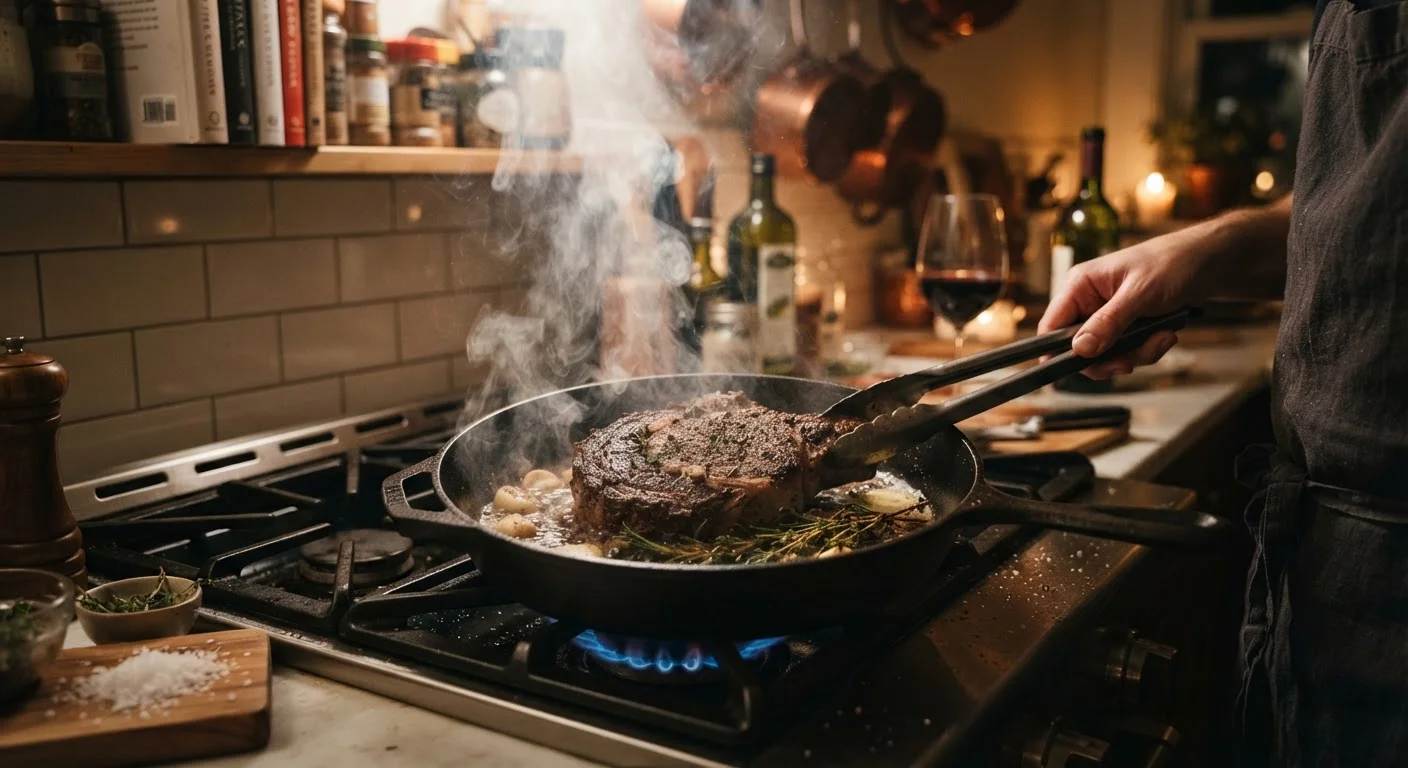
Photo: QuickAdvisor.net editorial
Key Takeaways
- Searing meat does not seal in juices - it creates flavor through browning, not a moisture barrier.
- Adding salt to water raises its boiling point by a negligible amount; the real benefit is flavor.
- Rinsing cooked pasta removes the starch that helps sauce cling to it - skip the rinse.
- Wooden cutting boards are not inherently less sanitary than plastic ones when properly maintained.
- Cooking with wine requires the same quality standard as drinking it - bad wine makes bad food.
Why Kitchen Myths Are So Hard to Kill
Kitchen wisdom gets passed down the same way folklore does - through repetition, authority, and confidence. A parent or culinary school instructor states something as fact, and it sticks. The problem is that many of these rules were never tested; they were simply observed, misinterpreted, and repeated until they felt true.
Understanding why these myths persist matters as much as debunking them. Most contain a kernel of logic - searing does produce something spectacular, salt does change water - but the explanation attached to the observation is wrong. Correcting the explanation doesn't just improve your cooking; it builds the kind of intuitive understanding that lets you adapt recipes and troubleshoot problems on the fly. For a broader look at how technique and temperature intersect, see Kitchen Temperatures You Should Actually Know by Heart.
Myth
Searing meat seals in the juices, keeping it moist and flavorful.
Fact
Searing does not create a moisture barrier. It creates flavor through the Maillard reaction - a chemical process involving heat, amino acids, and sugars.
This myth has been tested directly: seared cuts lose as much or more moisture during cooking as unseared ones. What searing does produce is a deeply browned, flavorful crust through the Maillard reaction, which begins around 280-330°F (138-165°C) at the surface of the meat. The result is genuinely worth pursuing - just not for the reason most cooks believe. The actual key to juicy meat is avoiding overcooking and resting the protein after it comes off the heat.
Myth
Adding salt to water makes it boil significantly faster.
Fact
Salt raises water's boiling point so minimally at culinary quantities that the effect on speed is negligible. You salt pasta water for flavor, not speed.
Dissolving salt in water does raise its boiling point - this is called boiling-point elevation - but the concentration needed to produce a meaningful temperature difference far exceeds what any cook would use. A tablespoon of salt in a large pot raises the boiling point by a fraction of a degree Fahrenheit. The real reason to salt pasta water generously is that pasta absorbs liquid as it cooks, and well-salted water is the only opportunity to season the pasta itself from within.
Myth
You should rinse pasta after cooking to stop it from sticking together.
Fact
Rinsing cooked pasta strips away surface starch - the very thing that helps sauce adhere. It also rapidly cools the pasta, which prevents sauce from emulsifying properly.
The starchy, slightly sticky surface of just-cooked pasta is a feature, not a bug. That starch helps sauce cling and, when a splash of pasta water is added to the pan, forms a light emulsion that binds the sauce to the noodles. Cold water rinses this away entirely. The only appropriate time to rinse pasta is when you're making a cold pasta salad and want to halt cooking quickly - in that specific case, the starch removal is acceptable because there's no hot sauce to bind anyway.
Myth
Wooden cutting boards are bacteria traps and far less sanitary than plastic ones.
Fact
Research has found that wooden boards can be as sanitary as plastic when properly cleaned; in some studies, hardwood surfaces showed better self-sanitizing properties against certain bacteria.
The assumption behind this myth is that plastic is non-porous and therefore safer. But plastic boards develop knife grooves over time, and bacteria can survive in those grooves even after washing. Hardwoods like maple have been shown in some laboratory studies to draw certain bacteria into the wood grain, where they die off rather than multiply. This doesn't mean wood is maintenance-free - boards of any material should be washed thoroughly with hot soapy water and dried completely. Neither type eliminates the need for safe food handling practices, including keeping raw proteins separate from other foods.
Myth
Cooking with wine "burns off" all the alcohol, so the quality of the wine doesn't matter.
Fact
Alcohol does not fully evaporate during typical cooking times, and wine's flavor compounds - including acidity, tannins, and fruit character - remain in the dish. Poor-quality wine produces poor-quality results.
Studies on alcohol retention in cooked food show that even after 2.5 hours of simmering, a dish can retain around 5% of its original alcohol. Shorter cooking times retain considerably more. More importantly, wine contributes far more than alcohol to a dish. Acidity brightens sauces, tannins can make proteins seem tougher, and off-flavors in cheap wine concentrate as liquid reduces. The standard culinary guidance - if you wouldn't drink it, don't cook with it - remains sound advice, though it doesn't require using an expensive bottle.
What Getting the Science Right Actually Changes
Debunking a myth isn't just trivia - it changes behavior at the stove. When you understand that resting meat redistributes juices rather than "letting them settle," you rest it correctly rather than rushing. When you know that acid (not heat alone) is what sets the color of red vegetables, you stop overcooking them chasing a brighter hue.
~5%
Alcohol remaining after 2.5 hours of simmering
Research on cooking and alcohol retention consistently shows that significant amounts remain even after extended heat exposure, challenging assumptions about "burning off" wine or spirits.
280-330°F
Temperature range for the Maillard reaction to begin
Food science literature identifies this surface temperature threshold as when browning and complex flavor development start - well above the boiling point of water.
These corrections also reveal a deeper principle: cooking is applied science, and the feedback loop between knowledge and result is immediate. If a recipe keeps failing despite careful following, the culprit is often a myth-based assumption baked into the instructions themselves. Why Recipes Keep Failing Even When You Follow Them Exactly explores exactly that problem. And because seasoning is one of the most myth-laden areas of cooking, it's worth reading Seasoning Throughout the Cook vs. Seasoning Only at the End alongside the myth corrections above.
Myth-Based Habits Can Undermine Safe Cooking
The goal isn't to cook with a chemistry textbook nearby - it's to internalize accurate principles so that good instincts replace bad habits. Every myth you unlearn is replaced by something more useful: a real understanding of cause and effect in the kitchen.
The content on this site is for informational purposes only and is not a substitute for professional advice. Always consult a qualified professional for guidance specific to your situation.