
Salt, Fat, Acid, Heat: What Each Element Actually Does to Food

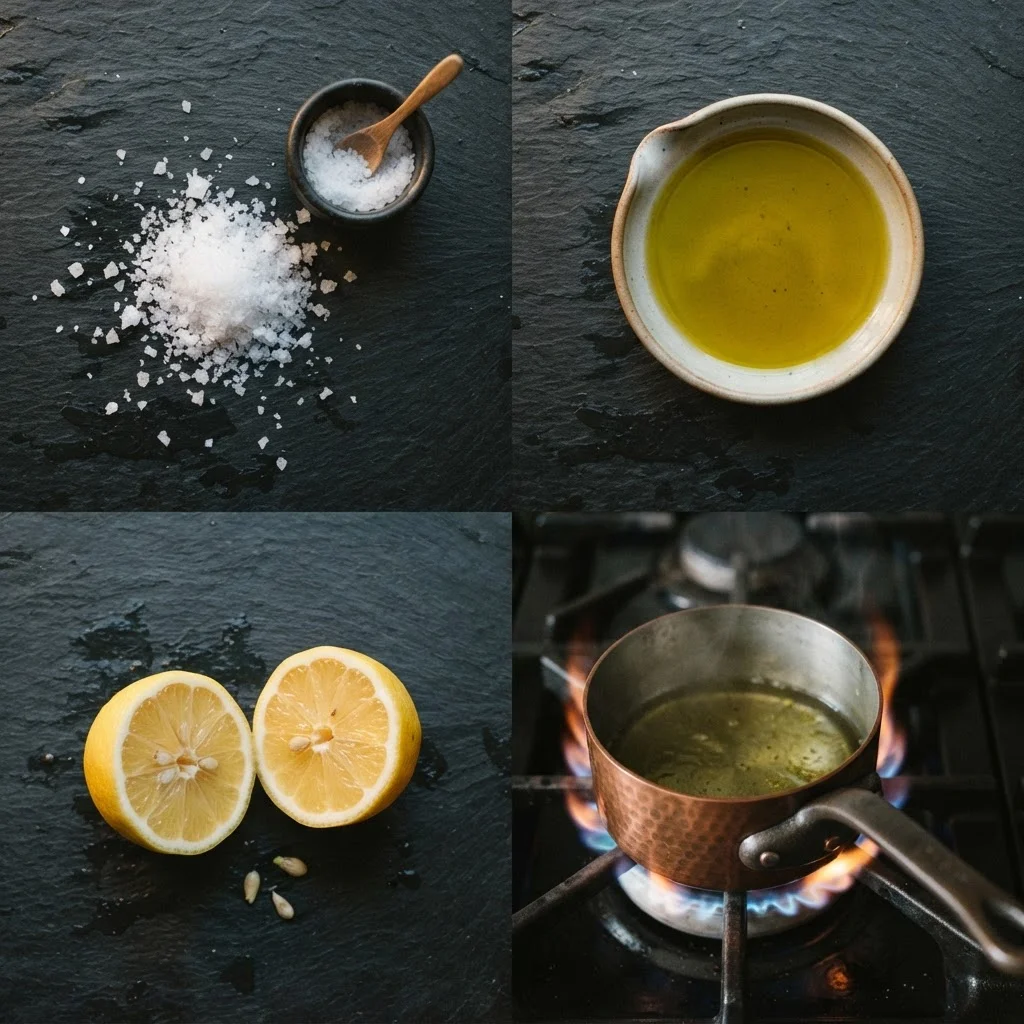
Photo: QuickAdvisor.net editorial
Key Takeaways
- Salt doesn't just add saltiness - it suppresses bitterness and amplifies other flavors across the whole dish.
- Fat carries fat-soluble flavor compounds, creating richness and a satisfying mouthfeel that water cannot replicate.
- Acid brightens food by contrast, balancing sweetness and cutting through heaviness from fat or starch.
- Heat is the most transformative element, driving browning, tenderness, and entirely new flavor compounds.
- Using all four elements in balance is the core skill separating confident cooks from recipe-dependent ones.
Salt: The Flavor Amplifier
Salt is the most consequential seasoning in any kitchen, and its role goes well beyond making food taste salty. At a sensory level, sodium suppresses bitterness - which is why a pinch of salt in coffee or chocolate makes them taste smoother and more balanced. It also enhances the perception of sweetness and amplifies aromatic compounds, making everything else in a dish taste more like itself.
Timing matters enormously with salt. Salting meat well before cooking (often called a dry brine) draws moisture to the surface, which is then reabsorbed along with the dissolved salt, seasoning the interior and improving texture. Salting pasta water generously ensures the pasta has seasoning built in, not just layered on top. Salt added only at the table tends to taste sharp and one-dimensional compared to salt woven in throughout cooking.
Different salts also behave differently. Kosher salt and fine sea salt dissolve and distribute at different rates - a fact worth understanding when converting measurements or seasoning by touch rather than by weight.
Salt Is Not One-Size-Fits-All
Fat: The Flavor Carrier
Fat does something water fundamentally cannot: it dissolves and holds onto fat-soluble flavor compounds. Many of the most aromatic molecules in herbs, spices, garlic, and chiles are lipophilic - meaning they bind to fat, not water. Blooming spices in warm oil before adding other ingredients is a direct application of this principle, releasing far more flavor than adding them to a water-based liquid.
Fat also creates mouthfeel. The richness of a well-made pan sauce, the satisfying weight of a good vinaigrette, the way butter on bread feels different from bread alone - all of this is fat coating the palate and slowing the release of flavor compounds. That extended contact is part of what makes fatty foods taste more complex and satisfying.
For more on how fat behaves as a structural ingredient in sauces, see how emulsions work - it's one of the most practical applications of fat science in everyday cooking.
Use Fat Strategically, Not Just Generously
Acid: The Balancer
Acid is the element most home cooks underuse. It doesn't make food taste sour - used correctly, it makes food taste brighter and more balanced. A squeeze of lemon over roasted vegetables, a splash of vinegar in a braise, a dollop of yogurt alongside rich stew: these additions create contrast that makes the other flavors pop.
Acid works by competing with and counterbalancing sweetness and fat. When a dish tastes heavy, dull, or one-dimensional, acid is often the missing element. It also interacts with proteins - acidic marinades begin denaturing (unfolding) the proteins in meat, which can improve texture when used carefully. In beverages, acid is equally powerful: it's a primary reason citrus juice transforms cocktails and sparkling water feels more refreshing than still.
Common culinary acids include citrus juice, wine, vinegars, yogurt, buttermilk, tamarind, and fermented ingredients. Each brings its own flavor alongside its acidity, which is why the choice of acid matters - red wine vinegar tastes different from rice vinegar even at the same pH.
Heat: The Transformer
Heat is the only element that fundamentally changes the molecular structure of food. It drives two of the most important flavor-creating reactions in cooking: the Maillard reaction and caramelization. The Maillard reaction - a complex interaction between amino acids and sugars - is responsible for the brown crust on seared steak, the color of toast, and the depth of roasted coffee. Caramelization occurs when sugars break down under heat, producing hundreds of new flavor compounds with bittersweet complexity.
Beyond browning, heat denatures proteins (turning raw egg white from translucent to opaque), gelatinizes starches (thickening sauces and softening grains), and breaks down tough collagen in meat into silky gelatin. Low, slow heat does the latter especially well - it's why braised short ribs or slow-cooked pork become tender and rich while a quick high-heat method would leave the same cuts chewy.
Understanding how heat moves through food is as important as the temperature itself. For a deeper look at conduction, convection, and radiation, see how heat transfer works in the kitchen. It's foundational knowledge that explains why a cast-iron skillet and a thin stainless pan behave so differently, even at the same burner setting. It's also worth knowing that different cooking methods do more than change flavor - they affect nutritional content too, as explored in how cooking methods change the nutritional value of food.
700+
Flavor compounds produced by Maillard reaction
Food scientists have identified over 700 distinct flavor and aroma compounds generated when proteins and sugars react under high heat, according to culinary chemistry research.
~25%
Bitterness reduction from salt addition
Research published in food science literature has shown that sodium can suppress bitter taste perception significantly, explaining salt's role in balancing complex flavors.
Putting the Four Elements Together
The practical value of understanding these four elements is that they give you a diagnostic framework when something in a dish isn't working. Food tastes flat? It likely needs more salt, or better distribution of salt throughout cooking. Tastes heavy or one-note? Try acid. Seems thin or lacking depth? Consider whether fat was used effectively to carry aromatic compounds. Lacks complexity or color? Heat - specifically browning - may have been insufficient.
This framework also explains why experienced cooks can improvise confidently with unfamiliar ingredients: they're not following a recipe as a fixed script, they're balancing these four variables in real time. That skill is transferable across cuisines, seasons, and whatever happens to be in the refrigerator.
Frequently Asked Questions
The content on this site is for informational purposes only and is not a substitute for professional advice. Always consult a qualified professional for guidance specific to your situation.