
How Different Cooking Methods Change the Nutritional Value of Food

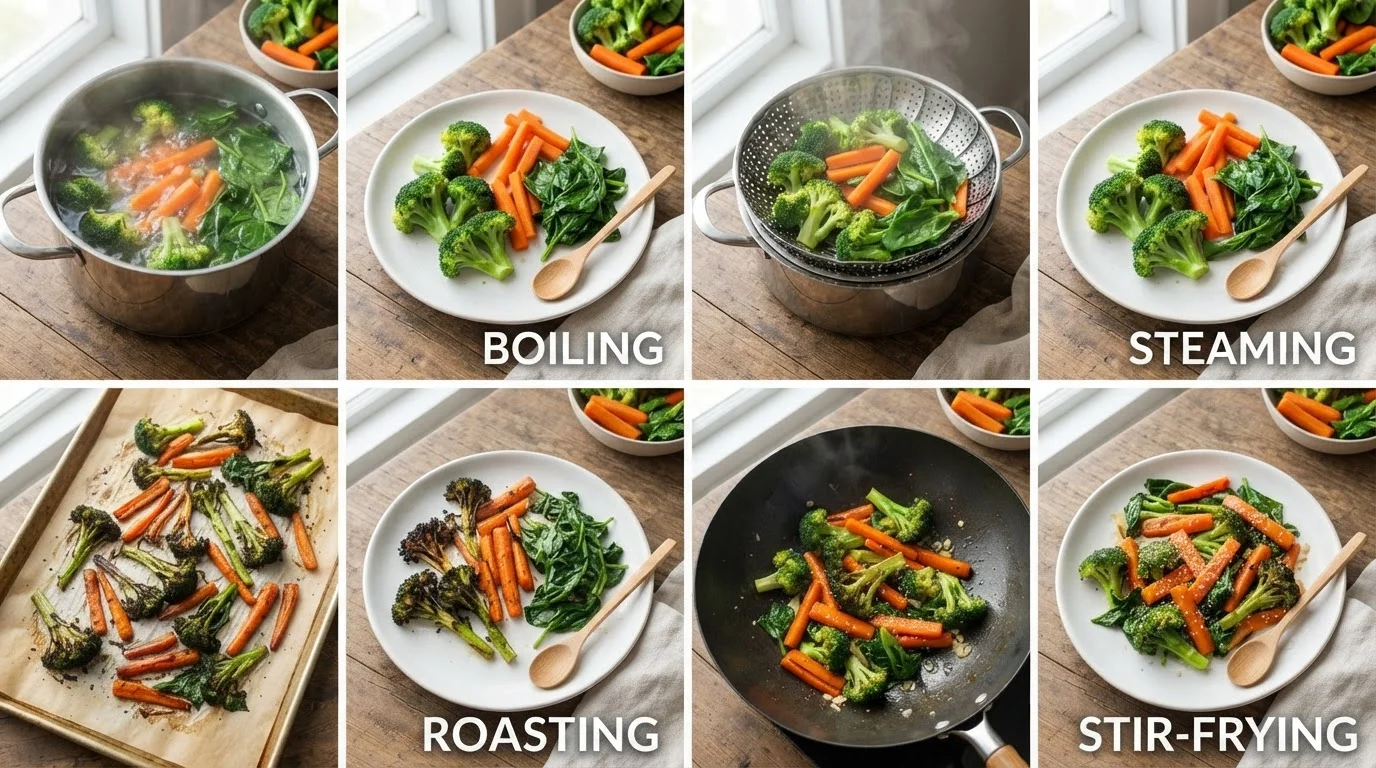
Photo: QuickAdvisor.net editorial
Key Takeaways
- Boiling causes the greatest nutrient loss, especially for water-soluble vitamins like vitamin C and B vitamins.
- Steaming preserves more nutrients than boiling because food doesn't contact the cooking water directly.
- Roasting can concentrate flavors but may reduce heat-sensitive nutrients at high temperatures.
- Some nutrients, like lycopene in tomatoes, actually become more bioavailable after cooking.
- Short cooking times and minimal water use generally lead to better nutrient retention.
- No single cooking method is perfect - variety in your cooking approach supports overall nutritional balance.
Why Cooking Methods Matter Nutritionally
Most people choose cooking methods based on flavor, convenience, or habit. But every time you apply heat to food, you're also triggering chemical changes that affect its nutritional profile. Vitamins break down, minerals leach into water, proteins denature, and some compounds become easier - or harder - for the body to use.
Understanding the science behind these changes doesn't require a culinary degree. It just requires knowing which nutrients are most vulnerable and which cooking techniques help preserve them. For a deeper look at how heat physically transfers to food, see our guide on conduction, convection, and radiation in cooking.
The key variables affecting nutrient retention are: heat intensity, cooking duration, water contact, and surface exposure to air. Different methods combine these variables in different ways - which is why boiling broccoli and roasting it produce genuinely different nutritional outcomes.
Boiling and Simmering: Convenience with Trade-offs
Boiling is one of the most common cooking methods, but it's also one of the least protective of nutrients. Water-soluble vitamins - particularly vitamin C and the B vitamins - leach out of food and into the cooking liquid. Research has shown that boiling vegetables can reduce their vitamin C content by 50% or more, depending on cooking time and temperature.
Minerals like potassium and magnesium also migrate into the water, though they're lost in smaller proportions than vitamins. The longer the cook and the more water used, the greater the loss.
50%+
Vitamin C lost when boiling vegetables
Multiple studies, including research published in the Journal of Food Science, have documented that boiling can reduce vitamin C content in vegetables by more than half, depending on cooking time.
2-3x
Increase in lycopene bioavailability after cooking tomatoes
Research published in the Journal of Agricultural and Food Chemistry found that heat processing significantly increases the bioavailable lycopene content of tomatoes compared to raw.
~5%
Nutrient loss from microwaving vs. boiling
A review in the Journal of the Science of Food and Agriculture found that microwave cooking generally results in significantly lower nutrient losses than boiling for most water-soluble vitamins.
One practical workaround: use the cooking liquid. Vegetable broth, soups, and stews recapture much of what leaches out. This is one reason why a bowl of vegetable soup retains more nutrients than the same vegetables discarded after boiling. For cooks interested in building flavor alongside nutrition, our article on stock vs. broth covers how to make the most of liquid-based cooking.
Steaming and Microwaving: The Nutrient-Friendly Options
Steaming keeps food out of direct contact with water while still using moist heat to cook it. This dramatically reduces the leaching of water-soluble vitamins. Studies comparing steaming to boiling consistently show better vitamin C and B vitamin retention in steamed vegetables.
Microwaving, often dismissed as nutritionally inferior, is actually among the best methods for preserving nutrients. Because microwave cooking is fast and uses little to no water, nutrient losses are typically lower than most stovetop methods. The short cooking times minimize heat-related degradation.
Keep Steaming Times Short for Best Results
Both methods work best with shorter cooking times. Oversteaming vegetables until they're mushy negates much of the nutritional advantage, just as extended microwaving does.
Roasting and Baking: Complex Effects at High Heat
Dry-heat methods like roasting and baking don't cause the water-soluble leaching that boiling does, but high temperatures can still degrade heat-sensitive nutrients. Vitamin C, for instance, is particularly vulnerable to prolonged heat exposure regardless of moisture.
On the positive side, roasting concentrates flavors and can improve the bioavailability of certain fat-soluble nutrients when a small amount of oil is used. Carotenoids - the pigments in carrots, sweet potatoes, and squash - are better absorbed by the body when consumed with a fat source, which roasting often naturally provides.
The difference between baking and roasting also matters here: roasting at higher temperatures for shorter times generally preserves more heat-sensitive compounds than low, slow baking.
Frying: Caloric Impact and Nutrient Shifts
Frying introduces fat - sometimes a significant amount - into food that may not have contained much to begin with. Deep-fried foods absorb oil during cooking, substantially increasing calorie density. The actual amount depends on the food's structure, the presence of a batter or coating, oil temperature, and frying time.
On the nutrient retention side, frying is a mixed picture. Because it's relatively fast and food isn't submerged in water, some nutrients survive well. However, high oil temperatures can degrade fat-soluble vitamins and produce compounds associated with oxidative stress, particularly when oils are reused or overheated.
Sautéing, pan-frying, and stir-frying differ meaningfully in how much fat they use and how they affect food - and these distinctions matter nutritionally, not just culinarily.
The Bioavailability Factor: When Cooking Helps
A crucial concept often missing from the raw-vs-cooked debate is bioavailability - how much of a nutrient the body can actually absorb and use. Cooking can increase bioavailability even when it reduces a raw nutrient's measurable quantity.
Classic examples include lycopene in tomatoes, which increases significantly after cooking, and beta-carotene in carrots, which becomes more available after the vegetable's cell walls are softened by heat. Spinach is another case: cooking reduces its oxalate content, which otherwise binds to calcium and iron and limits their absorption.
This means that a raw-food-only approach isn't automatically superior, and neither is fully cooked. The most nutritionally balanced approach tends to include a variety of both. For practical ideas on improving nutrient intake without major dietary changes, see getting more nutrients from your meals without overhauling your diet.
This article is for general informational and educational purposes only and is not a substitute for professional medical or dietary advice. Consult a registered dietitian or qualified healthcare provider for guidance tailored to your individual health needs.
Frequently Asked Questions
The content on this site is for informational purposes only and is not a substitute for professional advice. Always consult a qualified professional for guidance specific to your situation.