
The Maillard Reaction: Why Browned Food Tastes Better

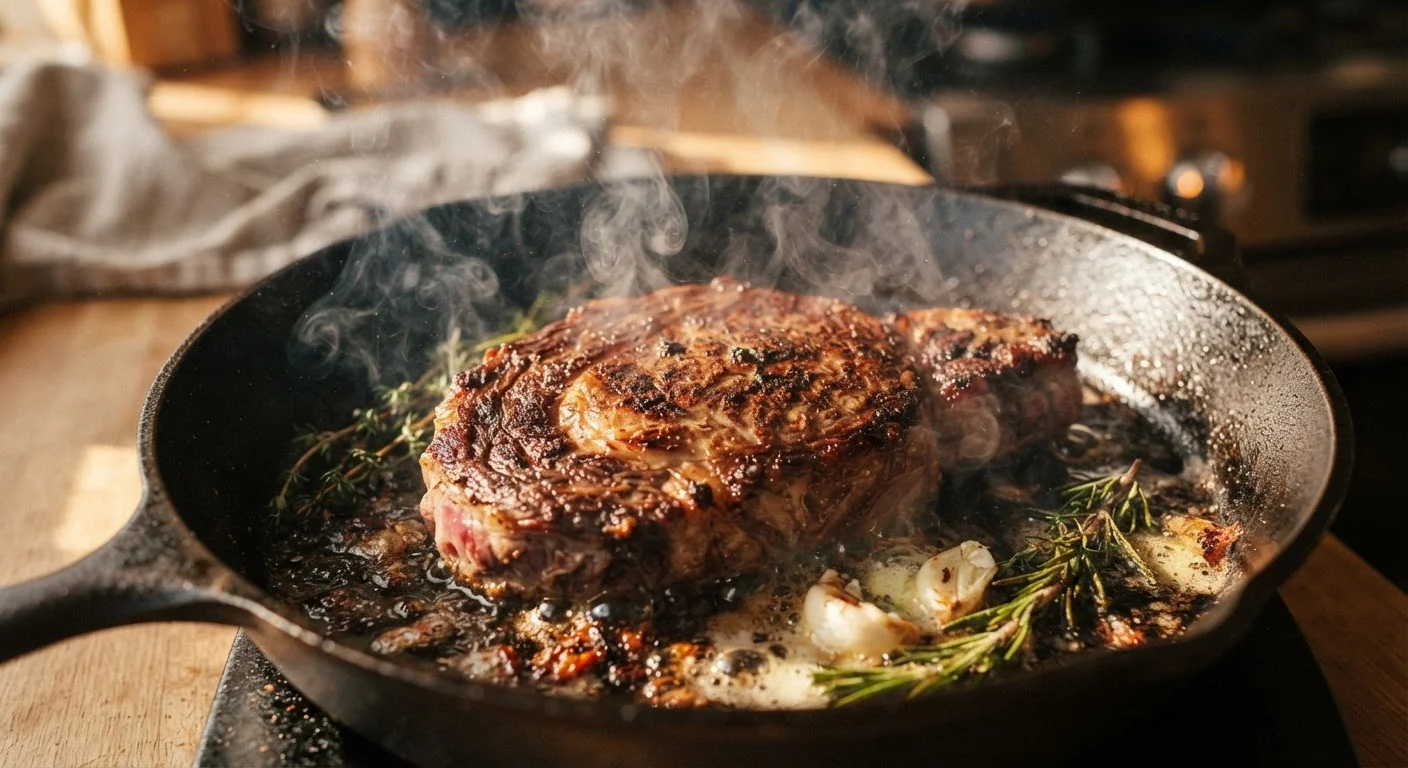
Photo: QuickAdvisor.net editorial
Key Takeaways
- The Maillard reaction requires both protein and sugar - it is not the same as caramelization.
- High, dry heat (typically above 280°F/140°C) is needed to trigger the reaction.
- Surface moisture is the enemy - wet food steams instead of browns.
- The reaction produces hundreds of flavor compounds, creating complexity and depth.
- Home cooks can reliably trigger it with a few straightforward technique adjustments.
What the Maillard Reaction Actually Is
Most home cooks recognize the result - that deep brown crust on a burger, the speckled top of a roasted vegetable, the aromatic perfume of freshly brewed coffee. What fewer cooks realize is that all of these share a single chemical origin: the Maillard reaction.
At its core, the reaction is a conversation between two types of molecules. When amino acids (the building blocks of protein) and reducing sugars (a class of simple sugars) encounter sustained high heat, they begin to react with each other. The result isn't just browning - it's the creation of hundreds of distinct flavor and aroma compounds that simply don't exist in raw or steamed food. This is why a grilled chicken breast tastes fundamentally different from a poached one, even when both are cooked to the same internal temperature.
Understanding this distinction gives cooks real power. Knowing why something browns - not just that it does - lets you troubleshoot problems and make deliberate choices at every step of cooking. It's the kind of foundational knowledge covered in resources like reading a recipe like a cook, where technique context transforms instructions into understanding.
The Conditions That Make It Happen
The Maillard reaction is not automatic. It has requirements, and when those requirements aren't met, browning stalls no matter how long the food sits on the heat.
280°F+
Minimum temperature to trigger Maillard browning
Below this threshold, browning is too slow to occur during normal cooking times - the surface must exceed the boiling point of water.
100s
New flavor compounds created
Food scientists have identified hundreds of distinct aroma and flavor compounds produced by the Maillard reaction, varying by food type, temperature, and duration.
212°F
Maximum temperature of boiling water
Because boiling water cannot surpass this temperature, methods like poaching and steaming cannot reach the threshold needed for Maillard browning.
Heat above roughly 280°F (140°C). Below this threshold, the reaction is too slow to be practical. Boiling water maxes out at 212°F (100°C), which is why boiled or steamed food never browns - the temperature simply can't climb high enough. Searing, roasting, grilling, and frying all achieve the necessary temperatures because they use dry heat methods that allow the food's surface to exceed the boiling point of water.
A dry surface. This is the condition home cooks most often get wrong. When food is wet - whether from a marinade, fresh from the refrigerator, or packed too tightly in a pan - the surface moisture must evaporate before temperatures can rise. During that evaporation phase, the food steams rather than sears. Patting proteins dry before cooking and avoiding pan overcrowding are the two simplest, highest-impact habits a home cook can develop.
Both protein and sugar present. The reaction needs amino acids and reducing sugars to proceed. Most whole foods contain both naturally, but the balance varies. This is why lean proteins may brown slightly differently than fattier cuts, and why adding a small amount of sugar to a marinade or rub can enhance browning on the surface.
Maillard vs. Caramelization: A Critical Distinction
These two browning processes are frequently conflated, but they are chemically different and produce distinct results.
“The Maillard reaction is responsible for an astonishing range of flavors and aromas in cooked food - from the crust of bread to the sear of meat to the roast of coffee. Understanding it is one of the most powerful tools a cook can have.”
— Harold McGee, Food science author and culinary chemistry expert
Caramelization is the thermal decomposition of sugars - no protein required. It typically begins at higher temperatures (around 320°F/160°C for sucrose) and produces the characteristic sweet, slightly bitter notes of caramel, toffee, and browned onions. The Maillard reaction, by contrast, requires amino acids alongside those sugars and generally kicks in at a lower temperature.
In practice, both reactions can occur simultaneously. A sautéed onion, for example, undergoes both: the sugars caramelize while the amino acids and sugars together drive Maillard browning. The flavors stack and intertwine, which is part of why deeply cooked aromatics form such a rich base for soups and sauces.
For home cooks, the practical takeaway is this: caramelization makes food sweeter; the Maillard reaction makes it more complex and savory. Both are useful, and both respond to the same fundamental lever - dry, high heat.
This matters especially in the oven. As explained in the real difference between baking and roasting, temperature and moisture levels shape how food transforms under dry heat - and the Maillard reaction is a central part of that story.
Practical Techniques to Maximize Browning
Armed with the science, the practical steps become intuitive rather than arbitrary.
The Single Best Tip: Dry Before You Sear
- Dry your food thoroughly. Use paper towels to pat proteins dry before searing. For vegetables, spread them in a single layer so moisture can escape during roasting.
- Use a hot pan or oven. Preheat your skillet before adding oil, and don't add food to a cold surface. In the oven, temperatures at or above 400°F (200°C) produce faster, more pronounced browning.
- Don't crowd the pan. Overcrowding traps steam. Work in batches if necessary - it's worth the extra time.
- Choose the right fat. Oils with higher smoke points (avocado, refined sunflower) tolerate the high heat needed for browning without breaking down before the Maillard reaction can occur.
- Leave food alone. Constant stirring or flipping prevents a crust from forming. Let the food sit in contact with the heat source long enough to develop color before moving it.
These aren't arbitrary rules from a recipe - they're logical extensions of understanding what the reaction needs. Once you see them through that lens, they become permanent instincts rather than instructions to memorize.
Frequently Asked Questions
The content on this site is for informational purposes only and is not a substitute for professional advice. Always consult a qualified professional for guidance specific to your situation.