
The Real Difference Between Baking and Roasting

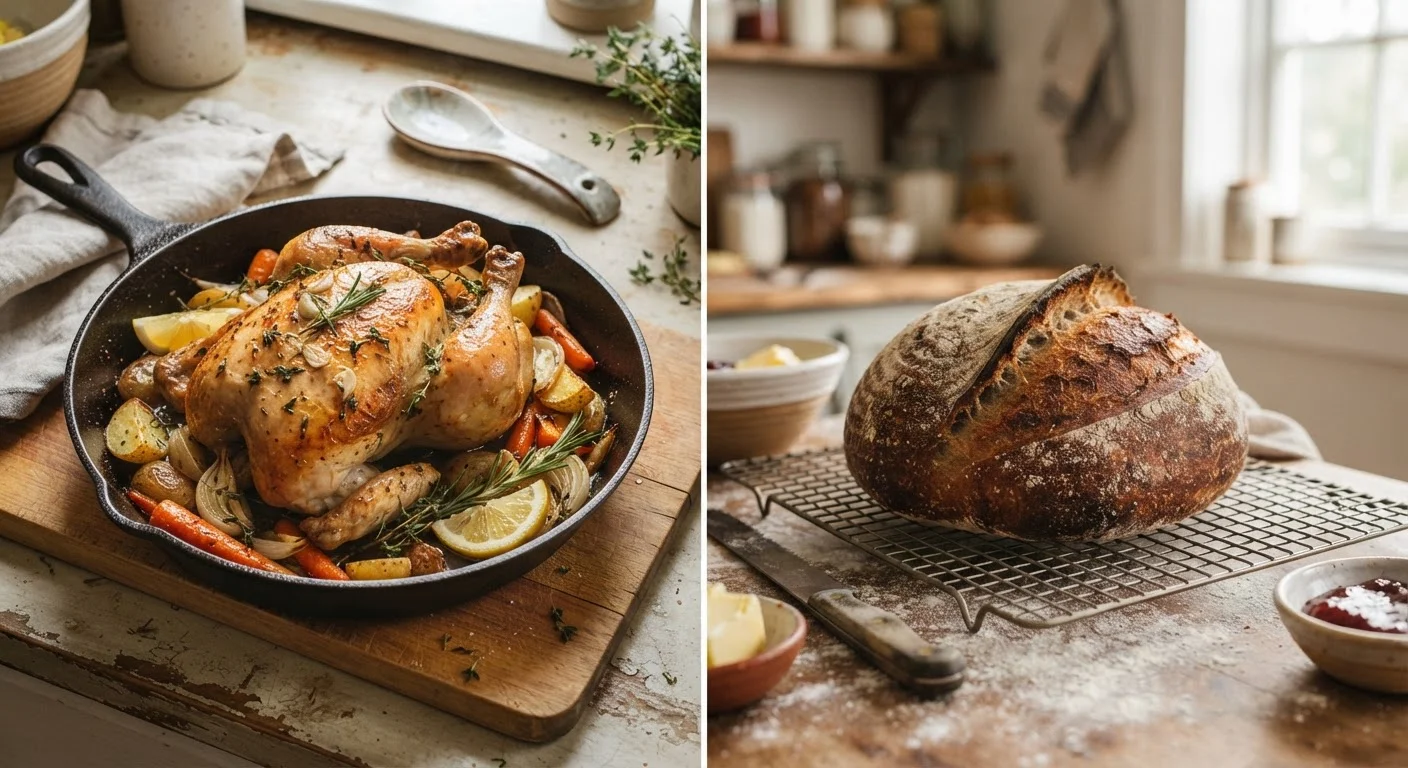
Photo: QuickAdvisor.net editorial
Key Takeaways
- Baking and roasting both use dry oven heat, but the terms apply to different foods and goals.
- Baking is primarily for structureless foods like doughs and batters that solidify as they cook.
- Roasting targets already-solid foods - meats, root vegetables - and aims for browning and depth of flavor.
- Roasting typically uses higher temperatures than most baking applications.
- The distinction is partly culinary convention, not a strict scientific boundary.
- Understanding the difference helps you make smarter decisions about time, temperature, and technique.
Why the Distinction Matters
Most home cooks use the words baking and roasting interchangeably - and cookbooks, recipe sites, and even professional chefs sometimes blur the line. But the distinction carries real practical meaning. Choosing the right approach shapes your temperature setting, how you prep your food, and what kind of result you're actually aiming for.
Both methods work by surrounding food with hot, dry air inside an enclosed oven. Understanding how oven heat moves through food - through convection in the air, conduction through pans, and radiant heat from oven walls - helps explain why the same box can produce a delicate sponge cake and a deeply bronzed pork shoulder using what appear to be similar conditions.
What Defines Baking
Baking applies to foods that undergo a structural transformation during cooking. Before a batch of muffins goes into the oven, the batter is liquid and formless. Heat activates a chain of chemical reactions - proteins coagulate, starches gelatinize, leavening gases expand - that turn that liquid into a solid, sliceable structure. The same logic applies to breads, cookies, pies, soufflés, and casseroles.
Baking temperatures are usually moderate - roughly 325°F to 375°F for most baked goods - because the interior must set evenly before the exterior over-browns. The goal is a controlled, predictable transformation, not aggressive surface color. Moisture management matters enormously: steam from the batter or dough itself is often what gives baked goods their rise and tender crumb.
Watch Your Pan Choice
What Defines Roasting
Roasting starts from a different premise. The food - a chicken thigh, a tray of root vegetables, a rack of lamb - already has solid structure going into the oven. The objective isn't to build structure; it's to concentrate flavor, render fat, and drive the Maillard reaction (the browning process that creates hundreds of new flavor compounds on exposed surfaces).
Roasting typically runs hotter, often 400°F to 450°F, and the food is usually coated in fat to encourage surface browning rather than steaming. Air circulation matters: crowding a roasting pan causes foods to steam in each other's moisture rather than roast, which is why home cooks are often told to leave space between pieces. The result of good roasting is a caramelized, deeply savory exterior with a cooked - but not dried out - interior.
310+
Flavor compounds created by Maillard browning
Food scientists have identified over 300 distinct flavor compounds produced when proteins and sugars brown under high heat, the reaction central to roasting.
400°F+
Typical threshold for effective roasting
Most culinary guides and professional kitchens use temperatures above 400°F to achieve meaningful surface caramelization when roasting meats and vegetables.
325-375°F
Common range for most baked goods
This temperature window appears in the majority of standard baking recipes because it allows even interior cooking without excessive surface browning.
Where Convention Muddies the Line
Here's where the tidy definition gets complicated: culinary tradition assigns the word based on the food type as much as the method. A whole potato cooked in its skin at 400°F is called a baked potato, not a roasted one - even though the same oven at the same temperature might be roasting a chicken next to it. Sweet potatoes, on the other hand, are frequently called roasted when they're cut and caramelized at high heat.
Fish is typically said to be baked even at relatively high heat. Nuts are roasted in a dry pan or oven even without oil. These naming conventions reflect culinary history and cultural usage more than strict technique. What matters practically is understanding what you want the heat to do - build structure or develop surface color - and setting your conditions accordingly. For a deeper look at how each method affects the food you eat, see how different cooking methods affect nutritional value.
Putting It Together in the Kitchen
When you're deciding between the two approaches, ask two questions: Does my food need to form structure as it cooks, or does it already have it? And am I after a tender, even interior or a browned, flavorful crust? For foods that are already solid - proteins, dense vegetables - lean toward roasting logic: higher heat, fat on the surface, and room for air to circulate. For batters, doughs, and custards, baking logic applies: moderate heat, attention to moisture, and enough time for the interior to set completely.
These aren't rigid categories with a hard boundary. But building clarity around each approach sharpens your instincts as a cook - just as understanding the difference between sautéing, pan-frying, and stir-frying gives you better command over stovetop heat.
Frequently Asked Questions
The content on this site is for informational purposes only and is not a substitute for professional advice. Always consult a qualified professional for guidance specific to your situation.