
Dishes That Carried Culture: How Immigrant Foods Found a Place in America

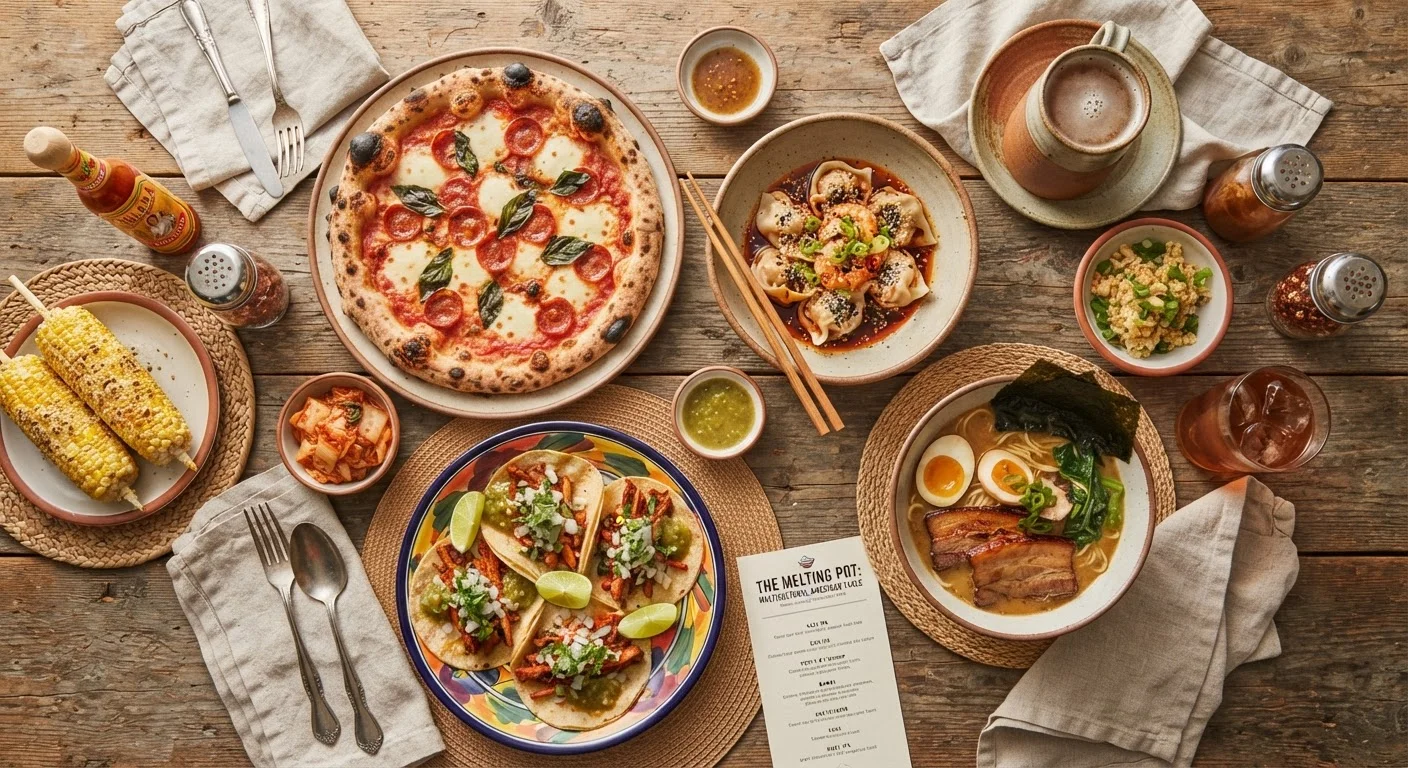
Photo: QuickAdvisor.net editorial
Key Takeaways
- Many of America's most beloved foods originated in immigrant kitchens before crossing into mainstream culture.
- Dishes often change when they travel - adapting to new ingredients, tastes, and economic realities.
- Food carries cultural memory, helping communities preserve identity across generations.
- The popularity of immigrant foods doesn't always translate into respect for the cultures that produced them.
- Understanding a dish's origin deepens appreciation for the people and history behind it.
Food as a Passport
Every wave of immigration to the United States has left a permanent mark on the national table. Long before "fusion cuisine" became a culinary trend, immigrant families were quietly negotiating between the foods of home and the ingredients available in their new country - producing dishes that eventually became American staples most people no longer think of as foreign at all.
That process of culinary adoption is rarely simple. It involves cultural pride, economic survival, occasional erasure, and sometimes outright appropriation. A dish might enter American life through a neighborhood restaurant, a factory cafeteria, a school lunch program, or a grandmother's kitchen - and each pathway shapes how it's received and remembered. For a deeper look at the broader arc of this story, see how immigrant waves reshaped the American plate.
The seven dishes below don't represent a complete list - that would be impossible. They are, instead, entry points into the larger conversation about what it means for a food to cross a border and find a new home.
Pizza: Southern Italian Roots, American Reinvention
Pizza as Americans know it traces directly to southern Italian immigrants, particularly those from Naples, who arrived in large numbers in the late 19th and early 20th centuries. In cities like New York and Chicago, they opened small bakeries and restaurants that initially served their own communities. Over time, the pizza they made - adapted to local flour, tomatoes, and cheese - began attracting broader audiences.
The New York slice, with its wide, foldable crust, emerged partly from the practicality of feeding workers on the move. Chicago's deep-dish style developed later, shaped by local tastes and available ingredients. Both versions diverged significantly from their Neapolitan origins, becoming distinctly American foods that now circle back to Italy as novelties.
Pizza was considered working-class immigrant food long before it became a national obsession.
Tacos: A Mexican Staple Transformed at the Border
The taco predates Mexican-American immigration by centuries - it was already a foundational street food throughout Mexico before the U.S.-Mexico border was drawn where it is today. Mexican workers who came north brought the taco with them, and it spread gradually through the Southwest and California via taquerias, roadside stands, and home kitchens.
What happened next is complicated. The taco was simplified, softened, and mass-marketed in ways that stripped regional specificity. Yet authentic regional Mexican taco traditions - from Oaxacan tlayudas to Yucatecan cochinita pibil - have also gained visibility in American cities, driven by both immigrant communities insisting on their own food culture and curious diners seeking real variety.
The taco's journey north is inseparable from the broader history of Mexican migration and labor.
Dumplings: A Pan-Asian Comfort Food With Deep Roots
Dumplings - in their many forms - exist across dozens of cultures, but the Chinese jiaozi and its close relatives have had an especially visible trajectory in the United States. Chinese immigrants arrived in significant numbers during the California Gold Rush and the construction of the transcontinental railroad. They opened restaurants that initially served their communities in Chinatowns, then gradually expanded to broader audiences.
The "chop suey" era represented an early, heavily Americanized interpretation of Chinese food. But as subsequent generations of Chinese and other East and Southeast Asian immigrants arrived, more regionally specific and authentic dishes - including various dumpling traditions - gained recognition. Today, soup dumplings (xiaolongbao), pierogi, gyoza, and momo each carry their own distinct cultural address.
Dumplings cross nearly every cultural boundary - each version carries a distinct community's story.
Hot Dogs: Central European Origins, All-American Identity
The hot dog's ancestry runs through German and Austrian immigrant butchery traditions - specifically the Frankfurt-style sausage and the Vienna wiener. German immigrants brought their sausage-making expertise to the United States throughout the 19th century, establishing butcher shops and meat-packing operations that supplied growing industrial cities.
The hot dog's transformation into an American cultural icon accelerated through baseball stadiums, seaside boardwalks, and eventually backyard grills - contexts that stripped away its European identity almost entirely. The regional variations that developed - Chicago's dragged-through-the-garden style versus New York's simple mustard-and-sauerkraut - reflect how thoroughly the food was absorbed and reimagined by its new setting.
Few foods feel more American than the hot dog, yet its origins are unmistakably European.
Bagels: From the Jewish Pale to the National Breakfast Table
The bagel originated in the Jewish communities of Central and Eastern Europe, arriving in the United States with the large waves of Ashkenazi Jewish immigration between roughly 1880 and 1924. In New York City, bagel bakers formed tight-knit labor unions and served a primarily Jewish clientele. For decades, the bagel remained a community-specific food with little mainstream penetration.
Its national breakthrough came gradually, accelerating significantly in the latter half of the 20th century as cream cheese pairings and deli culture expanded beyond Jewish neighborhoods. The industrial bagel - pre-sliced, softer, shelf-stable - bears little resemblance to its hand-rolled, boiled predecessor, a transformation that illustrates how mass production can both spread and dilute a food's identity.
The bagel's rise from immigrant staple to national breakfast item took most of a century.
Pho: Vietnamese Resilience in a Bowl
Pho - the fragrant Vietnamese noodle soup built on slow-simmered bone broth, rice noodles, and fresh herbs - arrived in the United States primarily through the refugee communities that fled Vietnam after 1975. It was initially served in informal restaurants in cities with significant Vietnamese populations: San Jose, Houston, New Orleans, and the Washington, D.C. area, among others.
Unlike many immigrant foods that were quickly adapted for mainstream palates, pho retained much of its character as it gained a wider following, partly because its preparation genuinely demands time, technique, and specific ingredients. Its growing popularity reflects a broader American willingness - still uneven, but real - to engage with Southeast Asian food on its own terms rather than through a simplified lens.
Pho's rise in America is inseparable from the Vietnamese refugee experience and its communities' perseverance.
Gumbo: A Dish That Is Already American Synthesis
Gumbo is one of the few dishes on this list that was not imported intact from another country - it was created in Louisiana through the forced and voluntary convergence of West African, French, Spanish, and Indigenous Choctaw culinary traditions. The word itself likely derives from a Bantu word for okra, a key thickening ingredient brought to the Americas through the transatlantic slave trade.
Gumbo is a reminder that "immigrant food" is only part of the story. Enslaved people's culinary knowledge was foundational to American Southern cooking even as it was rarely acknowledged. Understanding gumbo's origins is inseparable from understanding the distinct but intertwined histories of soul food and Southern cuisine.
Gumbo was born on American soil from multiple diasporas - it belongs to no single country of origin.
Why Origins Still Matter
When a dish becomes ubiquitous, its origins tend to fade from view. Pizza is "American." Tacos are "Mexican food" without a regional address. Dumplings are simply dumplings. That flattening is worth resisting - not out of nostalgia, but because understanding where food comes from reveals something honest about how cultures interact and who gets credit for that creativity. The complicated history of how "ethnic" restaurants are framed in America is part of this same story.
Food is also one of the most accessible entry points into cultures that might otherwise feel distant. Comfort food carries layers of memory and meaning that go well beyond the ingredients in the bowl. Recognizing that depth - in your own meals and in others' - is a form of cultural literacy worth cultivating.
Look Beyond the Menu for Cultural Context
The content on this site is for informational purposes only and is not a substitute for professional advice. Always consult a qualified professional for guidance specific to your situation.