
The Complicated Legacy of 'Ethnic' Restaurants in the United States

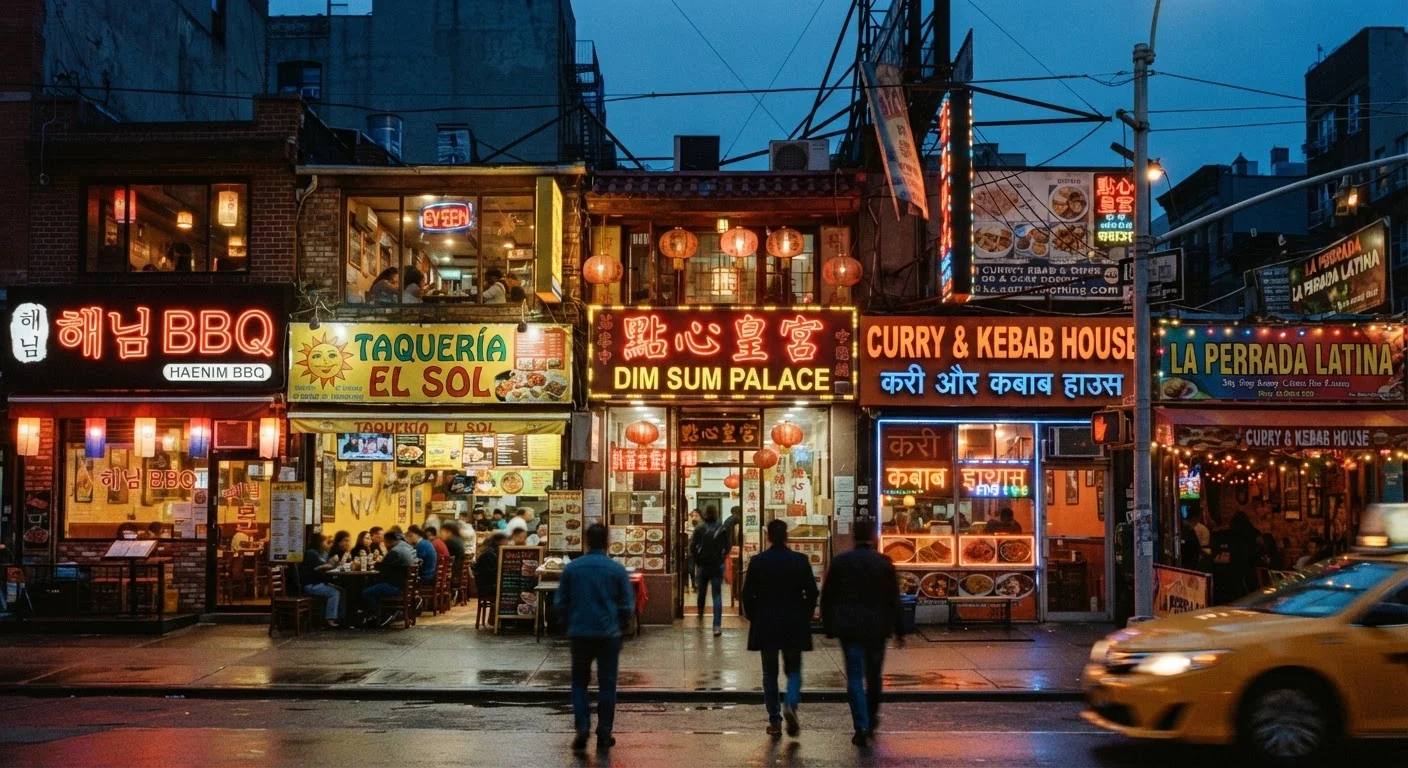
Photo: QuickAdvisor.net editorial
Key Takeaways
- The label 'ethnic restaurant' is a contested term that shapes cultural perception far beyond the menu.
- Such restaurants have served as genuine economic lifelines and community anchors for immigrant families.
- The category can flatten deeply complex, regional food traditions into a single, simplified identity.
- Pricing disparities reveal how 'ethnic' food is often undervalued compared to European-origin cuisines.
- Food scholars argue that what gets labeled 'ethnic' reflects power dynamics more than culinary logic.
Gateway to genuine cultural understanding
Sharing a meal is one of the most accessible ways to encounter an unfamiliar culture. Restaurants make that possible at scale, introducing millions of Americans to flavors, ingredients, and traditions they would not otherwise encounter.
Economic engine for immigrant families
Restaurant ownership has historically served as a primary pathway to economic stability for immigrant communities, requiring relatively low startup capital while allowing families to leverage culinary skills and cultural knowledge.
Preservation of culinary heritage
Many dishes and techniques that might otherwise disappear have survived through restaurant culture, where owners maintain traditional recipes as a matter of identity and pride, not just profit.
Enriches the national food landscape
American cuisine as a whole has been transformed and deepened by immigrant restaurant traditions. Ingredients like fish sauce, miso, and cumin are now pantry staples partly because restaurants normalized them for mainstream diners.
Creates community anchor institutions
In diaspora communities, restaurants frequently serve as more than eating establishments - they are meeting places, employment hubs, and visible markers of cultural presence in a new country.
Collapses diverse traditions into one label
Calling both a Cantonese seafood restaurant and a Sichuan hotpot spot simply 'Chinese' obscures centuries of regional culinary distinction, much the way lumping French and Greek food together as 'European' would be unthinkable.
Justifies chronic underpayment and undervaluation
Research in restaurant economics has consistently found that cuisines labeled 'ethnic' command lower prices and receive less critical prestige than Western European-origin food of comparable quality, creating economic pressure on owners to stay cheap.
Reinforces a non-neutral cultural default
The label implicitly defines American food culture as a white European baseline, relegating everything else to the margins - a framing that misrepresents the actual diversity of the country's culinary history.
Can commodify culture without benefiting the community
When a cuisine becomes trendy, the financial gains often flow to non-community investors or franchises rather than to the original immigrant families who built demand for that food over generations.
Reduces expectation to authenticity performance
Restaurants labeled 'ethnic' often face pressure to perform a static, exoticized version of a cuisine rather than evolve creatively, trapping chefs in a nostalgic idea of their food that the originating culture itself has long moved past.
What Does 'Ethnic' Actually Mean?
In American restaurant culture, the word ethnic has long functioned as a catch-all - applied to cuisines perceived as foreign, non-Western, or tied to minority immigrant communities. Italian, French, and Spanish food rarely gets the label, even though they are equally foreign in origin. That asymmetry is not accidental. It reflects a historical pattern in which whiteness has been coded as a neutral default, and everything else categorized as other.
Food writers and scholars have pointed out this double standard for decades. A Vietnamese pho shop and a Senegalese restaurant might both be called 'ethnic,' while a French bistro charging three times the price is simply called fine dining. As our companion piece on the language of food explores, the vocabulary Americans use around eating encodes deeper social meaning than most diners realize.
A Note on Terminology
The Real Advantages These Restaurants Provide
Whatever the complications of the label, the restaurants themselves have delivered concrete value - cultural, economic, and culinary - across American history.
Gateway to genuine cultural understanding
Sharing a meal is one of the most accessible ways to encounter an unfamiliar culture. Restaurants make that possible at scale, introducing millions of Americans to flavors, ingredients, and traditions they would not otherwise encounter.
Economic engine for immigrant families
Restaurant ownership has historically served as a primary pathway to economic stability for immigrant communities, requiring relatively low startup capital while allowing families to leverage culinary skills and cultural knowledge.
Preservation of culinary heritage
Many dishes and techniques that might otherwise disappear have survived through restaurant culture, where owners maintain traditional recipes as a matter of identity and pride, not just profit.
Enriches the national food landscape
American cuisine as a whole has been transformed and deepened by immigrant restaurant traditions. Ingredients like fish sauce, miso, and cumin are now pantry staples partly because restaurants normalized them for mainstream diners.
Creates community anchor institutions
In diaspora communities, restaurants frequently serve as more than eating establishments - they are meeting places, employment hubs, and visible markers of cultural presence in a new country.
The journeys of dishes like pizza, tacos, and dumplings - detailed in our piece on how immigrant foods found a place in America - show how thoroughly these cuisines have woven themselves into the national fabric. They began in restaurants that took financial risks on unfamiliar ingredients and skeptical diners.
~1 in 5
U.S. restaurants owned by immigrants
According to research from the National Restaurant Association and immigration economists, immigrant entrepreneurs are significantly overrepresented in restaurant ownership relative to their share of the general population.
30-40%
Price gap vs. comparable European cuisine
Food economists and culinary researchers have observed that dishes from non-Western cuisines are consistently priced lower than technically comparable dishes from European traditions, even when ingredient and labor costs are similar.
Where the Category Does Real Harm
The 'ethnic' label carries costs that fall unevenly on the communities it describes.
Collapses diverse traditions into one label
Calling both a Cantonese seafood restaurant and a Sichuan hotpot spot simply 'Chinese' obscures centuries of regional culinary distinction, much the way lumping French and Greek food together as 'European' would be unthinkable.
Justifies chronic underpayment and undervaluation
Research in restaurant economics has consistently found that cuisines labeled 'ethnic' command lower prices and receive less critical prestige than Western European-origin food of comparable quality, creating economic pressure on owners to stay cheap.
Reinforces a non-neutral cultural default
The label implicitly defines American food culture as a white European baseline, relegating everything else to the margins - a framing that misrepresents the actual diversity of the country's culinary history.
Can commodify culture without benefiting the community
When a cuisine becomes trendy, the financial gains often flow to non-community investors or franchises rather than to the original immigrant families who built demand for that food over generations.
Reduces expectation to authenticity performance
Restaurants labeled 'ethnic' often face pressure to perform a static, exoticized version of a cuisine rather than evolve creatively, trapping chefs in a nostalgic idea of their food that the originating culture itself has long moved past.
These dynamics contrast sharply with how mainstream American food culture treats familiar comfort categories. As examined in our coverage of fast food's cultural footprint, chains built on broadly accepted American tastes have enjoyed enormous institutional support - financing, real estate, and cultural prestige - rarely extended to immigrant-owned restaurants operating on thin margins.
The rise of fusion cooking adds another layer of complexity. Fusion cuisine is often celebrated when a non-immigrant chef remixes traditional dishes, yet the originating community's restaurants remain in the 'ethnic' bucket - valued for authenticity but rarely for innovation.
How to Engage More Thoughtfully
None of this is an argument against eating at or celebrating these restaurants. The goal is more conscious engagement. A few principles help:
- Notice the pricing gap. If a cuisine is consistently cheaper than comparable European food, ask why - and whether that reflects the actual cost of ingredients and labor, or a market that systematically undervalues certain cultures.
- Look past the monolith. 'Chinese food,' 'Mexican food,' and 'Indian food' each contain enormous regional variation. Seeking out that specificity - Sichuan vs. Cantonese, Oaxacan vs. Yucatecan - rewards both the diner and the restaurant trying to represent that nuance.
- Support ownership, not just cuisine. A restaurant serving a community's food, owned by members of that community, plays a different economic and cultural role than one capitalizing on a cuisine's popularity from outside it.
Food has always been one of the most accessible entry points into another culture's worldview. The way Americans label and price that access says something important - and worth examining - about who is considered the cultural default, and who remains perpetually other.
The content on this site is for informational purposes only and is not a substitute for professional advice. Always consult a qualified professional for guidance specific to your situation.