
Food Appropriation vs. Food Exchange: Where Is the Line?

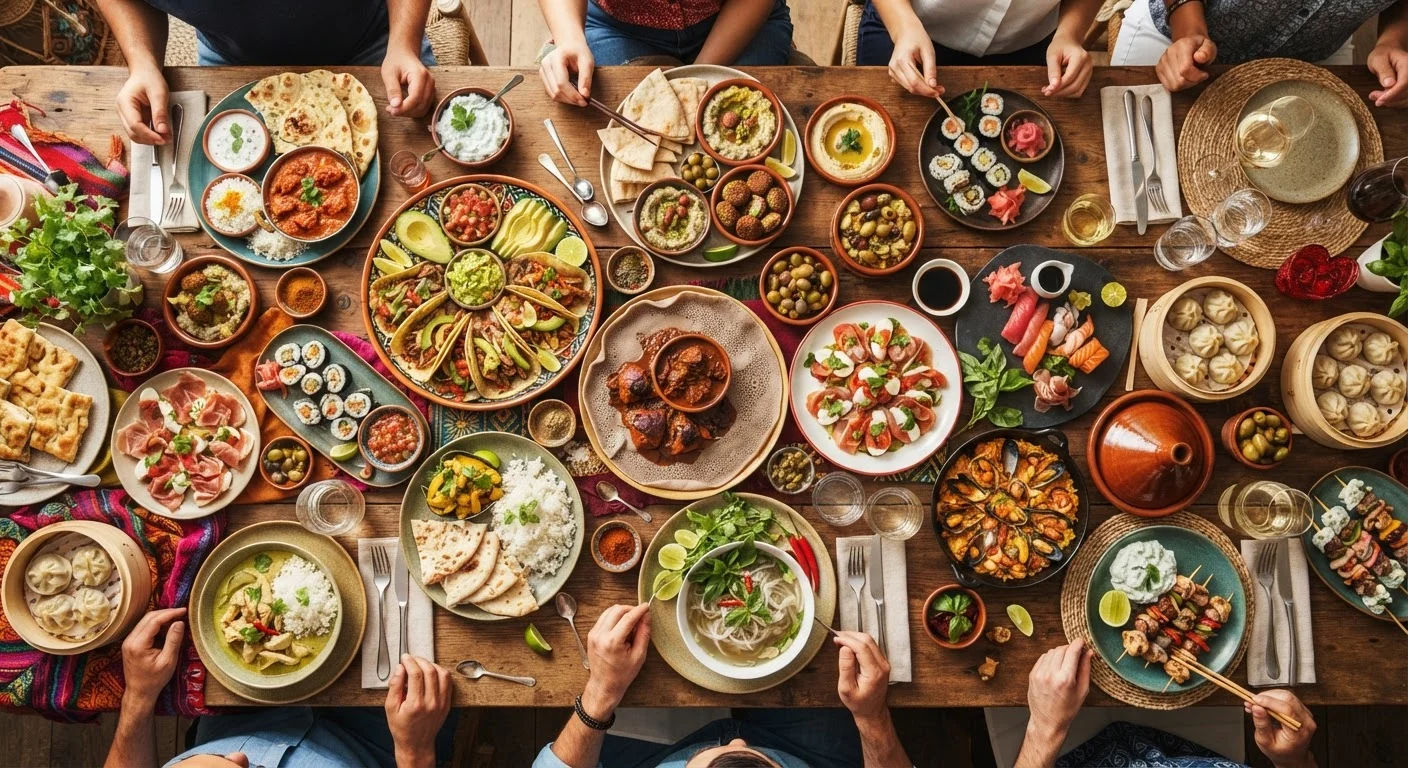
Photo: QuickAdvisor.net editorial
Key Takeaways
- Food exchange is a natural, historical process; appropriation occurs when power imbalances erase the source culture's credit and profit.
- Context matters: who is cooking, for whom, and whether the originating community is acknowledged or economically excluded.
- Scholars and chefs broadly agree that curiosity and respect are the starting points - extraction and erasure are the red lines.
- The same dish can represent either exchange or appropriation depending on the circumstances surrounding its preparation and sale.
- Awareness of food's cultural weight helps eaters and cooks engage more honestly with cuisines not their own.
Why Food Culture Raises Questions of Ownership
Food has never stayed inside borders. Tomatoes are Italian staples today, but they arrived from the Americas in the sixteenth century. Chili peppers define Thai cooking, yet they too originated half a world away. The movement of ingredients, techniques, and recipes across cultures is as old as trade itself.
So why does the phrase cultural appropriation generate such friction when it enters food conversations? Because the movement of food is never purely culinary - it carries history, identity, and economic stakes. When a cuisine travels with its people under conditions of migration, conquest, or survival, and then re-emerges later as a profitable trend in someone else's hands, the question of who benefits becomes impossible to ignore.
Understanding this tension requires distinguishing between two broad frameworks: food exchange, in which culinary influence moves with acknowledgment and some degree of mutual benefit, and food appropriation, in which the source culture is erased, diminished, or excluded from the gains. As the history of soul food and Southern cuisine illustrates, the same ingredients and techniques can carry radically different cultural meanings depending on who is telling the story.
Defining Exchange vs. Appropriation: The Key Distinctions
Food scholars and cultural critics have spent considerable energy mapping the difference. Several factors tend to separate exchange from appropriation in practice.
| Food Exchange | Food Appropriation | |
|---|---|---|
| Attribution | Source culture named and credited | Origin erased or vague |
| Economic benefit | Shared or community-inclusive | Concentrated outside source community |
| Cultural framing | Respectful, contextual | Exotic, othering, or demeaning |
| Learning approach | From within the tradition, with engagement | Superficial borrowing without context |
| Power dynamics | Relatively balanced or mutual | Dominant group profits while source is excluded |
| Community response | Generally welcomed or collaborative | Often experienced as harm or erasure |
Credit and attribution may be the clearest marker. A chef who notes that a dish draws from a specific regional tradition - and who has spent time learning that tradition - is operating differently from one who rebrands a community's everyday food as an exotic novelty without acknowledgment.
Economic dynamics matter just as much. When a marginalized community's cuisine is dismissed or policed when they sell it - then celebrated and priced up when adopted by dominant-culture entrepreneurs - that asymmetry is the clearest sign that something other than exchange is happening. The language surrounding these shifts often signals the power play too. Words like "elevated" or "refined" applied to a dish that working-class communities have eaten for generations encode a social judgment, not just a culinary one.
Where Culinary Exchange Has Thrived
Food history is full of examples where exchange genuinely enriched both parties. Japanese ramen draws on Chinese noodle traditions but developed into something distinct over generations. New Orleans Creole cuisine blends French, West African, Native American, and Spanish influences in ways that reflect the city's layered history - none of these traditions erased, all of them traceable.
What made these exchanges generative rather than extractive? Proximity, sustained relationship, and often shared economic participation. Communities cooking alongside one another, trading ingredients at markets, or building culinary vocabularies together tend to produce hybrid cuisines that carry the fingerprints of everyone involved. Eating within a culture - as a traveler who listens and pays local producers directly - is a form of this honest engagement.
One Practical Starting Point
Applying the Framework: Practical Questions Worth Asking
For anyone - home cook, food writer, restaurant professional - who wants to engage thoughtfully with cuisines outside their own background, a few honest questions can clarify intent and impact.
- Am I naming the source? Calling a dish by its actual name and cultural origin is a baseline of respect.
- Whose expertise am I drawing on? Learning from practitioners within a tradition, whether through cookbooks, restaurants, or direct mentorship, is substantively different from casual mimicry.
- Who profits? If a food business is built on another culture's cuisine, are people from that community employed, paid equitably, and involved in creative decisions?
- How is the food being framed? Describing a cuisine as "adventurous" or "exotic" centers the outsider's gaze rather than the food's own cultural context.
None of these questions produces a clean verdict every time. Food culture is messy, fluid, and deeply human. But they shift the orientation from unconscious consumption to deliberate engagement - which is, most practitioners agree, the real goal.
The content on this site is for informational purposes only and is not a substitute for professional advice. Always consult a qualified professional for guidance specific to your situation.