
Food Deserts in America: Geography, Race, and Access to Nutrition

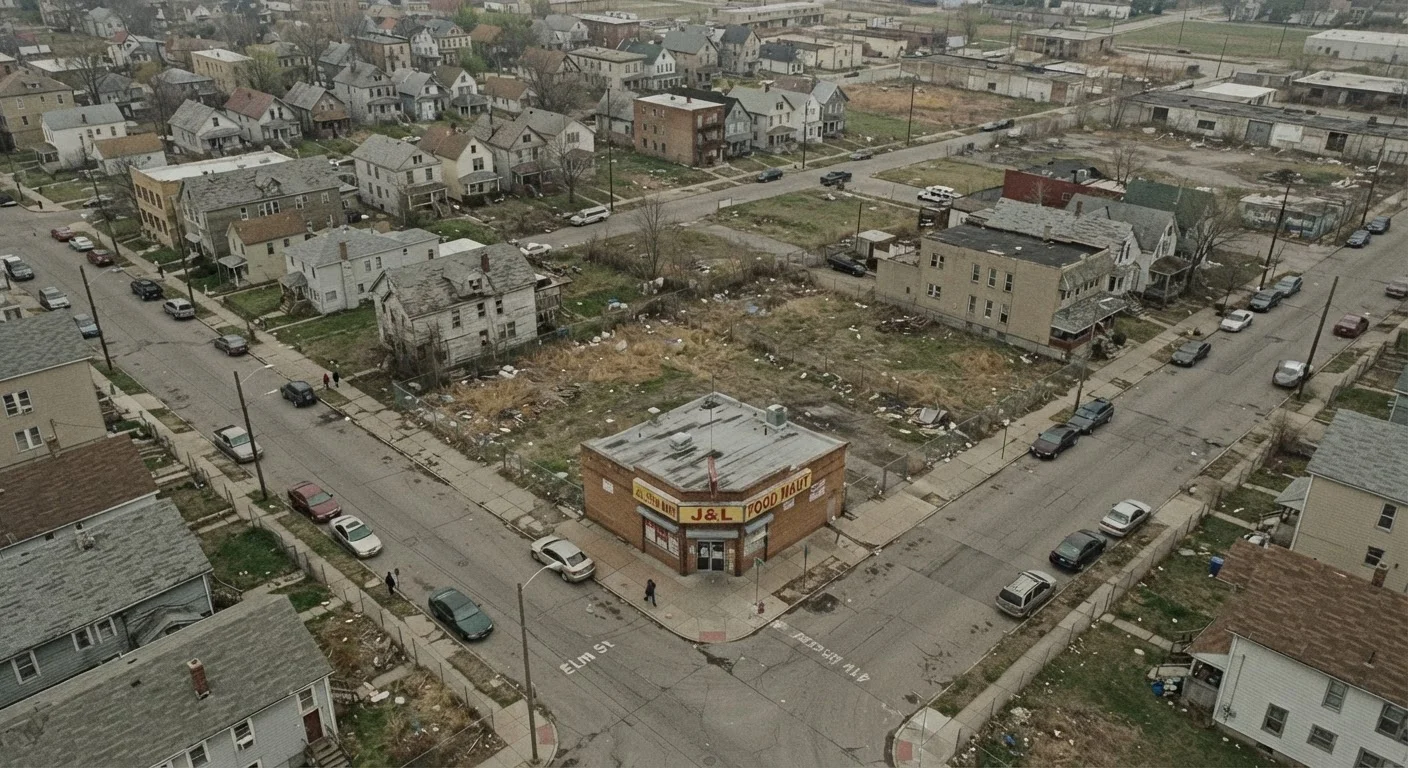
Photo: QuickAdvisor.net editorial
Key Takeaways
- Food deserts are low-income areas with limited access to affordable, nutritious food.
- Rural and urban communities are both affected, though in different ways.
- Structural racism and decades of disinvestment are key drivers of food access disparities.
- Residents of food deserts face measurably higher rates of diet-related chronic disease.
- Community-led solutions - not just new stores - are central to lasting change.
What Is a Food Desert?
The term food desert refers to a geographic area - typically a low-income community - where residents have limited or no convenient access to affordable, nutritious food. The U.S. Department of Agriculture (USDA) uses a specific definition: a low-income census tract where a substantial number of residents live more than one mile from a supermarket in urban areas, or more than ten miles away in rural ones.
The phrase can be misleading. These aren't empty wastelands - they're neighborhoods full of people, corner stores, and fast-food restaurants. What's missing is the kind of full-service grocery infrastructure that provides fresh produce, lean proteins, whole grains, and dairy at reasonable prices. In their place are often liquor stores, dollar stores, and chain fast-food outlets whose menus skew heavily toward processed, calorie-dense options.
Food desert
A low-income area where many residents live far from a full-service grocery store, making it difficult to access affordable, nutritious food.
Food insecurity
A condition in which a person or household lacks consistent access to enough food to live an active, healthy life.
Redlining
A mid-20th-century U.S. government and banking practice that denied loans and investment to predominantly Black and minority neighborhoods, concentrating poverty and starving those areas of commercial development.
SNAP
The Supplemental Nutrition Assistance Program, a federal program that provides low-income Americans with monthly benefits to purchase food at authorized retailers.
Food apartheid
An alternative term used by some researchers and advocates to describe unequal food access, emphasizing that it results from deliberate policy decisions rather than natural conditions.
Some researchers now prefer the term food apartheid, arguing that "desert" implies a natural condition rather than the result of deliberate policy choices and structural disinvestment. Understanding the language is part of understanding the problem.
The Geography of Hunger
Food deserts exist across all fifty states, in both urban cores and rural stretches of the country. The specific shape of the problem differs by geography.
In cities, food deserts often emerge in neighborhoods that have experienced decades of economic decline, white flight, and retail abandonment. A supermarket may exist three miles away - but without a car or reliable public transit, three miles might as well be thirty.
In rural America, the challenge is scale. When the only local grocery closes - a common story as large regional chains have consolidated - residents may face a 20- or 30-mile round trip. This is expensive in fuel costs alone, and prohibitive for those without a vehicle. The intersection of distance and poverty defines rural food insecurity in ways that are often invisible to policymakers focused on urban centers.
Fast food's cultural and geographic footprint is deeply intertwined with this story - chain restaurants often fill the commercial vacuum left by retreating grocery retail, shaping the eating habits of entire communities by default rather than by choice.
Race, Income, and the Roots of Inequality
Food access in America is not randomly distributed. Studies published in peer-reviewed journals have consistently found that predominantly Black and Latino neighborhoods are far more likely to be food deserts than predominantly white neighborhoods at comparable income levels. This disparity is not accidental.
Redlining - the mid-20th-century federal practice of denying mortgages and investment to minority neighborhoods - concentrated poverty in specific zip codes. Businesses, including grocery chains, followed capital flows and avoided those same areas. Decades later, the commercial infrastructure in many of those neighborhoods never recovered.
Don't Mistake Poverty for Personal Choice
Income alone doesn't explain the gap. Research has documented that even controlling for poverty rates, race remains a significant predictor of food access. This makes food deserts not just an economic issue but a racial justice issue - one connected to broader patterns of urban disinvestment and policy neglect.
The vocabulary Americans use to talk about food can itself encode status and access. Words like "artisanal" and "farm-to-table" signal belonging in food culture - a culture that is largely inaccessible to residents of food deserts, for whom the more pressing question is simply: what's available and what can I afford?
Health Consequences of Living in a Food Desert
Diet is one of the most powerful determinants of long-term health - and where you can shop shapes what you eat. Research links food desert residence to higher rates of obesity, type 2 diabetes, hypertension, and cardiovascular disease. When the most accessible calories come from fast food and convenience stores, diets tend to be high in sodium, saturated fat, and refined sugar, and low in fiber, vitamins, and minerals.
Dietary fiber is a good example of what gets squeezed out. Most Americans already fall short on fiber - and for residents of food deserts, where fresh vegetables, legumes, and whole grains are scarce, the deficit is often even more pronounced. Fiber supports digestive health, blood sugar regulation, and cardiovascular function.
These are structural health disparities, not individual failures. When the neighborhood doesn't offer the infrastructure for healthy eating, personal choices are constrained in ways that nutrition advice alone cannot fix. This content is for general educational purposes only and is not a substitute for personalized medical guidance - please consult a qualified healthcare provider about your specific dietary and health needs.
What's Being Done - and What's Still Needed
Interventions to address food deserts range from federal policy to neighborhood-level organizing. The USDA's SNAP program (Supplemental Nutrition Assistance Program) remains the largest tool for improving food purchasing power, though SNAP benefits alone can't overcome geographic barriers when no stores are within reach.
Community-driven models have shown genuine promise. Food co-operatives owned by residents, urban farms and community gardens, mobile produce markets, and community fridges all expand access without waiting for a commercial chain to arrive. These models also keep economic activity local.
Policy levers matter too. Zoning reform that allows urban agriculture, public transit investments that connect neighborhoods to existing stores, and incentive programs that recruit grocery retailers to underserved areas are all active areas of experimentation at city and state levels.
What the evidence consistently shows is that opening a single new supermarket is rarely sufficient on its own. Addressing food deserts requires addressing the conditions that created them: poverty, disinvestment, and structural inequality. Explore more on nutrition and eating fundamentals to understand how access shapes dietary patterns for communities across the country.
Frequently Asked Questions
The content on this site is for informational purposes only and is not a substitute for professional advice. Always consult a qualified professional for guidance specific to your situation.