
Fast Food's Cultural Footprint: How Chain Restaurants Shaped American Life

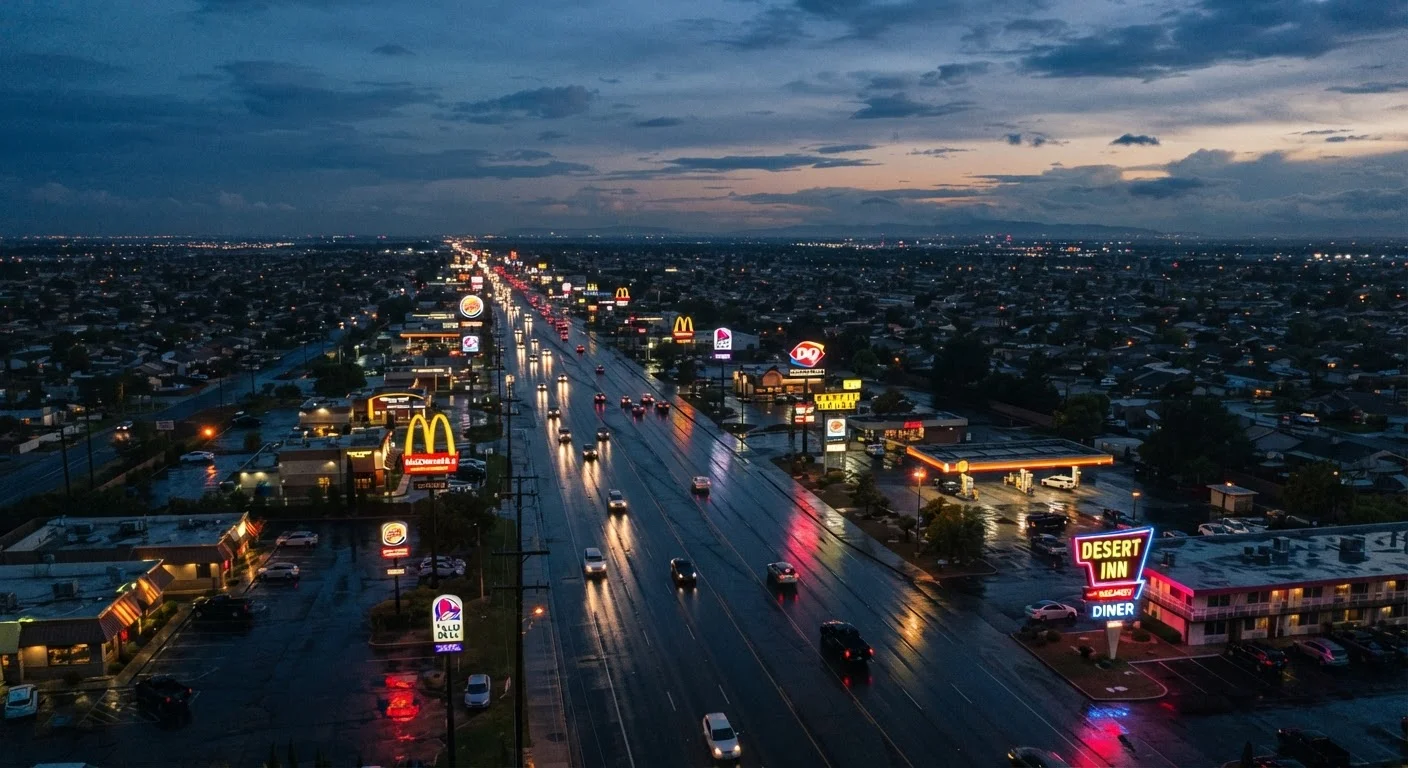
Photo: QuickAdvisor.net editorial
Key Takeaways
- Fast food chains expanded rapidly after World War II alongside car culture and suburban growth.
- Standardization created a shared national food experience, flattening regional culinary diversity.
- Chain placement has historically reflected and reinforced class and racial inequities in American geography.
- Fast food occupies a complex emotional space - tied to memory, affordability, and community ritual.
- The industry's cultural influence extends far beyond diet into marketing, labor, and urban planning.
The Rise of the Chain: A Postwar American Story
Fast food as Americans know it is inseparable from one specific historical moment: the postwar economic boom. Returning veterans, new highways, cheap automobiles, and rapidly expanding suburbs created ideal conditions for a new kind of eating establishment - one built around speed, consistency, and the car. Drive-in restaurants had existed since the 1920s, but the systematic franchising model that emerged in the late 1940s and 1950s transformed a novelty into a national institution.
The logic was elegant in its simplicity: replicate a proven menu and operating system across hundreds or thousands of locations. Travelers crossing state lines could find an identical meal at a familiar price. That reliability was not merely commercial convenience - it became a form of cultural glue, a shared reference point in an increasingly mobile society. By the 1970s, the golden arches, the red-and-white buckets, and the orange roofs had become landmarks as recognizable as any civic monument.
For a deeper look at how immigrant food traditions ran a parallel track - shaping the American palate in messier, less standardized ways - see how immigrant dishes found a place in America.
Standardization as a Cultural Force
The chain restaurant's defining feature - uniform products across locations - had consequences that extended well beyond the menu. Standardization compressed regional food variety. Locally owned diners, regional burger stands, and town-specific lunch counters struggled to compete with the marketing budgets and supply-chain efficiencies of national brands. Whole categories of regional cooking retreated, becoming specialty items rather than everyday fare.
At the same time, standardization created something genuinely new: a national palate. A generation of Americans grew up with the same salt-and-fat ratios, the same sesame-seed bun, the same carbonated drink sizes. Food researchers have documented how industrial flavor engineering - calibrated sweetness, fat, and salt combinations - can establish baseline expectations that shape what consumers find satisfying. The fast food kitchen, in this sense, was also a flavor laboratory with a continental reach.
When analyzing food culture, resist the impulse to assign uniform meaning to a single food category. A McDonald's in rural Mississippi carries different cultural weight than one in a Manhattan airport terminal - context is everything.
Pay attention to what disappears when a chain arrives - the local lunch counter, the family diner, the taqueria - because those losses are part of the cultural ledger that rarely appears in revenue reports.
This tension between homogeneity and regional identity continues to animate food culture debates today. Consider how foods become tied to national identity - fast food is part of that story, whether critics of the industry acknowledge it or not.
Fast Food, Class, and the American Dream
Fast food has always carried an ambivalent class meaning in American life. On one hand, affordability made it genuinely accessible across income levels - a family that couldn't afford a sit-down restaurant could still mark a birthday or celebrate a little league win at a chain. On the other hand, the industry built its labor model on low wages and limited advancement, making it a defining site of working-class employment and, at times, labor organizing.
The franchise ownership model was also marketed as a pathway to entrepreneurship, particularly to veterans and Black Americans in the mid-twentieth century. Historians have noted that some chains actively courted franchise applications in urban Black neighborhoods during the late 1960s and early 1970s - partly as a response to civil rights pressure, partly because inner-city locations were undervalued. The results were complicated: some owners built genuine community wealth, while others found themselves locked into unfavorable contract terms.
Complexity Resists Simple Narratives
Fast food's relationship with class and aspiration is not a simple success narrative, nor a simple exploitation story. It is both, and understanding that complexity is essential to reading the industry honestly.
Geography, Race, and Where Chains Land
Where a fast food restaurant opens is never a neutral decision. Site selection has historically followed purchasing power, traffic patterns, and zoning - factors that are themselves shaped by decades of racially coded urban policy. Research has consistently found that lower-income communities and communities of color often have higher concentrations of fast food outlets and fewer full-service grocery stores, a pattern directly linked to broader food desert dynamics in America.
This matters culturally as well as nutritionally. When a fast food chain is the most accessible, most affordable, and most familiar dining option in a neighborhood, it becomes woven into daily life in ways it may not be in wealthier zip codes. The same brand can mean convenience and choice in a suburb, and constrained options in an under-resourced urban neighborhood.
~200,000
Fast food locations in the U.S.
Industry analysts estimate the U.S. has roughly 200,000 fast food restaurant locations, making it one of the most densely distributed foodservice sectors in the world.
36%
Adults eating fast food on a given day
According to CDC data, approximately 36% of American adults consume fast food on any given day, with consumption highest among adults aged 20-39.
$331B+
Annual U.S. fast food industry revenue
The U.S. fast food sector generates hundreds of billions in annual revenue, reflecting its deep integration into everyday American spending habits.
Nostalgia, Memory, and the Emotional Pull of Familiar Menus
Dismissing fast food as purely commercial misses something real about how Americans relate to it emotionally. For many people, a specific chain meal is bound up with childhood, family routines, road trips, or first jobs. That emotional encoding isn't manufactured sentimentality - it reflects genuine memory formation. As explored in our piece on what comfort food reveals about memory and identity, the brain encodes food experiences alongside emotional context, which is why a specific smell or flavor can activate vivid autobiographical recall.
Fast food chains understood this early and reinforced it through marketing aimed at children, collectibles, holiday packaging, and limited-time menu items that generate anticipation. The result is a generation - actually several generations - for whom fast food is not merely a transactional food choice but a site of cultural memory. That doesn't mean the food is healthful or that its production practices are above scrutiny. It means the cultural analysis has to be honest about the full picture.
Fast Food's Ongoing Influence on American Food Culture
The chain restaurant model did not simply grow alongside American culture - it actively shaped it, from highway infrastructure to breakfast norms (the fast food industry helped nationalize the breakfast sandwich as a daily habit) to the speed at which Americans expect service. Its influence runs in the other direction too: consumer pressure has pushed some chains to remove certain additives, introduce vegetable-forward options, and publish nutritional information - changes that reflect evolving public awareness around nutrition and eating habits.
None of this makes fast food culturally simple. It exists as a mirror of American contradictions - democratic and exploitative, comforting and constraining, aggressively uniform and yet locally inflected in ways visitors sometimes notice before residents do. Understanding it as a cultural force, rather than just a dietary category, is essential to understanding how America eats - and who gets to eat well. For a contrasting lens, the role of local food in travel and cultural understanding offers a useful counterpoint to the chain's deliberate placelessness.
The content on this site is for informational purposes only and is not a substitute for professional advice. Always consult a qualified professional for guidance specific to your situation.